

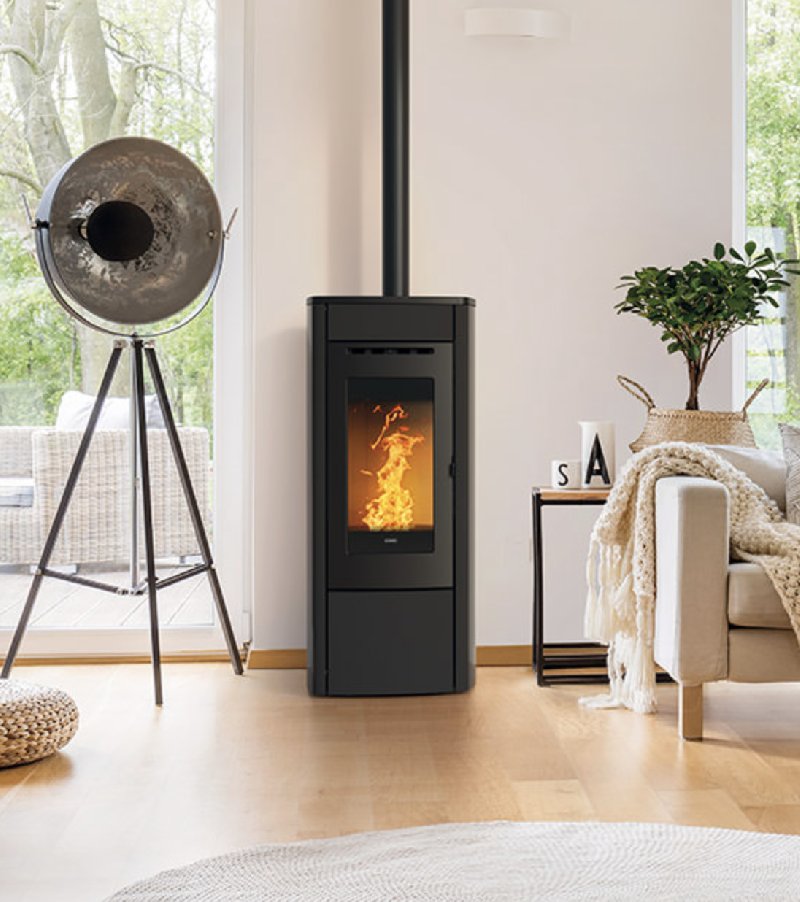
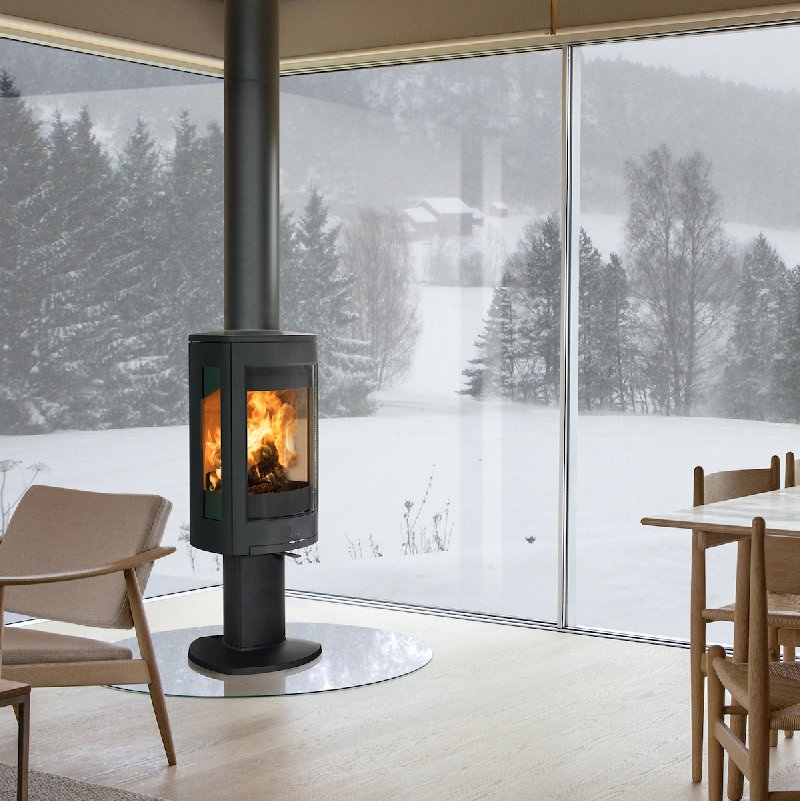
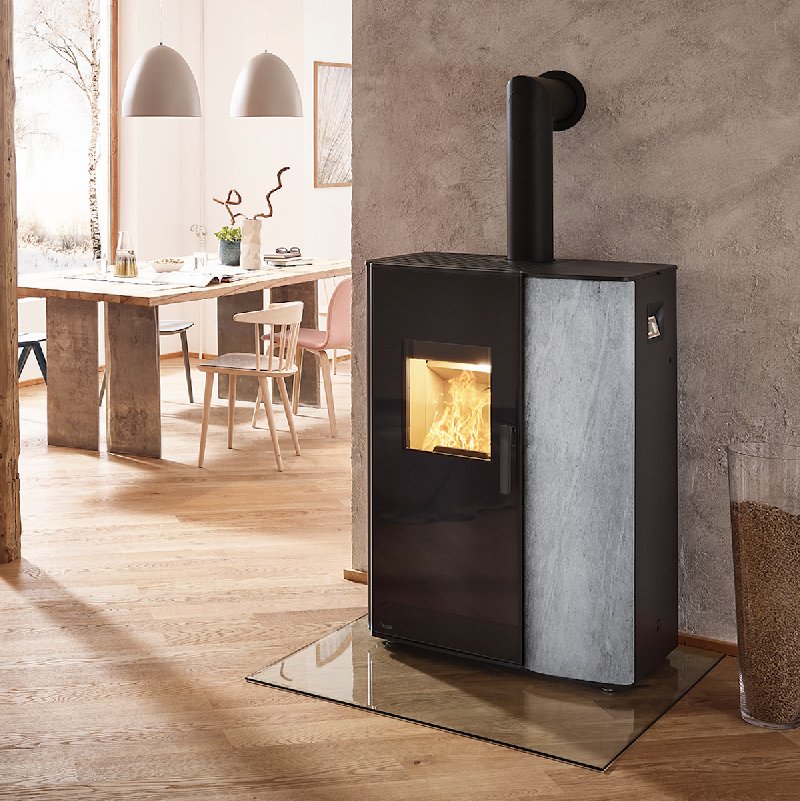
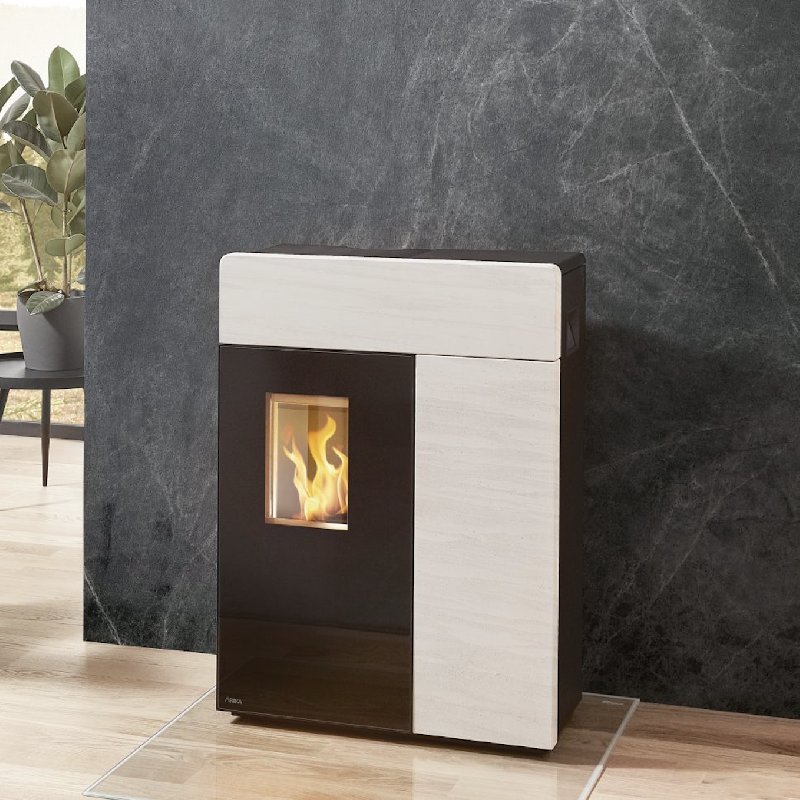
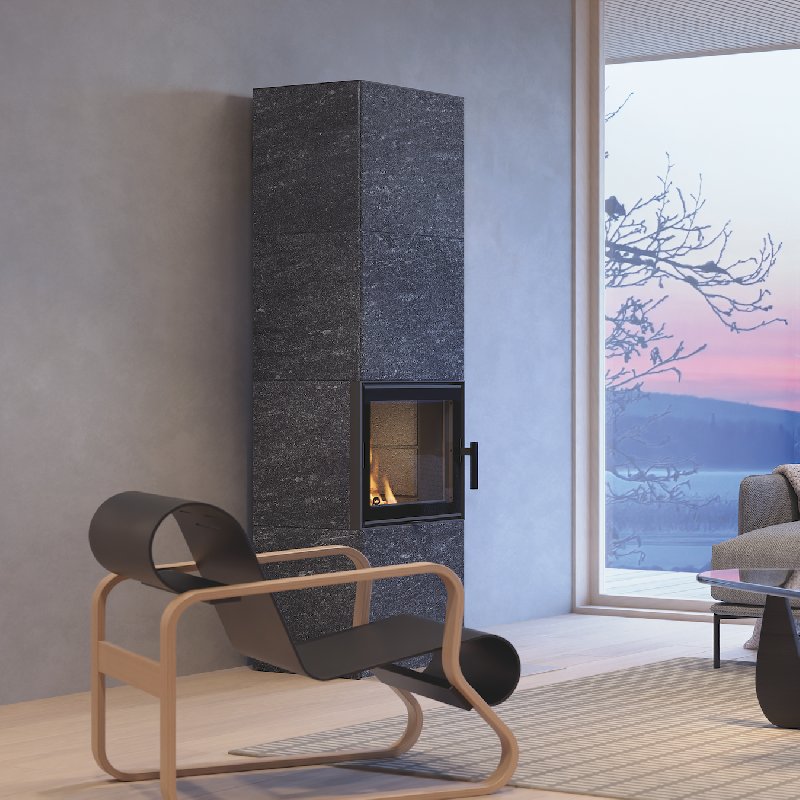
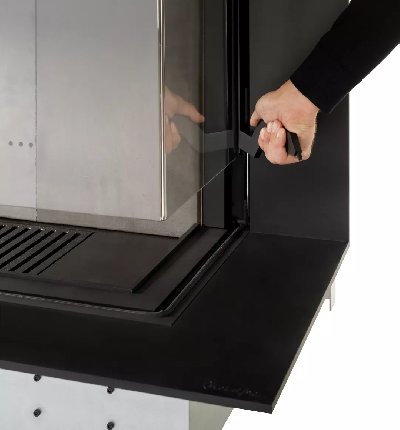
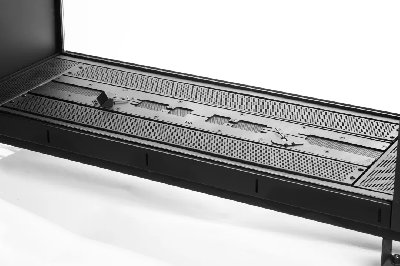

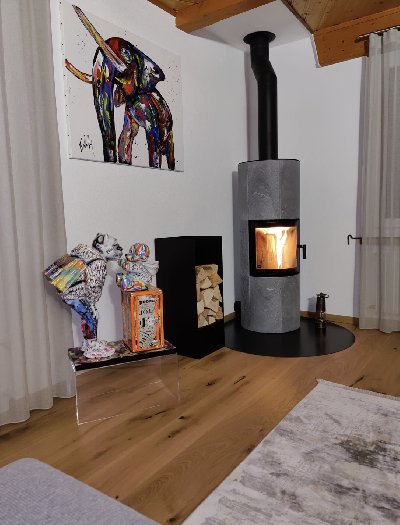
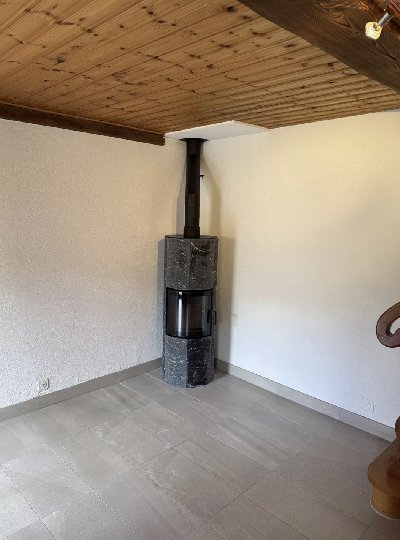
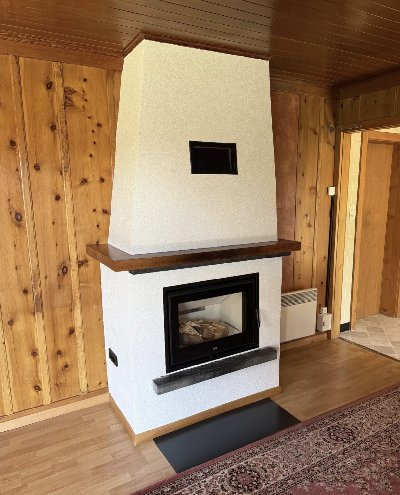
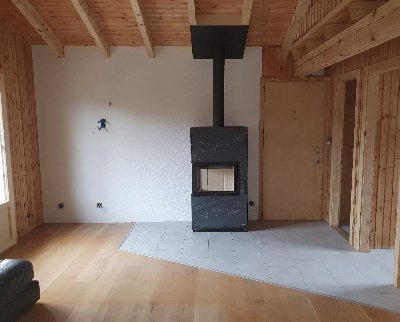
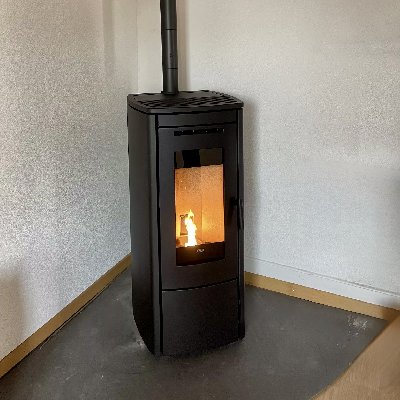
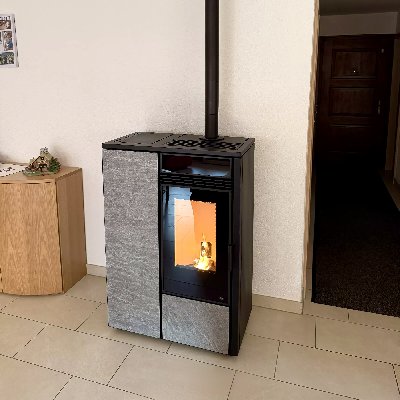
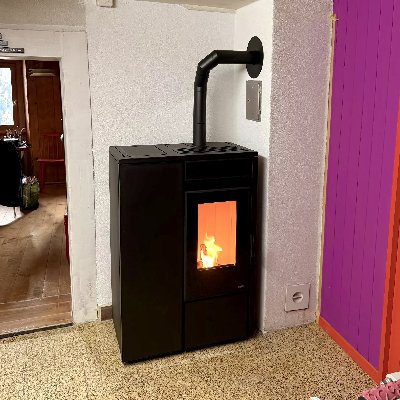

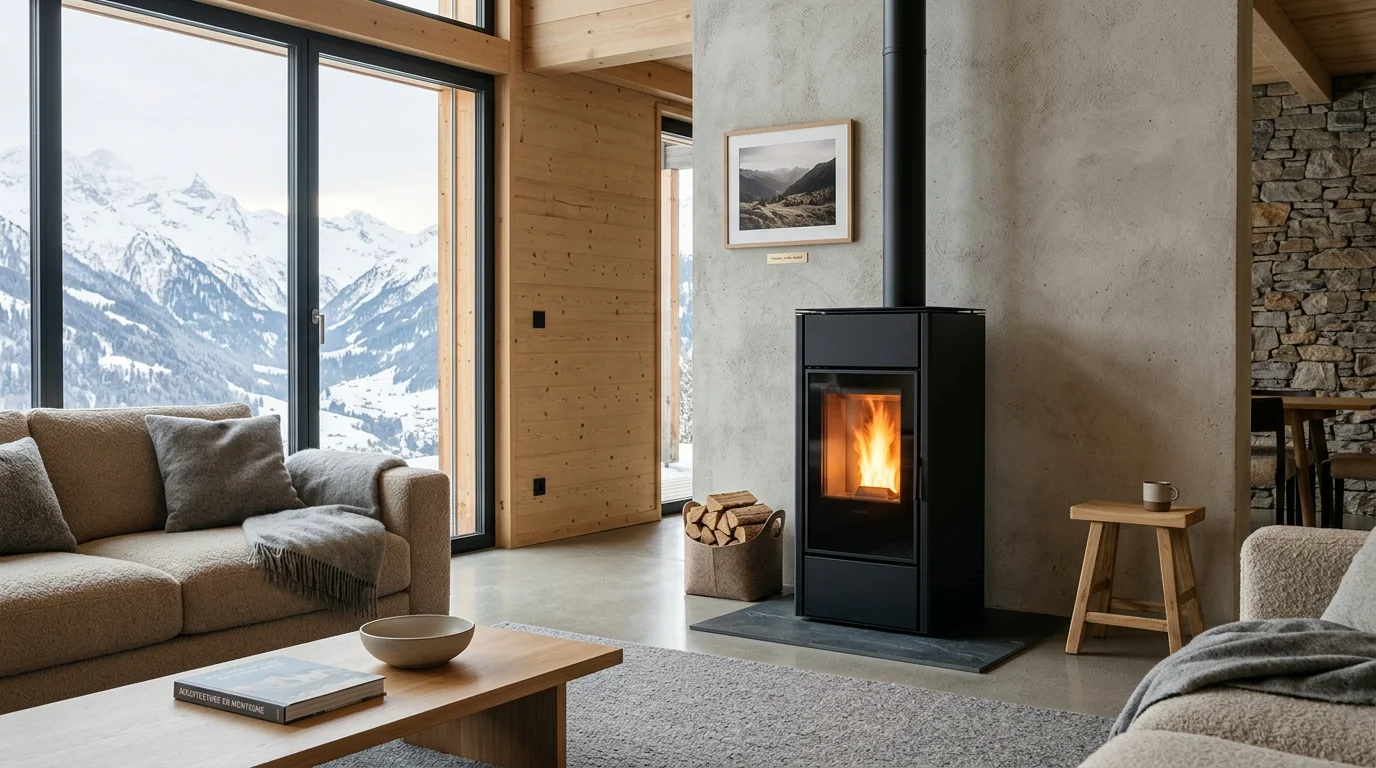
An efficiency rating exceeding 90%, a fuel whose price has remained stable for ten years, and a visible flame without the hassle of burning firewood: the pellet stove has some compelling advantages. Before you take the plunge, it’s helpful to understand what sets this appliance apart from other heating solutions. To get a concrete idea of a modern unit’s performance, check out our technical specifications for the RIKA CONNECT Pellet 22 pellet stove.
It’s worth asking: why choose a pellet stove for your home over a heat pump or a wood-burning stove? The answer lies in a rare balance between energy efficiency, independence, and ease of use. In Switzerland, where the building sector remains one of the largest sources of CO2 emissions, according to SuisseEnergie, replacing a fossil-fuel heating system with a wood-burning system is a concrete step toward climate action.
High efficiency that lowers your bill
Performance is the primary advantage of pellet heating. Automatic wood-burning systems achieve an efficiency of over 90%, as combustion is continuously controlled and optimized. In practical terms, virtually all the energy contained in the pellets is converted into useful heat for your home.
This efficiency translates into long-term savings. The price of fuel plays a key role. According to the organization proPellets.ch, over the past ten years, the price of pellets has remained between 7 and 9 centimes per kWh, while the price of heating oil has fluctuated between 6 and 13 centimes. This price stability is invaluable for planning your long-term heating budget.
A renewable and 100% local fuel
Choosing pellets means opting for locally sourced energy. Pellets are made from compacted sawdust and wood waste, without glue or additives. Their carbon footprint is virtually neutral, since the CO2 emitted corresponds to the amount absorbed by the tree during its growth.
Energy independence is a major factor. Unlike imported gas and oil, pellets are produced locally. The Swiss wood industry employs nearly 100,000 people, often in outlying regions. By heating with pellets, you decide for yourself where your fuel comes from and support the regional forestry economy.
In terms of air quality, the advantage is clear. Thanks to electronically controlled combustion and a very dry fuel, fine particulate emissions are six to seven times lower than in older wood-burning stoves. This is an increasingly critical consideration for homeowners concerned about their environmental impact.
The convenience of automation in everyday life
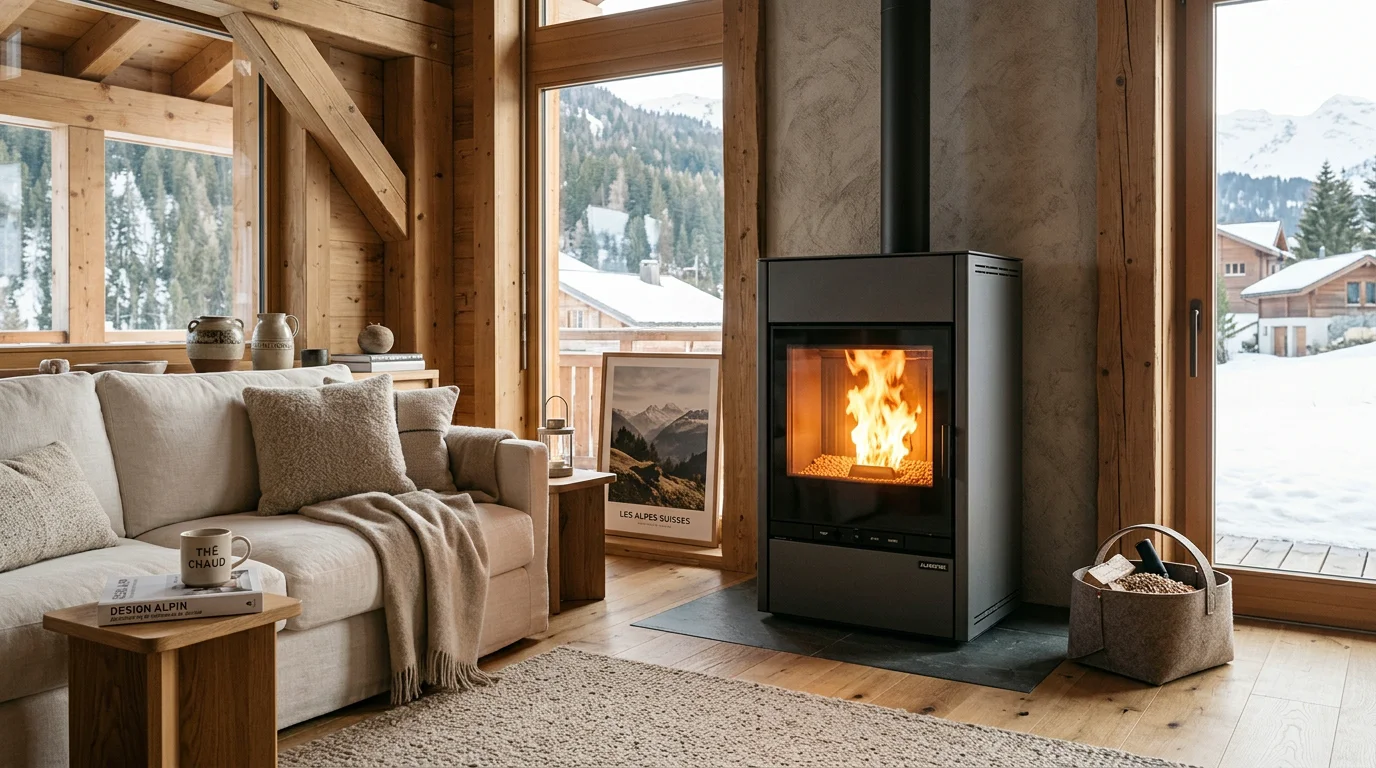
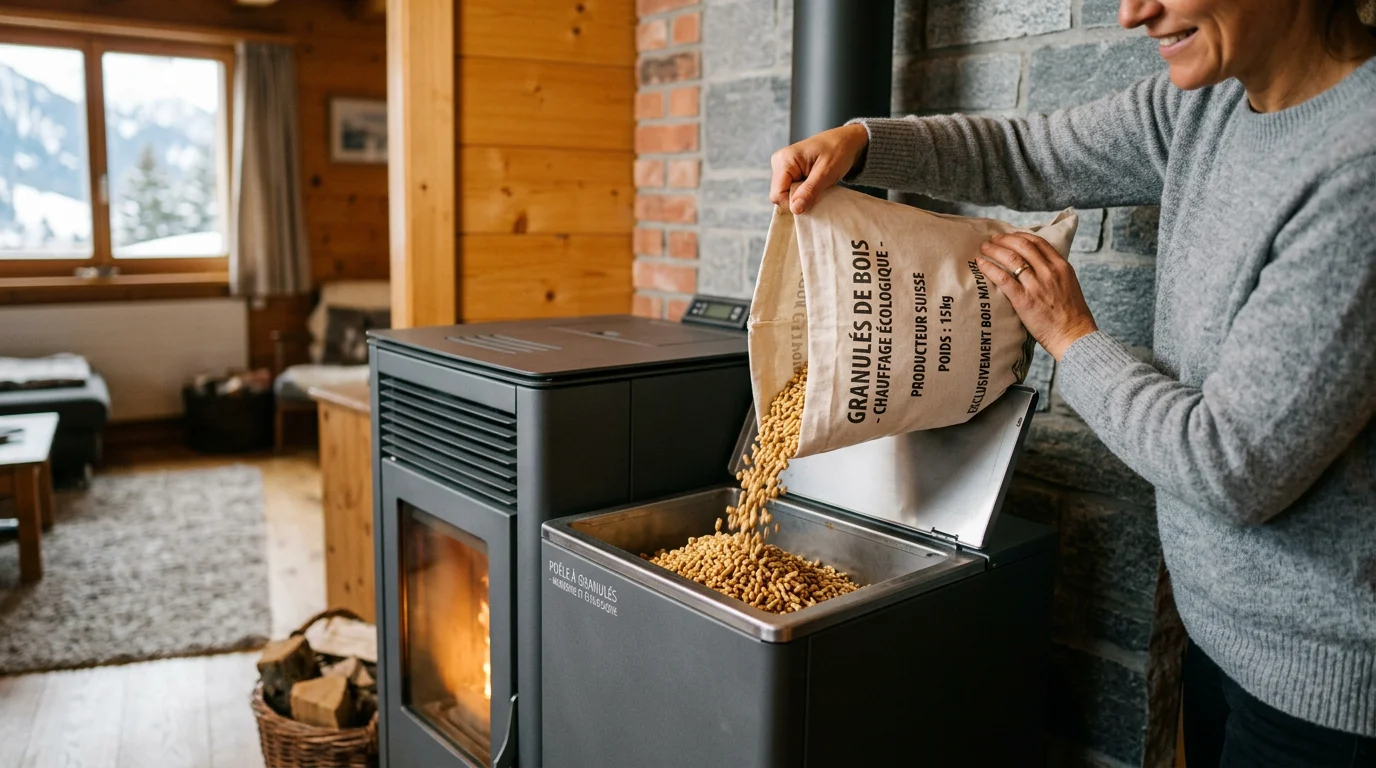
Gone are the days of having to reload logs every hour. The pellet stove manages its own fuel supply via an auger that feeds the fuel from a built-in hopper. You fill the hopper, and the stove runs autonomously for several days.
Programmability is the major advantage of this technology. You set a target temperature and time slots, and the unit turns on or off automatically. Many recent models can be controlled remotely via an app. To understand how flexible the settings are for everyday use, our user manual for the CONNECT Pellet 22 pellet stove details the programming and routine maintenance functions.
According to the energie-environnement.ch website, there are even pellet stoves that operate without electricity, capable of heating for two to three days without recharging—an attractive option for ensuring your heating remains reliable in the event of a power outage.
What Budget to Plan for and What Challenges to Anticipate
Let’s be transparent: a pellet stove requires an initial investment and a minimum of attention. The ash pan must be vacuumed regularly, the ash tray emptied, and annual maintenance by a professional ensures long-term safety and performance.
Storing bags of pellets also requires a dry space, as pellets are sensitive to moisture. Finally, most models rely on electricity for ignition and ventilation. These requirements are minor compared to the benefits, but they must be factored in from the very beginning of the project. This is where local support really makes a difference: at Carron-Lugon, we offer a free, no-obligation assessment of your needs—based on blueprints or during a home visit—to ensure the appliance is sized just right.
Pellet Stove or Another System: How to Decide
Pellets aren’t the only option, and the right choice depends on your home. Here’s a brief comparison of the main solutions, based on the criteria that matter most in everyday life.
| Criterion | Pellet stove | Wood-burning stove | Heat pump |
|---|---|---|---|
| Efficiency | Greater than 90% | Approximately 75–80% | Very high (COP) |
| Automation | Yes (programmable) | No (manual loading) | Yes (full) |
| Local fuel | Yes (Swiss wood) | Yes (Swiss wood) | Electricity (sometimes imported) |
| Carron-Lugon Support | In-house consulting, installation, and after-sales service | In-house consulting, installation, and after-sales service | Not applicable |
A wood-burning stove retains the charm of a fire and operates without electricity, but requires constant fuel handling. A heat pump offers excellent efficiency, but it relies on the electrical grid, which in winter may depend heavily on imports. The pellet stove strikes the ideal balance between self-sufficiency, environmental friendliness, and comfort. It’s worth noting that this technology is also gaining traction on a large scale: according to RTS, Basel inaugurated Switzerland’s largest pellet boiler in 2026, designed to supply some 8,000 households.
Choosing and Installing Your Stove in French-Speaking Switzerland
Even an excellent appliance will never perform satisfactorily if it is installed incorrectly. Determining the correct heat output, selecting the right location in the living area, ensuring proper flue venting, and maintaining safety clearances are all technical considerations that require genuine expertise.
That’s why support is just as important as the equipment itself. Our installation teams handle the removal of your old system, the new installation, and any follow-up work such as tiling or painting—all while protecting your home and cleaning up afterward. To assess a unit’s compliance, our Declaration of Performance for the CONNECT Pellet 22 pellet stove specifies the certified efficiency and emissions values.
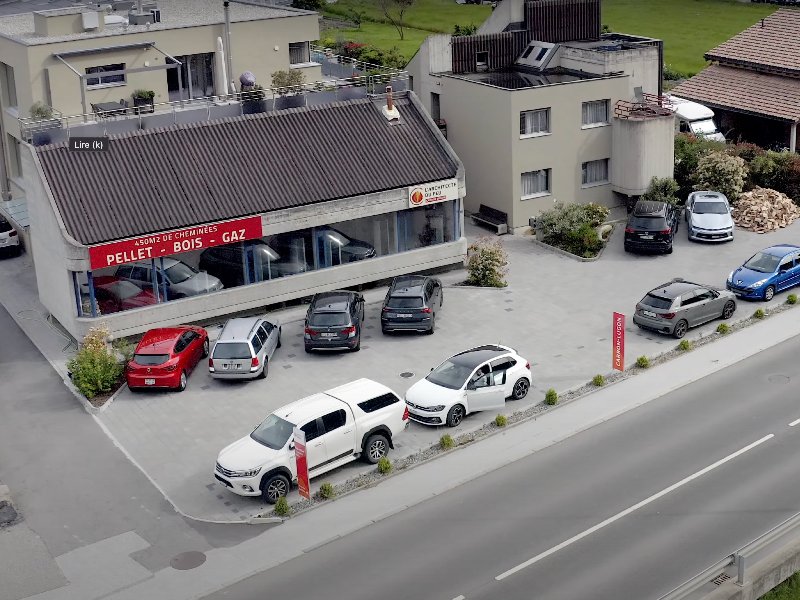
Whether your project involves supplemental heating for the living room or a more centralized solution in a well-insulated home, personalized advice will help you avoid sizing errors. Our showrooms in Fully and Etoy allow you to see the units before making a decision.
Conclusion
So, why choose a pellet stove? Because it combines features that few other systems offer together: efficiency exceeding 90%, a local fuel whose price has remained between 7 and 9 centimes per kWh over the past decade, and the convenience of automated heating. The secret to a successful project lies in sizing and installation: a well-chosen and properly installed unit will heat efficiently for fifteen to twenty years. Our strength lies in supporting you from start to finish—from free consultation to professional installation and in-house after-sales service. To bring your project to life, discover our RIKA PARO pellet stove and its Declaration of Performance.
Frequently Asked Questions
Can a pellet stove heat the entire house?
It primarily heats the room where it’s installed and the adjoining open spaces. In a well-insulated, modestly sized home, it can serve as the primary heating source. Otherwise, it acts as an effective supplemental heating source.
What maintenance does a pellet stove require?
Regular cleaning of the burner chamber and emptying the ash pan are sufficient for daily maintenance. Annual maintenance by a professional, including chimney sweeping, is essential. Our in-house after-sales service provides this support for pellet, wood, or gas appliances.
Is a pellet stove truly eco-friendly?
Yes. The fuel is renewable, and its carbon footprint is virtually neutral. Furthermore, its fine particulate emissions are six to seven times lower than those of an older wood-burning stove, thanks to electronically controlled combustion.