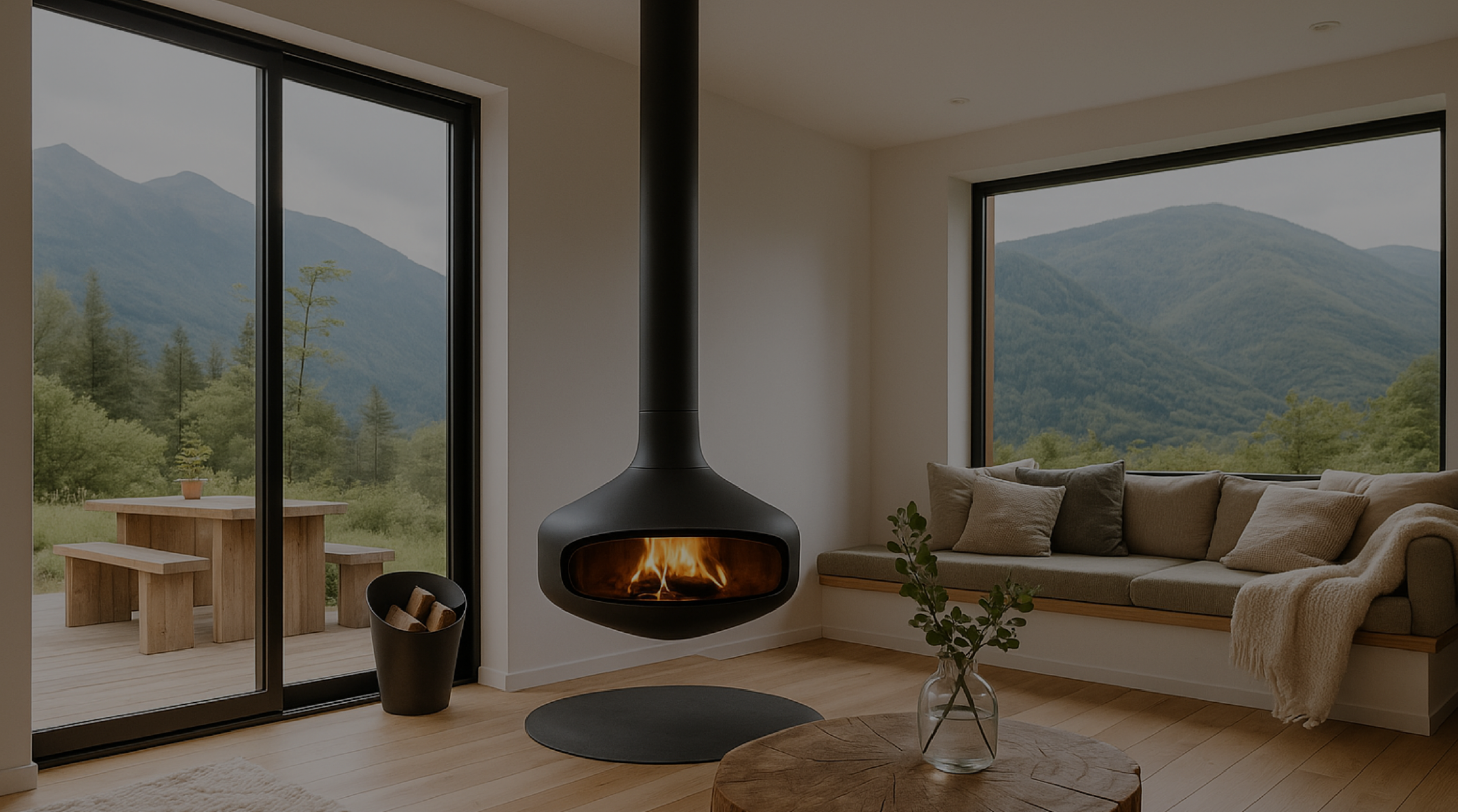


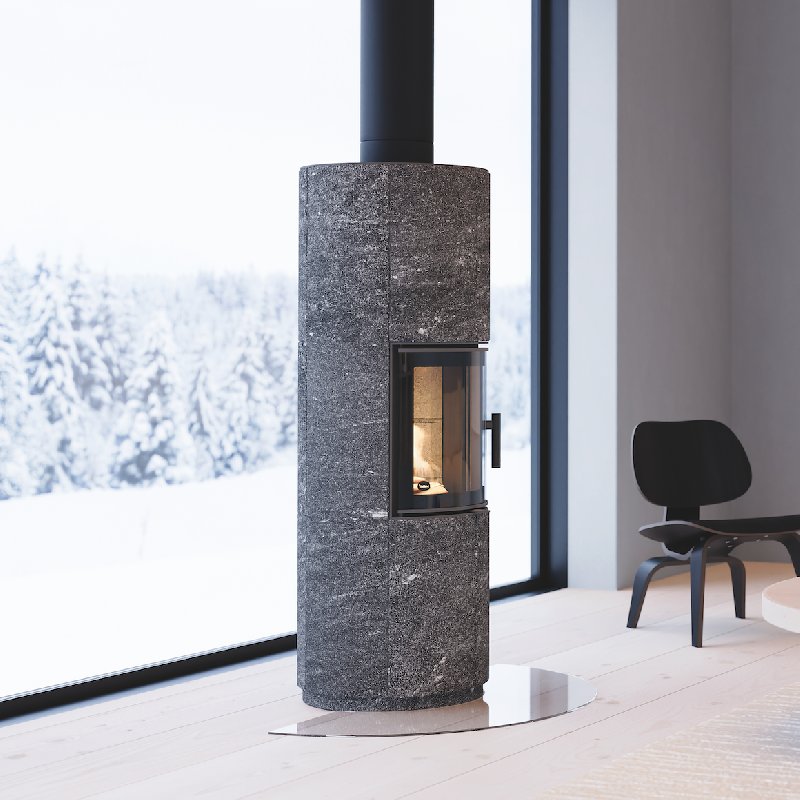
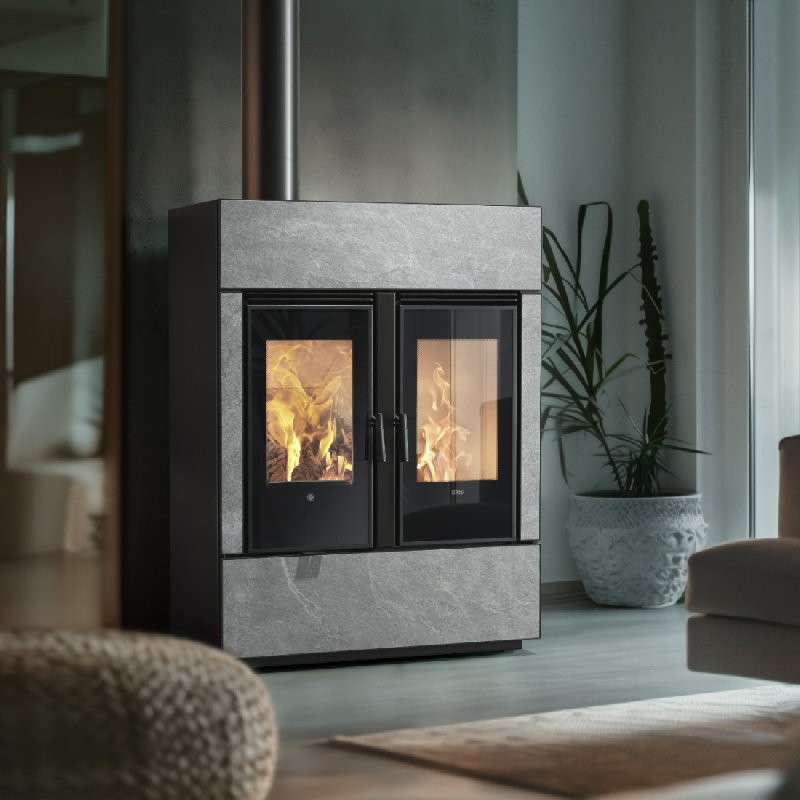
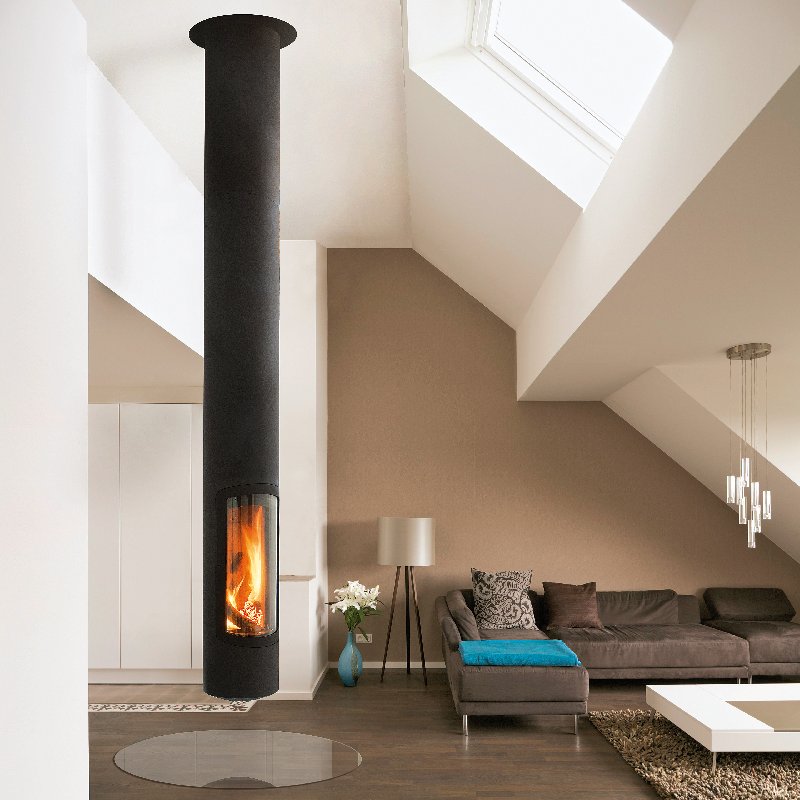
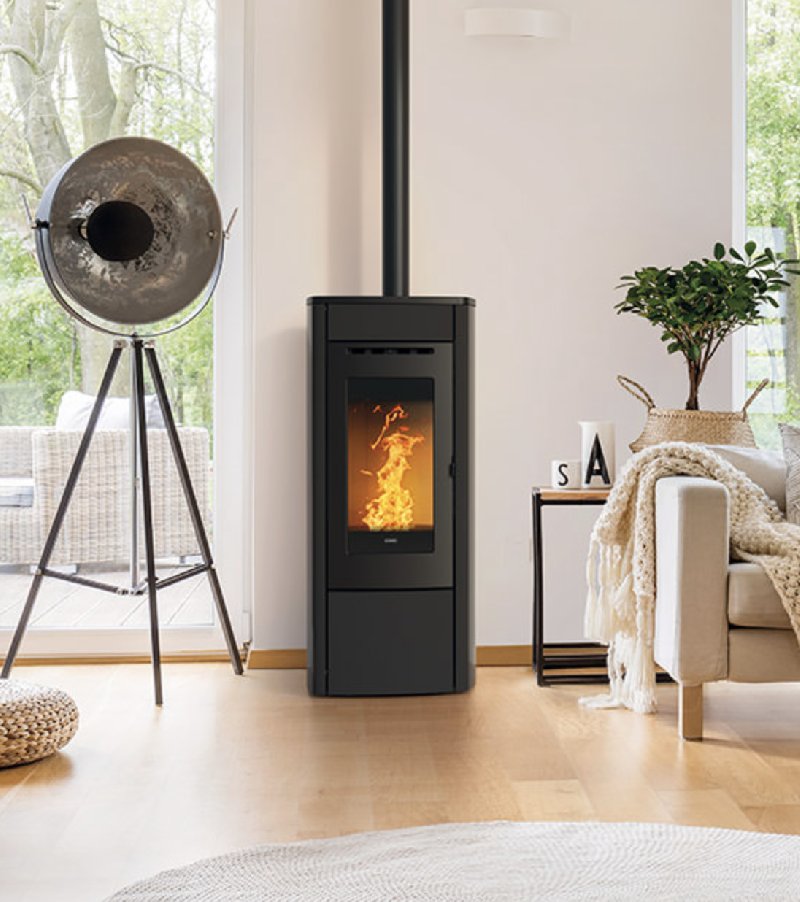
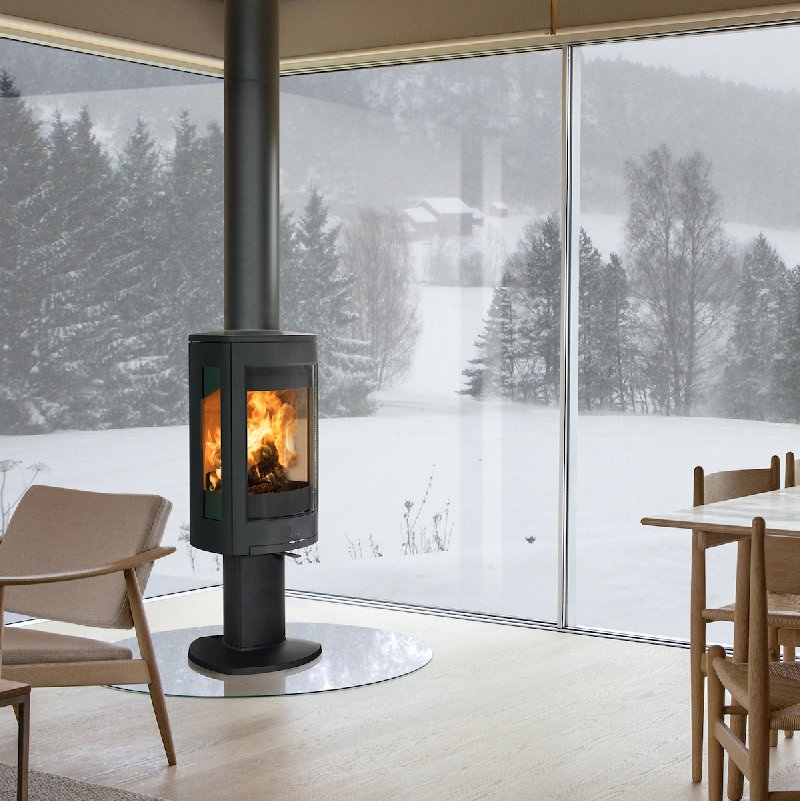
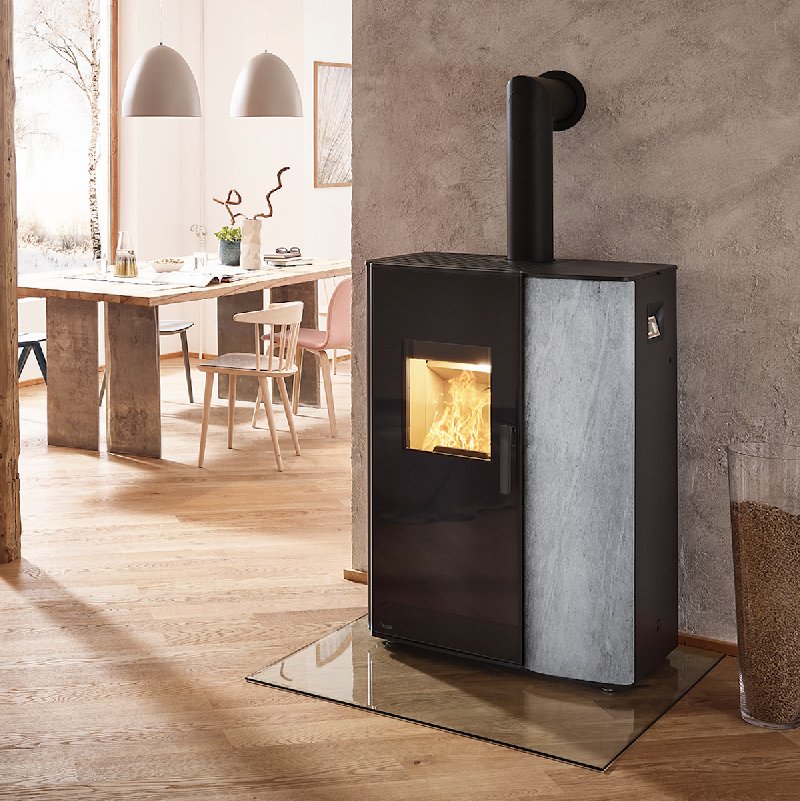
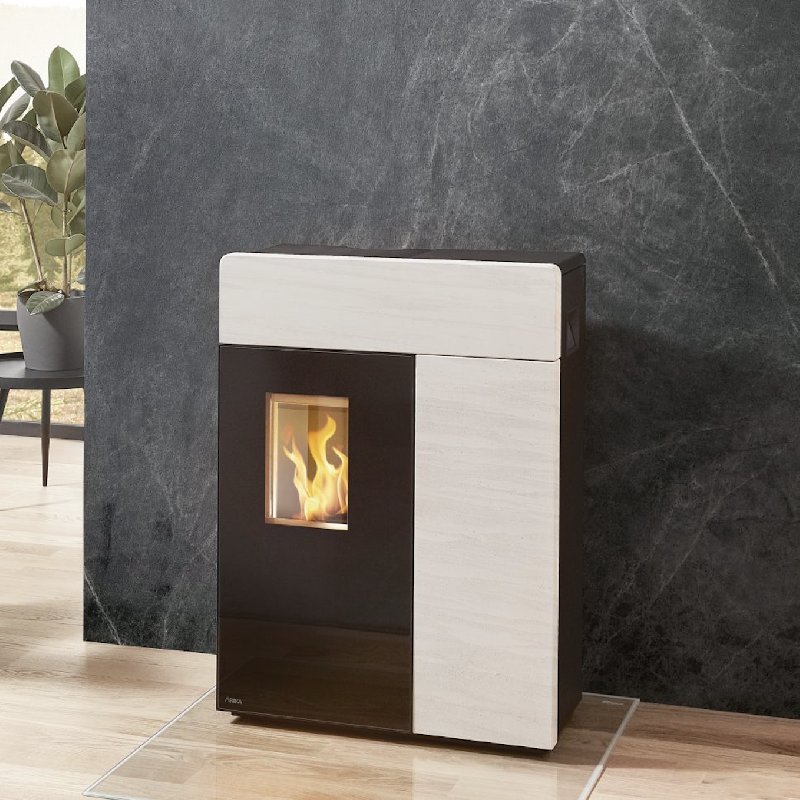
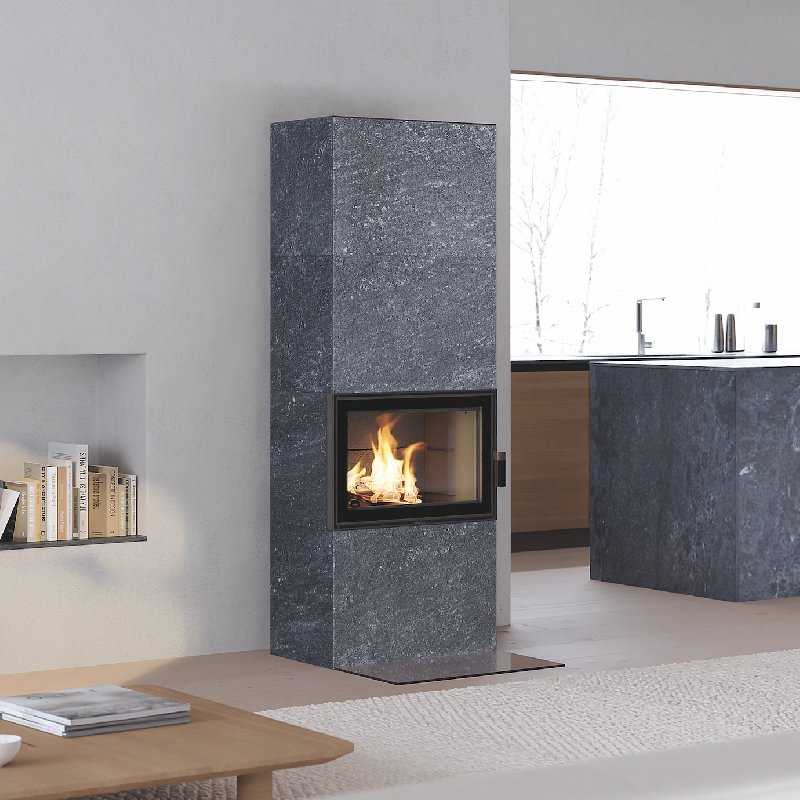
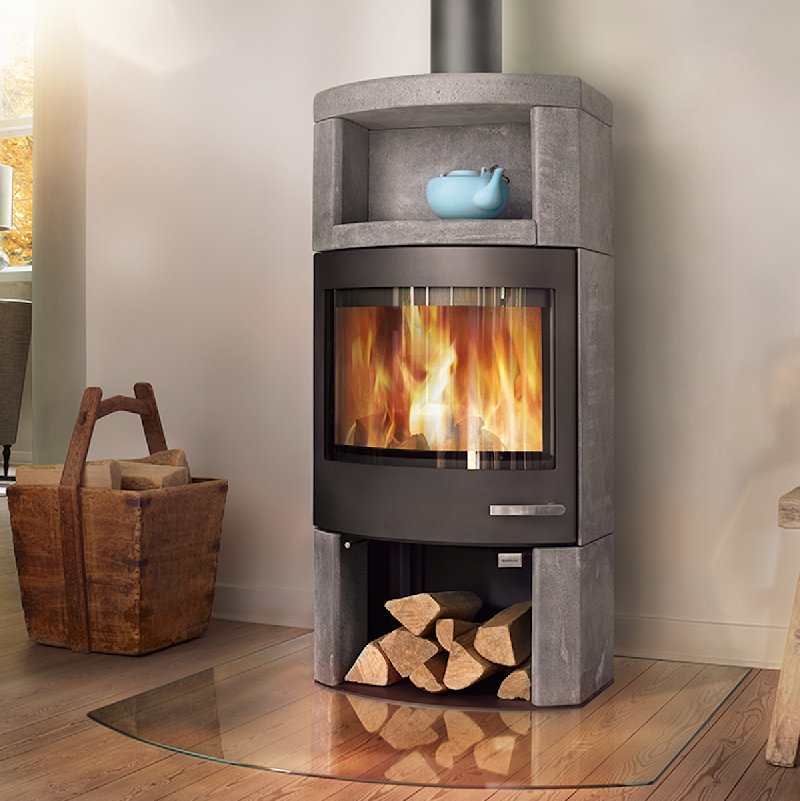
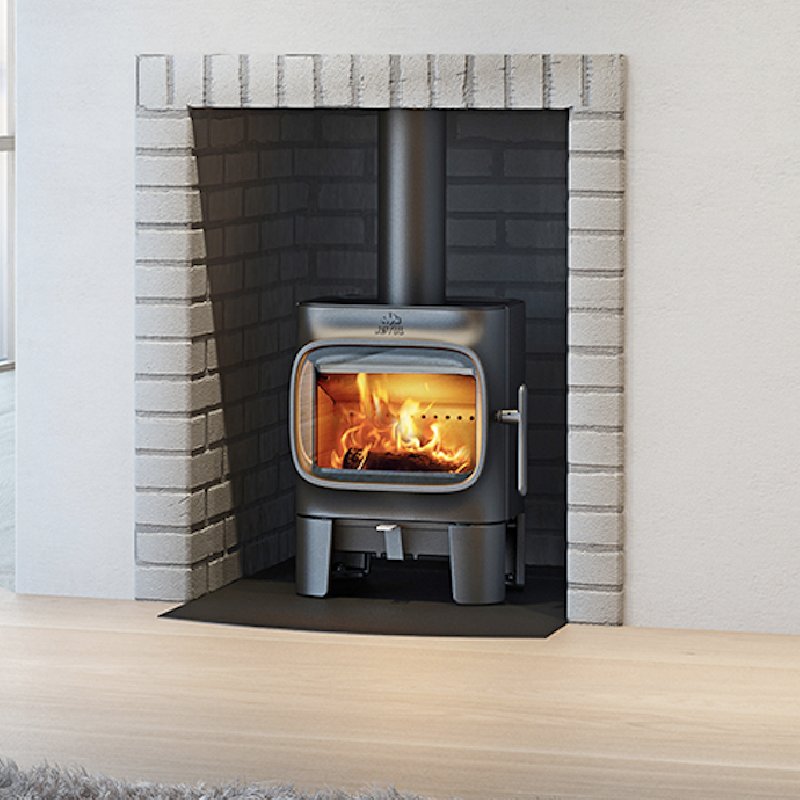
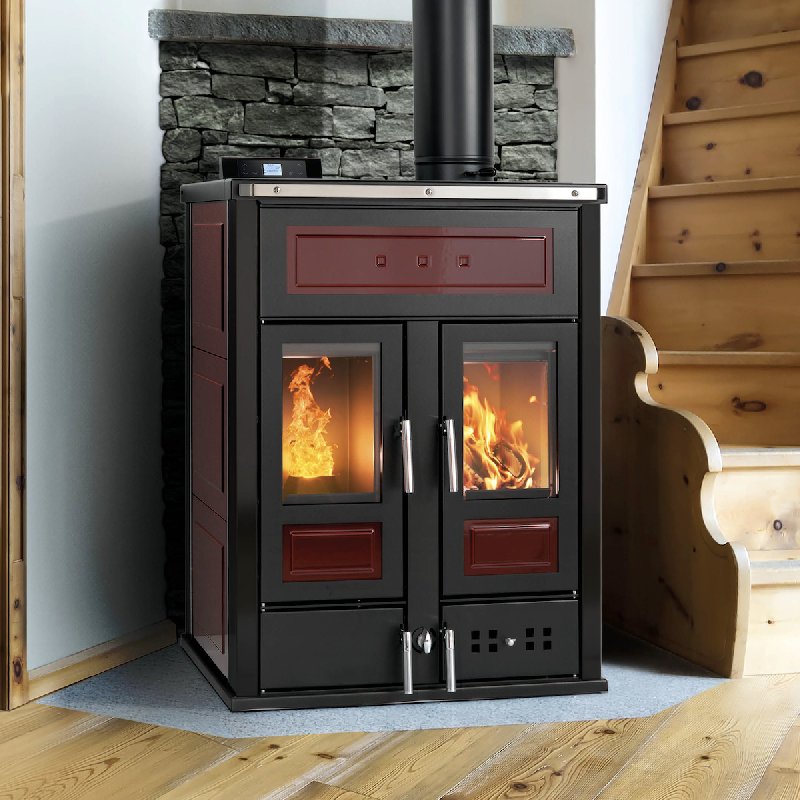
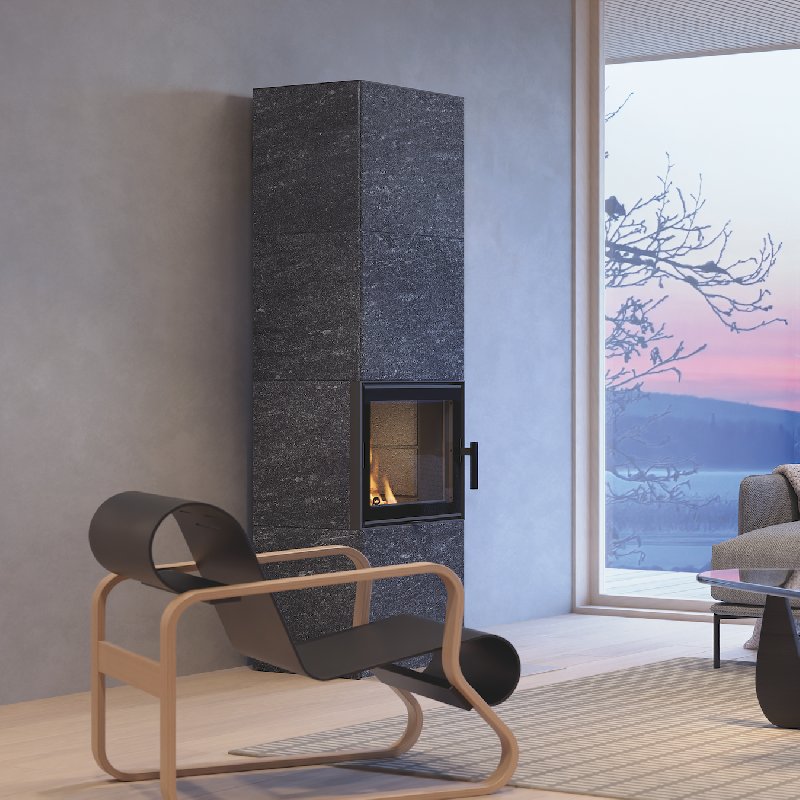
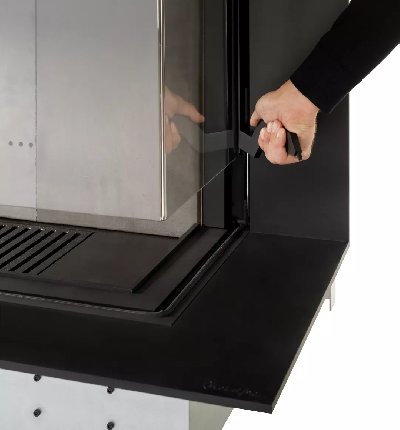

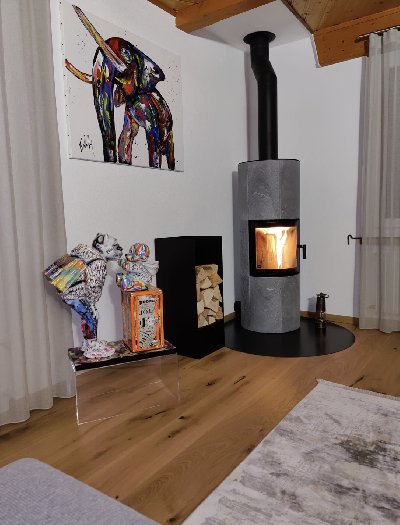
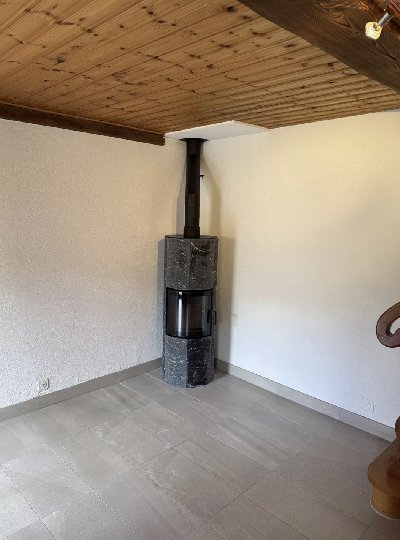
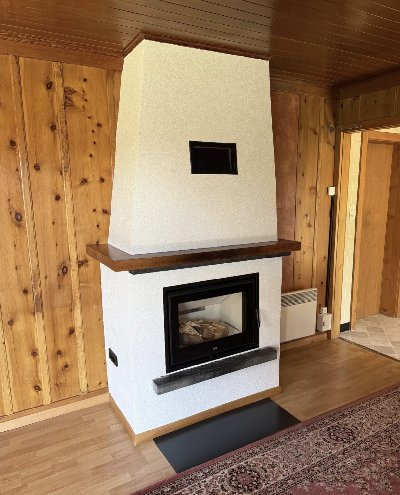
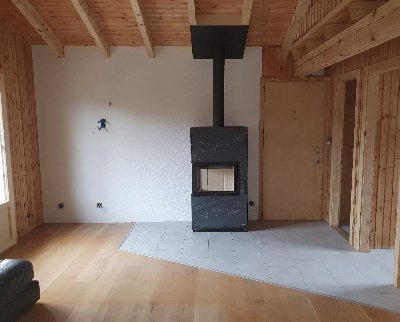
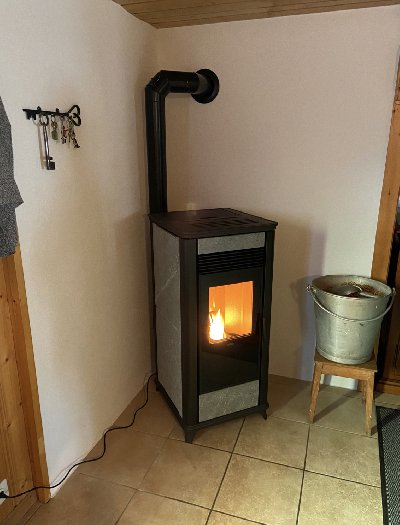
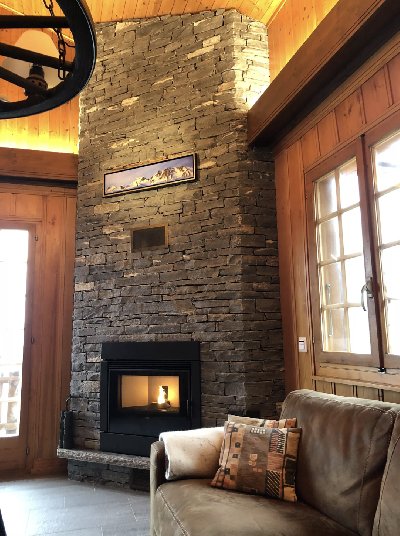
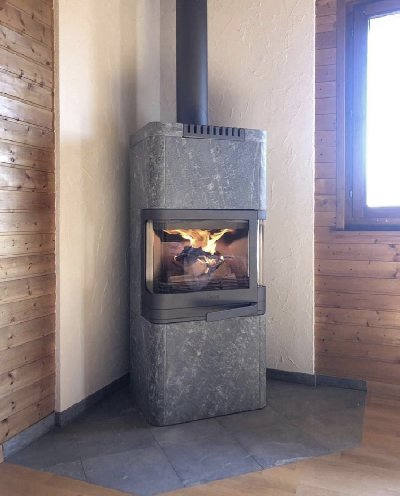
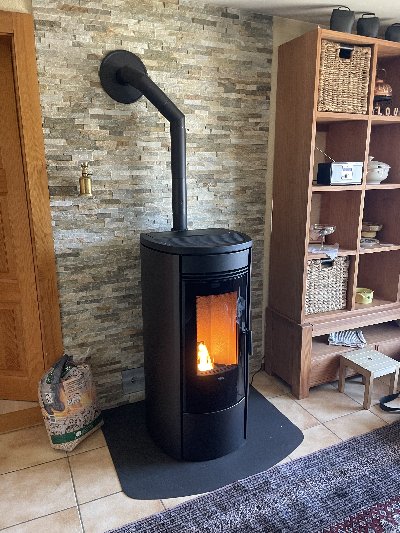
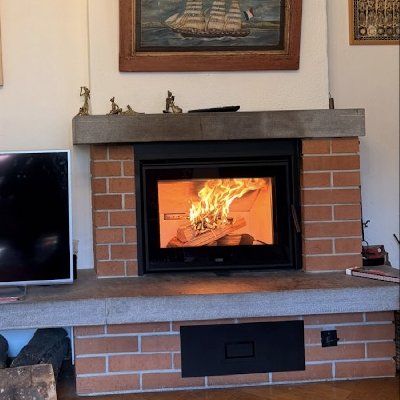
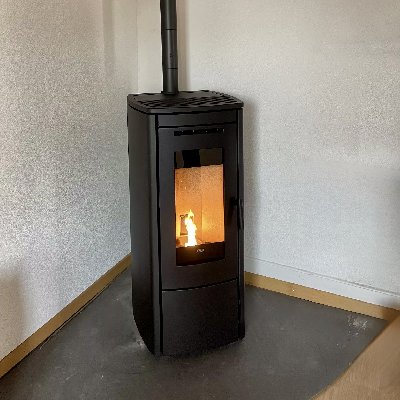
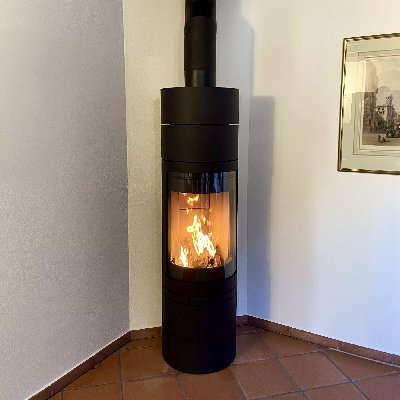
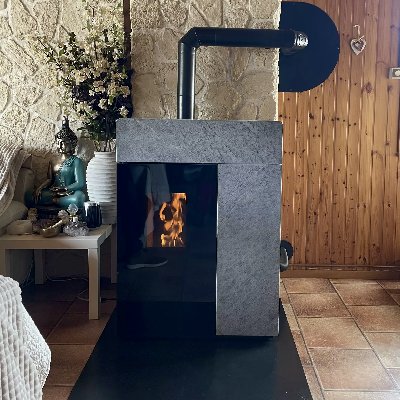
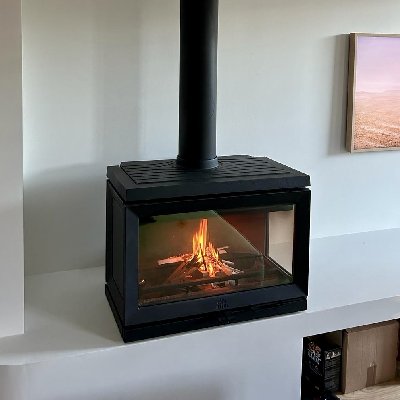
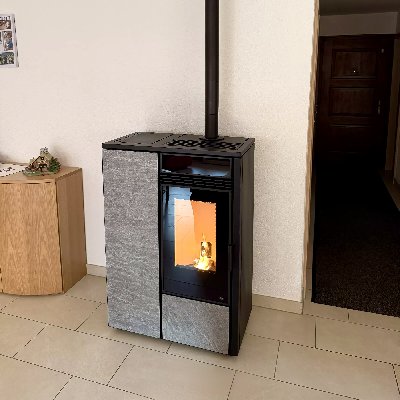
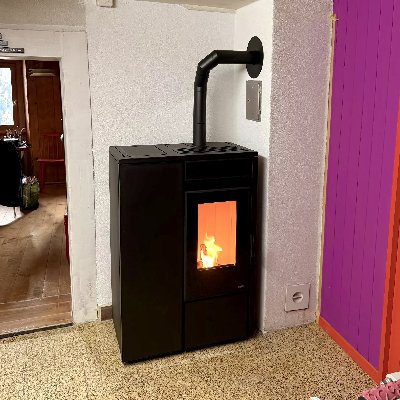

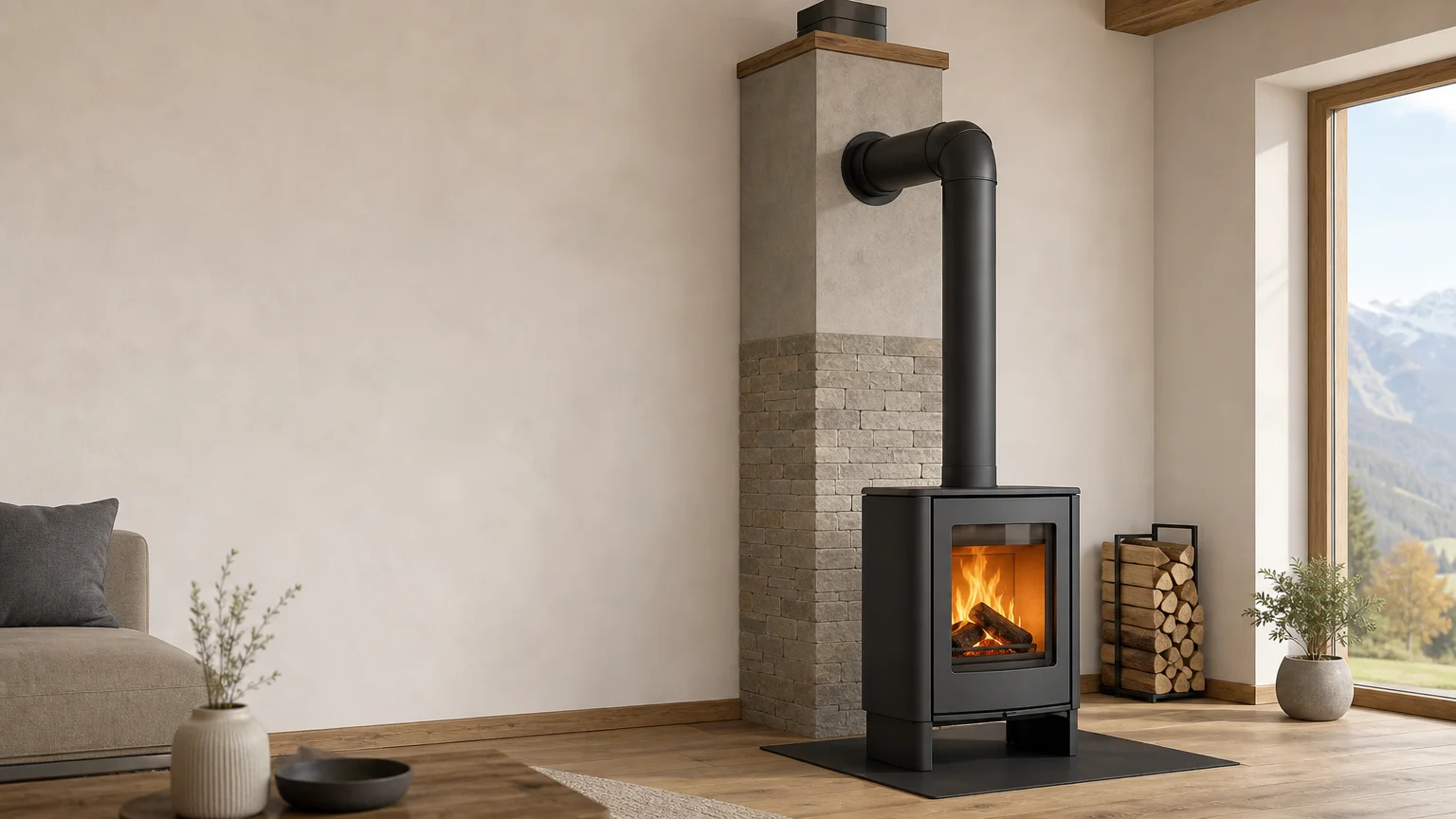
Connecting a stove or fireplace is not simply a matter of inserting a pipe into an existing flue. The diameter, fuel type, draft, distances from combustible materials, and access for maintenance must all be consistent. For the visible part of the installation, you can check out our stove connector with a drip tray, making sure to verify its compatibility with your appliance and your system.
A single-family home and an apartment have different requirements. The presence of a code-compliant flue, floor or roof penetrations, the air intake, and any required permits can affect the project. In Switzerland, thorough technical planning is therefore essential before ordering any materials or scheduling any work.
The installation begins with the housing and the appliance
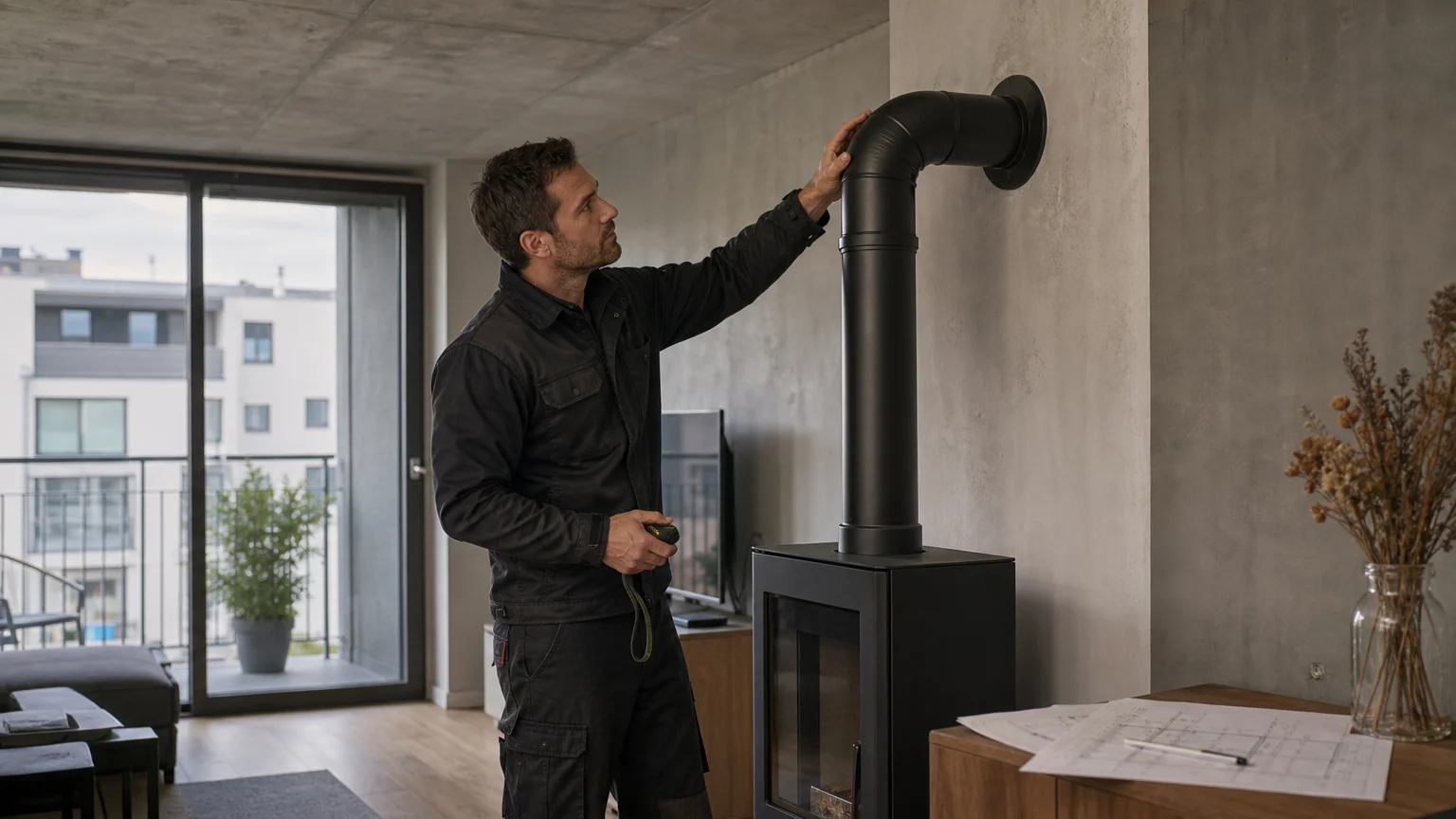
Before choosing a flue, start by precisely identifying the appliance. A wood stove, a pellet stove, and a closed fireplace do not produce the same types of flue gases. They may also require different diameters, operating temperatures, and draft conditions.
The appliance’s output must also match the volume of the space being heated and the flue’s specifications. A flue that is too narrow can impede the exhaust of flue gases. A flue that is too wide can cool the flue gases and promote condensation.
In an apartment building, additional considerations include those related to condominium ownership, property management, and common areas. A flue passing through a floor slab, a roof exit, or a shared flue often requires further analysis. It is also necessary to verify whether the building permits a new appliance and whether a cantonal or municipal permit is required.
We offer a free feasibility study to assess the dwelling, the available flue, and the proposed appliance. This step does not guarantee approval of the project, but it helps identify technical constraints before selecting a solution.
The flue determines the sizing
The existing flue must be inspected before any installation. Its interior diameter, height, geometry, condition, and accessibility directly affect the appliance’s operation. Cracks, high porosity, or an inadequate cross-section may make lining necessary.
Chimney lining involves inserting a suitable flue inside an existing flue. It can improve the continuity of the exhaust flow and limit leaks, but it does not automatically repair the outer structure. The supporting flue must therefore remain stable and compatible with the new installation.
The choice between a rigid liner and a flexible liner depends largely on the shape of the flue. A straight and accessible run can accommodate a rigid solution. An older flue with bends may require a more flexible solution, subject to the manufacturer’s instructions and the type of fuel used.
For the exposed section, we can recommend stove connection pipes. However, the listed diameter alone is not sufficient to confirm compatibility. You must compare the appliance’s model number, the flue’s technical documentation, and the actual installation conditions.
Technical documents play a central role. The guidelines from feusuisse note that the document on the state of the art regarding stoves and fireplaces supplements the fire safety regulations for the relevant installations.
Safety Distances, Airtightness, and Flue Gas Exhaust
A reliable connection must prevent flue gases from entering the dwelling and limit the heating of surrounding walls. Safety distances cannot be determined solely based on the pipe’s diameter. They depend on the flue’s class, its insulation, its temperature, and the nature of the surrounding walls.
Combustible materials require special attention. Construction lumber, paneling, insulation, beams, and wall coverings can alter the acceptable configuration. Protection added at the last minute does not always compensate for improper system sizing.
Connections must remain stable, continuous, and airtight. Cleaning doors and access points required for chimney sweeping must remain accessible. Elbows should be minimized whenever possible, as each change in direction can complicate draft and maintenance.
When the layout warrants it, we can evaluate the use of elbows for stove flues. Their use depends on the actual geometry of the flue path and the system’s specifications. An angle or number of elbows should not be chosen solely for aesthetic reasons.
The roof outlet must also be examined. Flue gases must be vented under conditions that minimize nuisance and turbulence. The FOEN’s recommendations specify that the height of exhaust systems is governed by the Air Pollution Control Ordinance and by building codes.
Procedures in Switzerland Vary by Canton
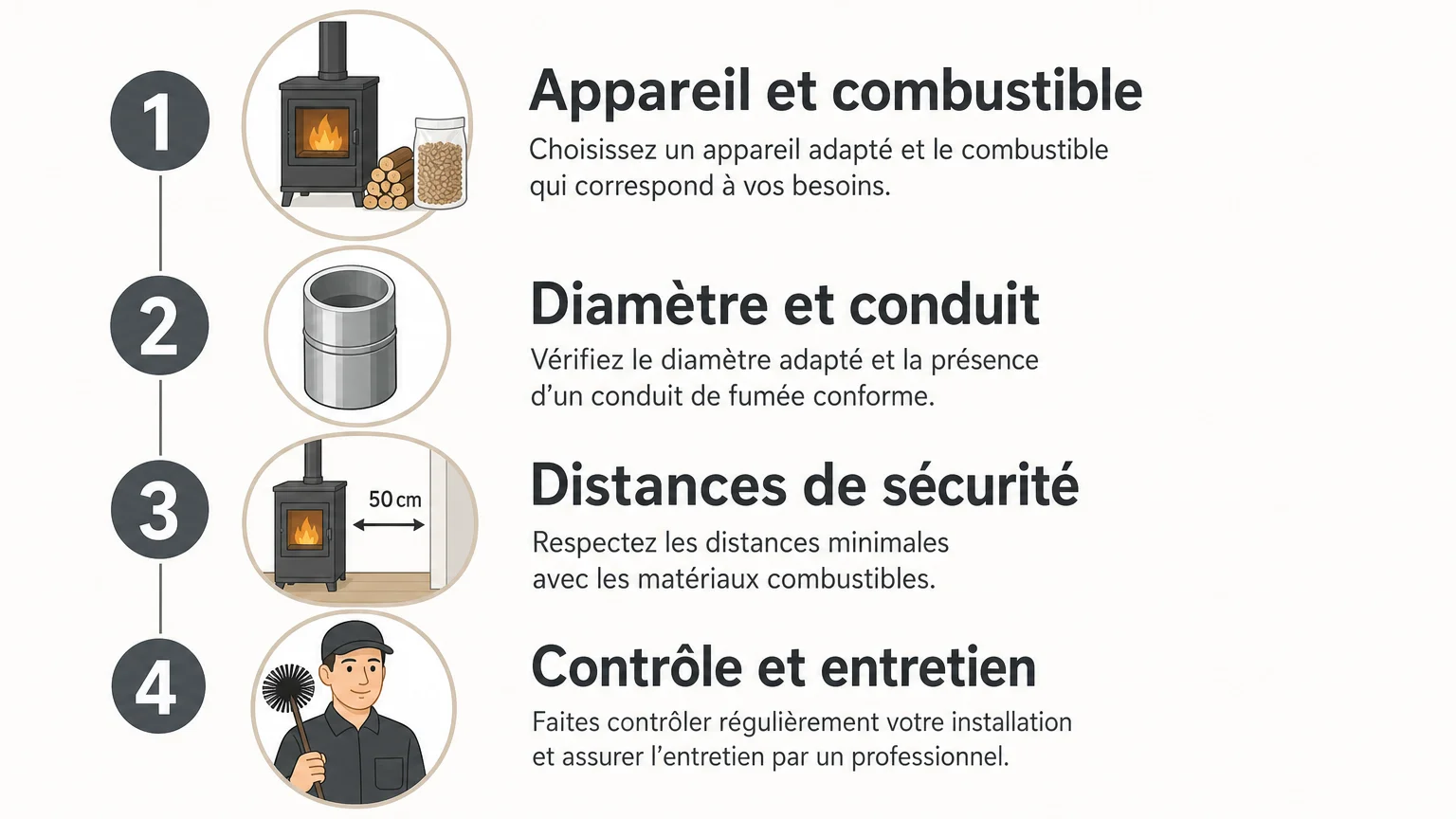
A project may be technically feasible but still require administrative procedures. Requirements vary depending on the canton, municipality, type of appliance, and scope of the work. Installing a system in a rental property also requires the consent of the property manager or owner.
A certified chimney sweep may perform inspections, cleaning, or final acceptance in accordance with local regulations. In Geneva, the official webpage dedicated to chimney sweeping specifically notes the existence of a service for sweeping and inspecting chimneys, stoves, and fireplaces.
In the canton of Neuchâtel, the regulation dated February 5, 2025, stipulates, among other things, that a chimney sweep may not inspect a flue that he or she has installed or modified. This example illustrates the importance of anticipating the roles of the various parties involved and verifying the applicable procedure in your canton.
To prepare the application, gather the following information:
- the brand and exact model number of the appliance;
- the fuel used and the rated output;
- the diameter, height, and route of the flue;
- the type of walls, floors, and ceilings the flue passes through;
- any available technical documents and declarations of performance;
- the contact information for the certified chimney sweep or the competent authority.
We can handle the design, installation, and administrative procedures associated with the project. We also assist you in assessing the condition of the home before planning the work.
Choosing Accessories Without Creating Incompatibilities
Accessories must be chosen as a coherent set. A pipe, elbow, coupling, or reducer may seem suitable on paper, but its compatibility depends on the appliance, the diameter, the direction of connection, and the entire system.
Increasing the diameter should not be used to compensate for a sizing error. While it may be necessary in certain configurations, its use must be specified in the technical design. We can consider a tapered extension for a flue when the connection and flue diameters differ, subject to approval of the entire system.
The choice of finish is also important for the visible portion. A matte black finish can blend into many interiors, but appearance must never take precedence over airtightness, safety clearances, and access for cleaning.
After commissioning, maintenance remains necessary. The frequency of chimney sweeping depends on the fuel type, output, usage, and cantonal regulations. A cleaner flue facilitates inspection and reduces risks associated with soot buildup, though it does not eliminate the need for regular monitoring.
What a Professional Must Check Before Commissioning
A final inspection must cover the entire system, not just the appliance itself. The professional examines the connection, the continuity of the flue, clearances, airtightness, access points for cleaning, and the flue gas outlet.
They must also compare the appliance’s specifications with the flue documentation. This comparison verifies the permissible temperature, corrosion resistance, pressure conditions, and applicable distances.
Before lighting the stove or fireplace, request the relevant documentation and clarify everyone’s responsibilities. The homeowner, installer, chimney sweep, and cantonal authority may be involved at different stages.
A properly designed installation facilitates future maintenance and repairs. Our after-sales service covers already installed equipment, including maintenance, repairs, and the supply of replacement parts for the relevant installations.
A safe connection depends on a comprehensive assessment
The connection of a stove or chimney must be planned with consideration for the appliance, the flue, the dwelling, and cantonal regulations. Check the diameter, draft, distances from combustible materials, airtightness, and access for cleaning before selecting accessories. In Switzerland, hiring a professional and consulting with a certified chimney sweep helps minimize errors and ensures the system is commissioned in compliance with regulations.
Plan Your Stove or Fireplace Project
Do you need to install a unit, inspect an existing flue, or have a project in an apartment? We start by assessing your home, your needs, and the technical constraints of the connection.
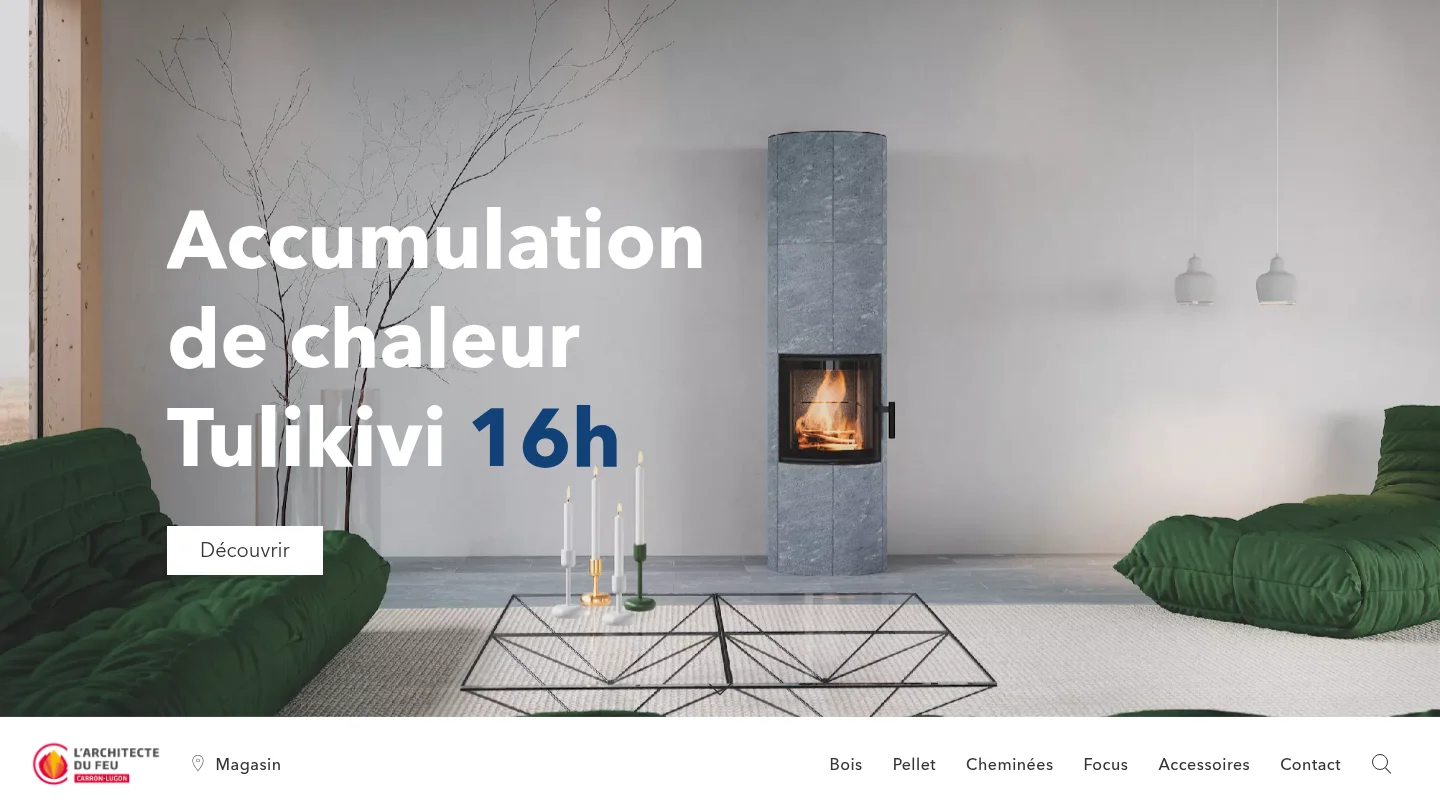
Our support includes consultation, a free feasibility study, installation, and the associated administrative procedures. We also provide post-installation follow-up for the relevant equipment. Browse our accessories for connecting a stove or fireplace and consult with our team to find the right solution for your home.
Frequently Asked Questions
Can a stove be connected in an apartment?
Yes, but feasibility depends largely on the presence of a code-compliant flue, building regulations, and the necessary permits. A preliminary assessment allows us to verify the technical requirements before proceeding.
How do I choose the diameter of the connection flue?
The diameter must match the appliance manufacturer’s specifications and the flue’s characteristics. It should not be determined solely based on the size of the stove’s visible outlet.
Is a flue liner required for an existing chimney?
No, it depends on the condition, geometry, and compatibility of the existing flue with the new appliance. However, it may become necessary if the flue is cracked, porous, too large, or unsuitable for the fuel.
Who is responsible for inspecting the connection of a stove or fireplace?
Regulations vary by canton and type of installation. The certified chimney sweep or the relevant authority can specify the inspections, documentation, and procedures required before the appliance is put into service.
What does Carron-Lugon offer for this type of project?
We offer personalized advice, a free feasibility study, installation, and assistance with the associated procedures. Our after-sales service also includes maintenance, repairs, and the supply of replacement parts for the relevant equipment.