

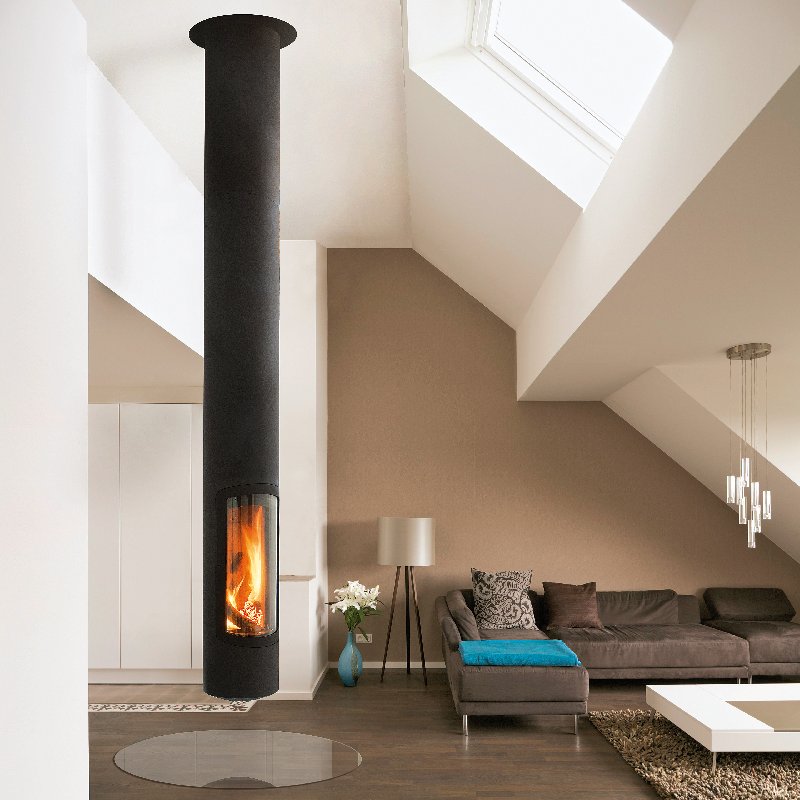
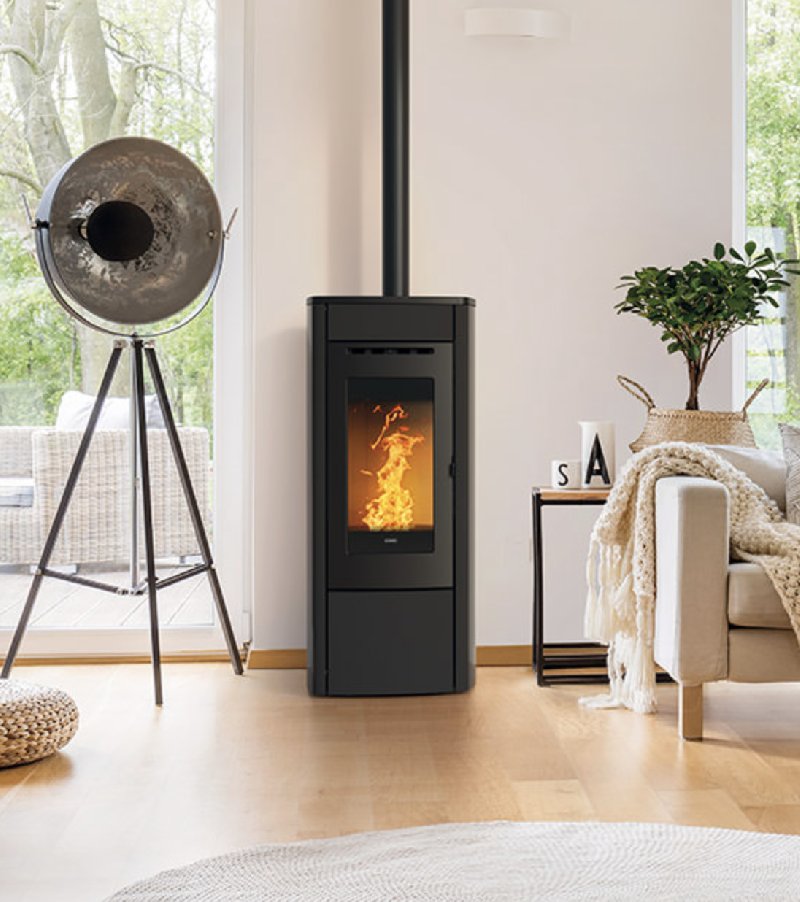
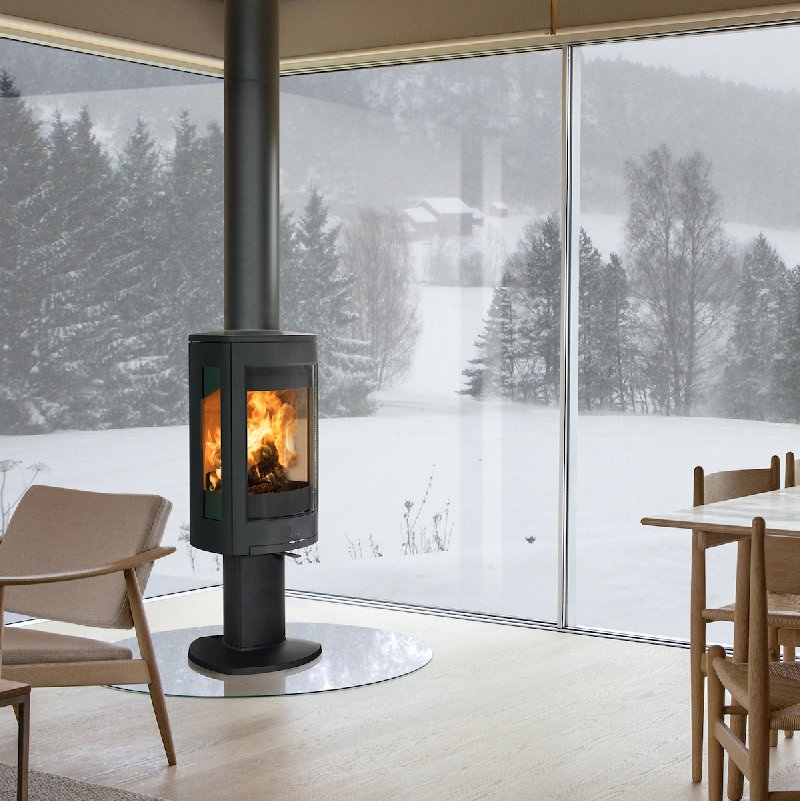
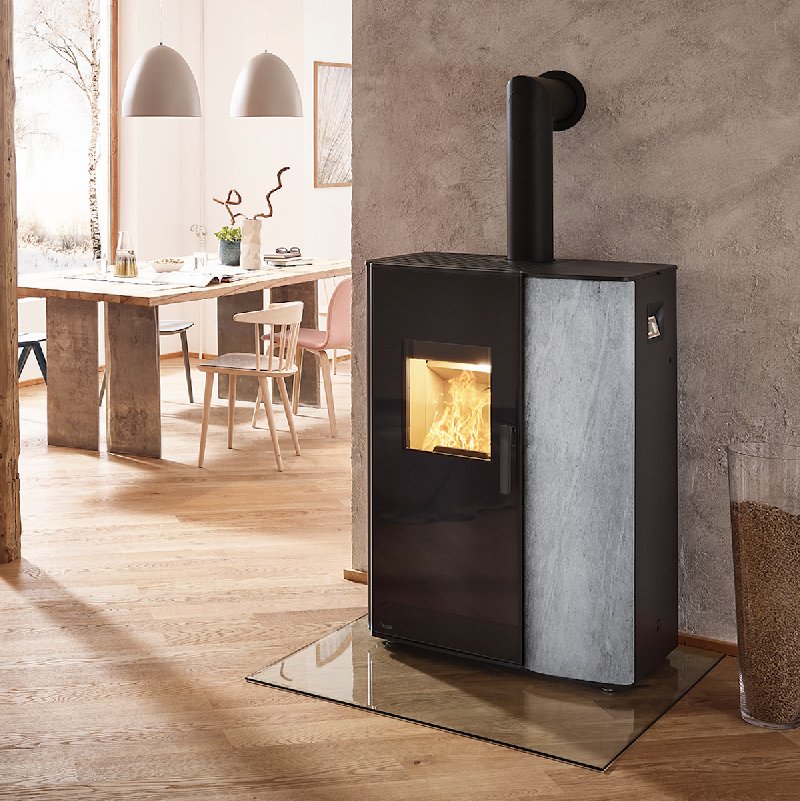
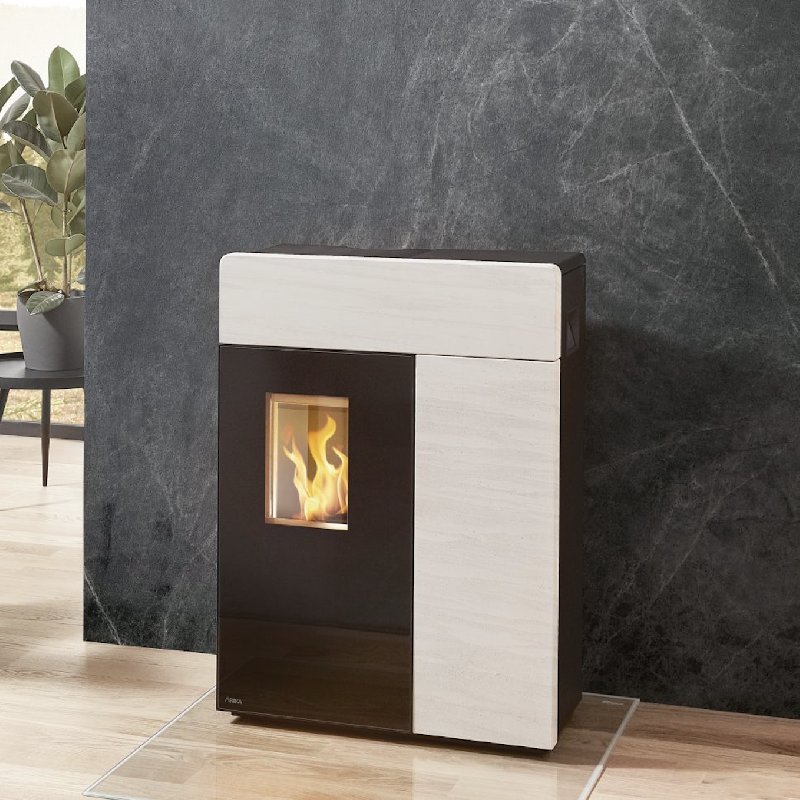
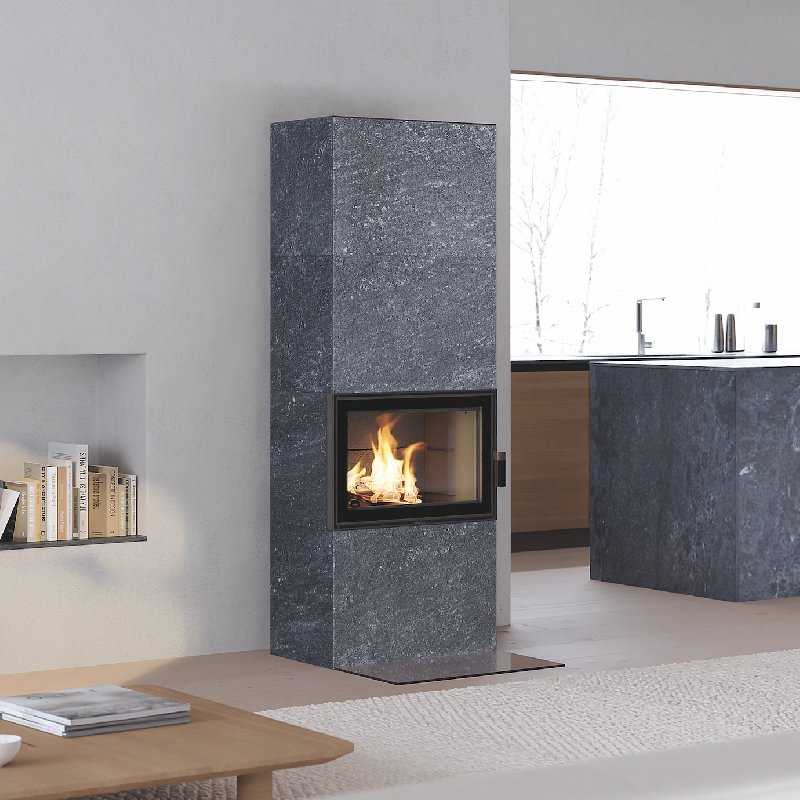
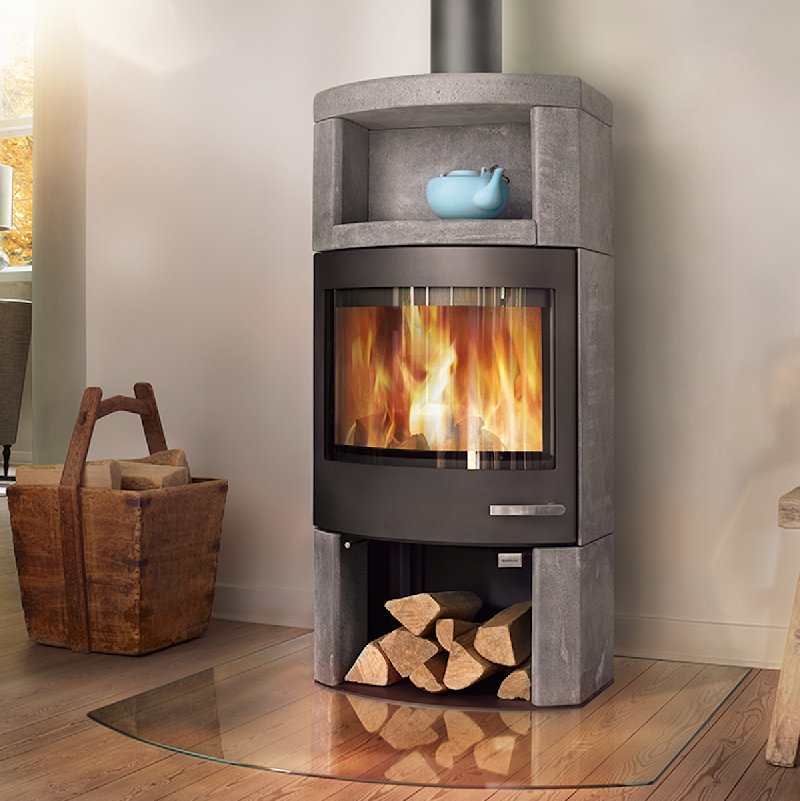
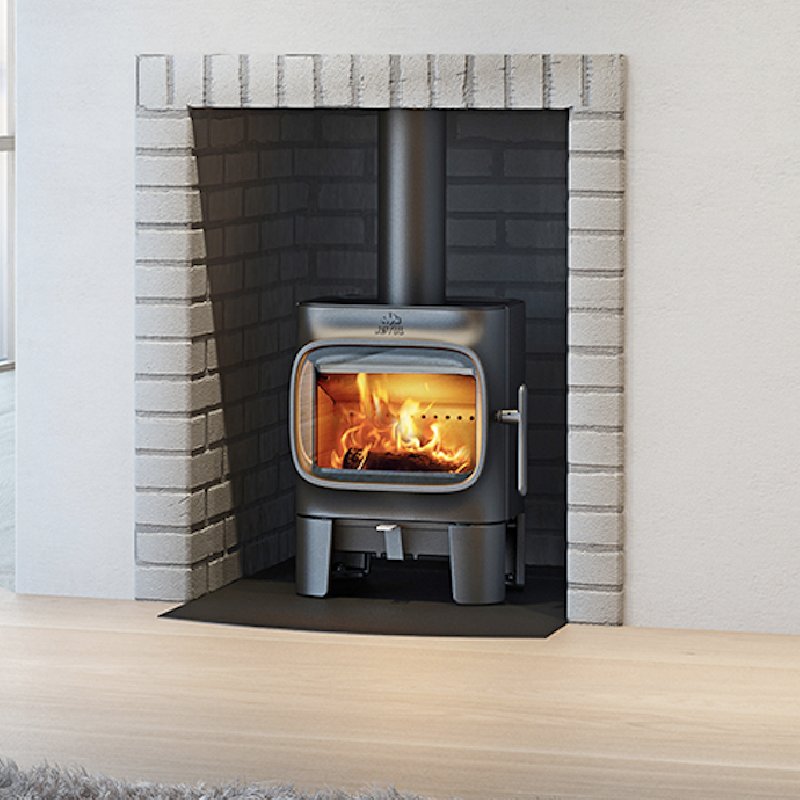

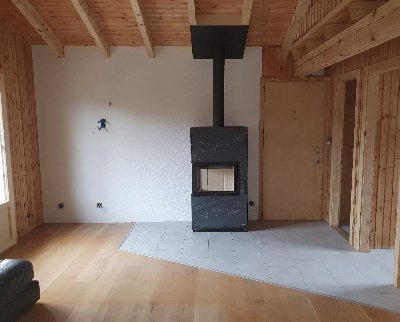
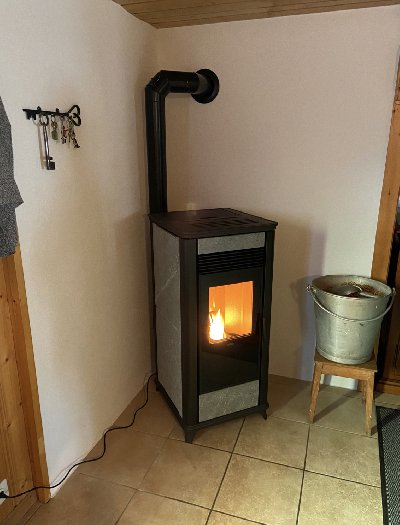
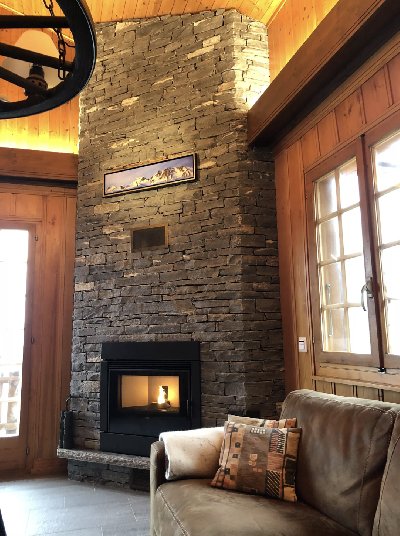
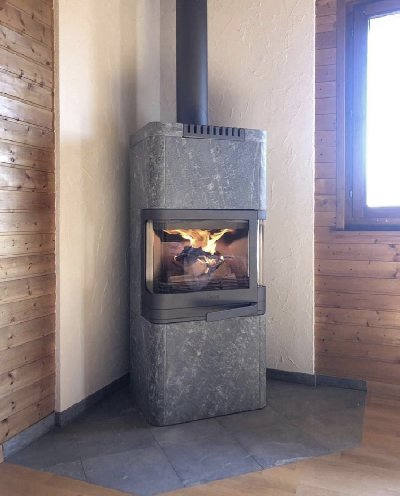
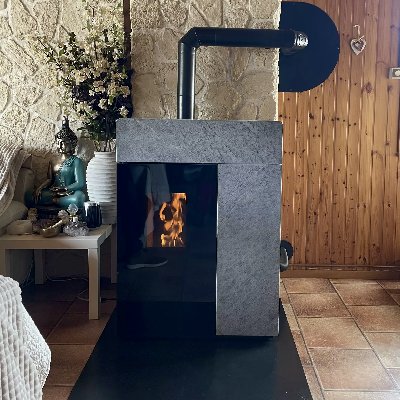
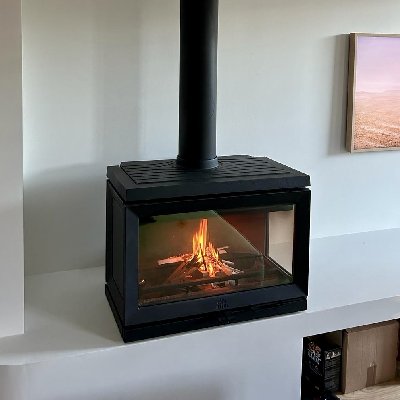
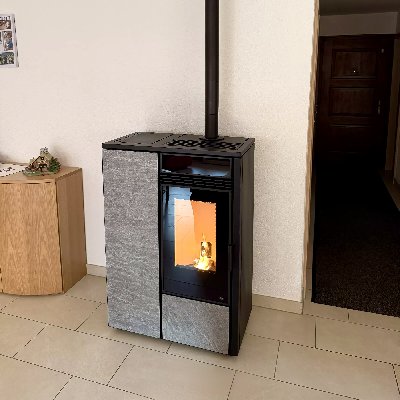
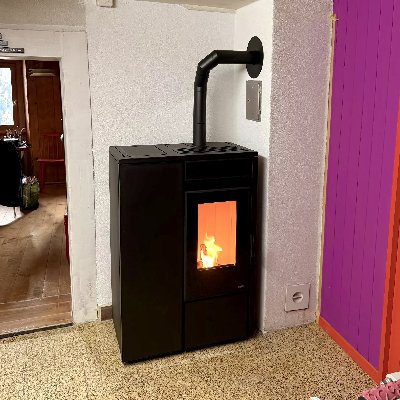

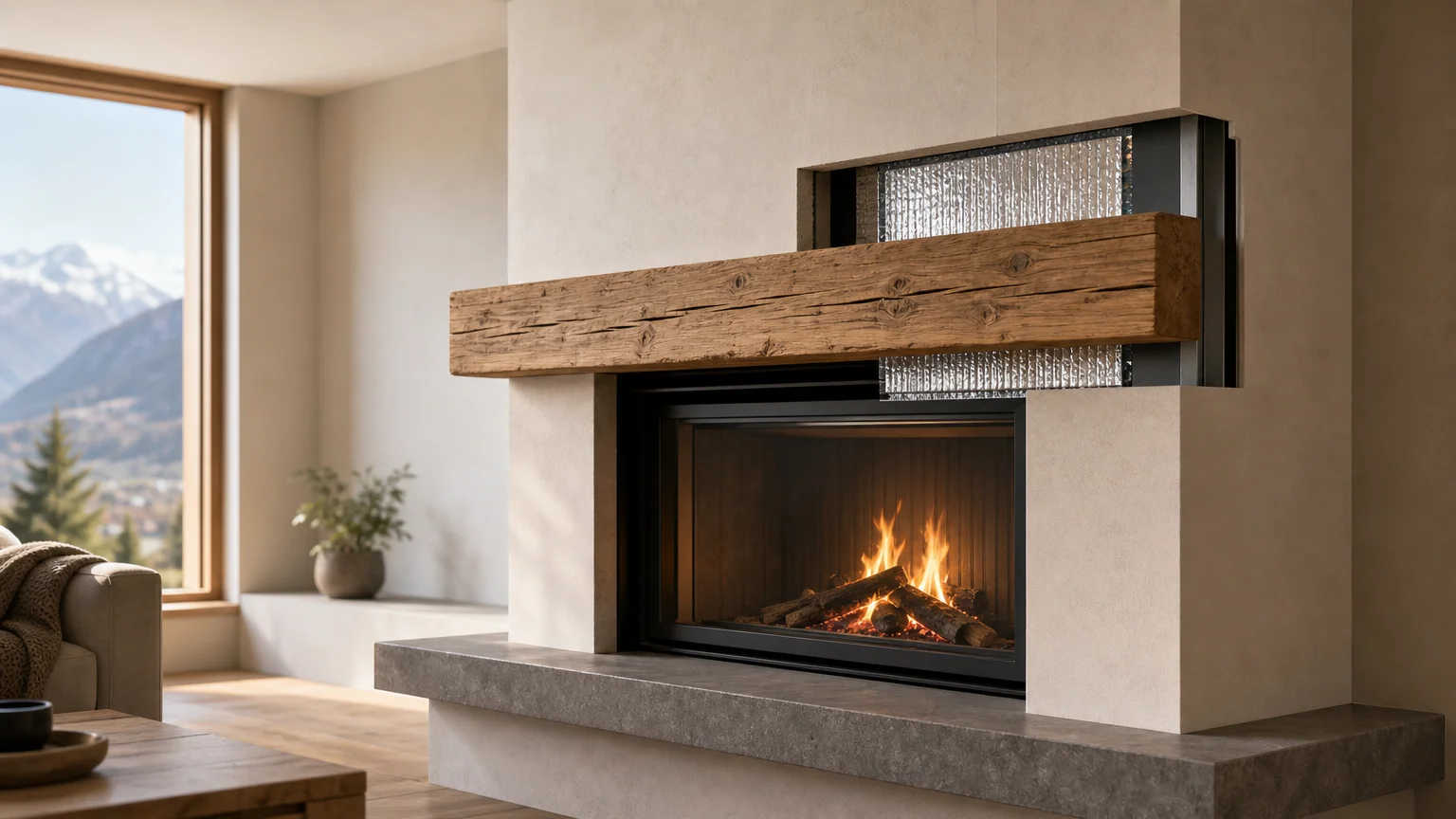
Can a wooden beam above a fireplace remain decorative without posing a fire hazard? Yes, but only if its composition, protection, and surroundings comply with safety requirements. To avoid a misguided renovation, we recommend having the entire installation inspected, not just the beam. You can also explore our custom fireplaces when a complete replacement becomes the better option.
In 2026, the standards for fireplace beams in Valais must be interpreted in conjunction with your appliance’s technical documentation, the flue configuration, and applicable local regulations. An older chimney may have been installed according to different regulations. It may therefore be flagged as non-compliant during an inspection, even if it has been in use for several years.
What do the standards for fireplace mantels in Valais cover?
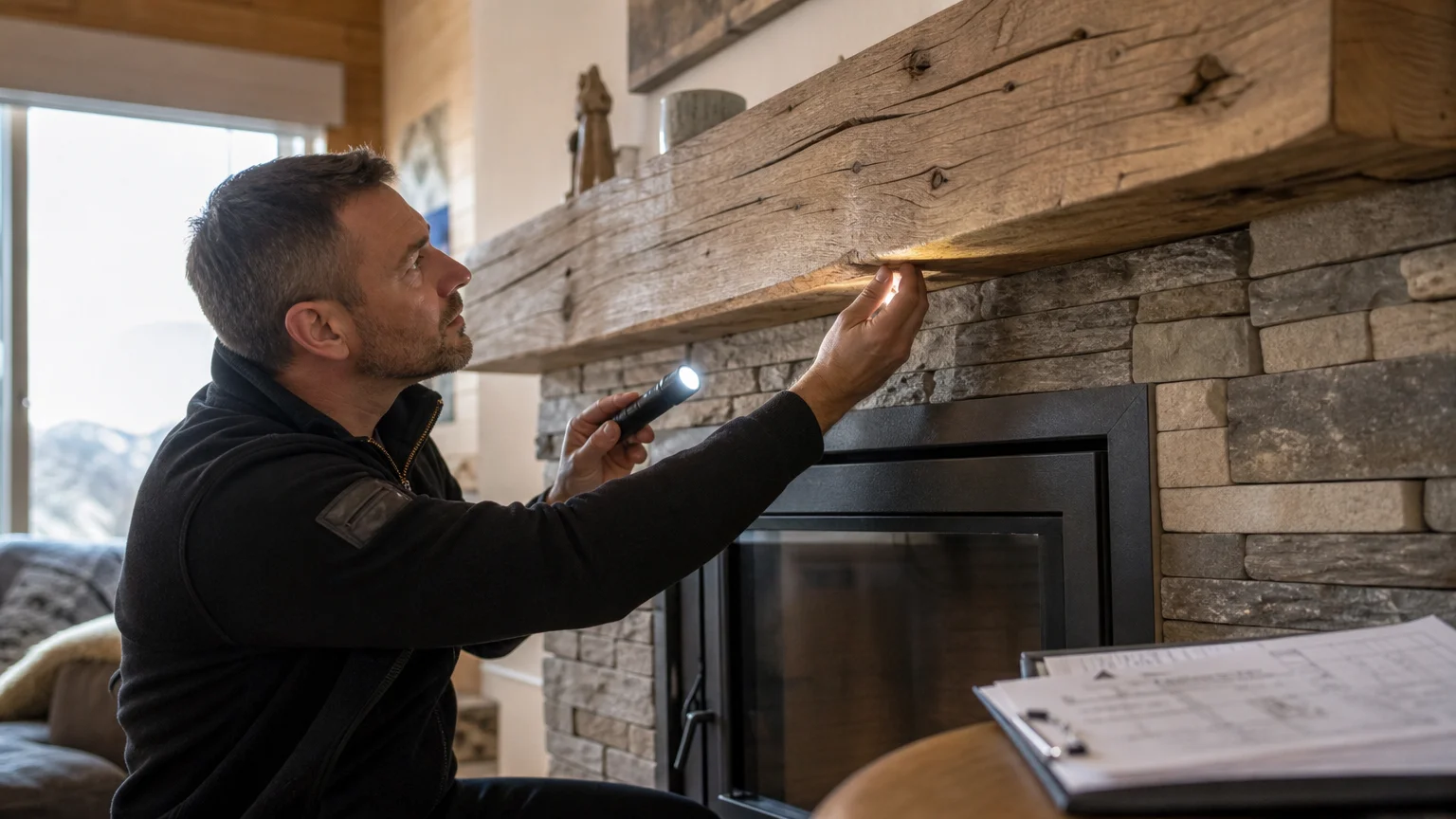
There is no single rule that would allow a mantel to be deemed compliant based solely on the type of wood used. The inspection covers the mantel, the fireplace surround, the hearth, adjacent walls, the flue, the air intake, and protective components.
Compliance also depends on the type of appliance and its output. An open hearth, a closed insert, a wood-burning fireplace, or a pellet stove do not produce the same temperatures or airflow. The required distances and protective measures must therefore correspond to the actual installed configuration.
In the canton of Valais, the chimney sweep or authorized professional may report a non-compliance if fire safety cannot be sufficiently demonstrated. The owner must then have the problem assessed before continuing to use the fireplace. A simple fire-retardant paint or surface treatment is generally not sufficient to address an insufficient clearance.
What type of wood can be used for a decorative beam?
Technical documents generally classify materials based on their reaction to fire. The categories RF1, RF2, and RF3 indicate their potential contribution to the spread of a fire. However, they do not replace an analysis of the entire assembly.
RF1 refers to materials that do not contribute, or contribute very little, to a fire. Concrete, steel, and certain mineral products fall into this category. RF1 protection can be used around a beam to limit heat transfer.
RF2 refers to materials that make a low contribution to a fire. Certain hardwood species are often classified in this category. In Valais installations, an RF2-type decorative wooden beam may be considered if it is installed with the required protective measures and clearances.
The RF3 classification corresponds to an acceptable, though greater, contribution to fire. Several hardwoods and softwoods may fall into this category depending on their specific classification. You should therefore not assume that a beam is compliant simply because it is made of oak, beech, or another well-known species.
The exact classification must be confirmed by the material’s documentation or by a qualified professional. The beam’s cross-section, moisture content, distance from the fireplace, and the presence of rear protection can also affect the practical assessment.
What protective measures should be taken around the beam?
The primary purpose of protecting a decorative beam is to prevent excessive heat buildup. The protection must cover exposed areas, be durable over time, and be installed without compromising the insulation.
In many renovation projects, the assessment focuses on the presence of fire protection behind and beneath the beam. A heat-resistant panel may be installed when the technical solution allows it. Its thickness, fire resistance rating, and installation method must be adapted to the specific system.
Special attention must be paid to fastening. Screws, drill holes, or poorly filled gaps can create weak points in the protection. The professional must verify the continuity of the insulation and ensure that no combustible materials are directly exposed.
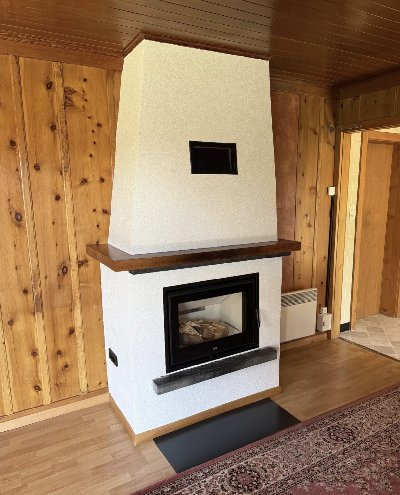
Inspections also cover the chimney surround. It must have sufficient fire resistance and must not contain any cables, insulation, or unplanned combustible materials. The ventilation of the surround and the convection grilles must also function properly.
If you’d like to preserve the warm, natural look of wood, we can explore renovation options or guide you toward a new design tailored to your interior. Our approach begins with assessing technical feasibility before considering aesthetic choices.
What other elements should be checked along with the beam?
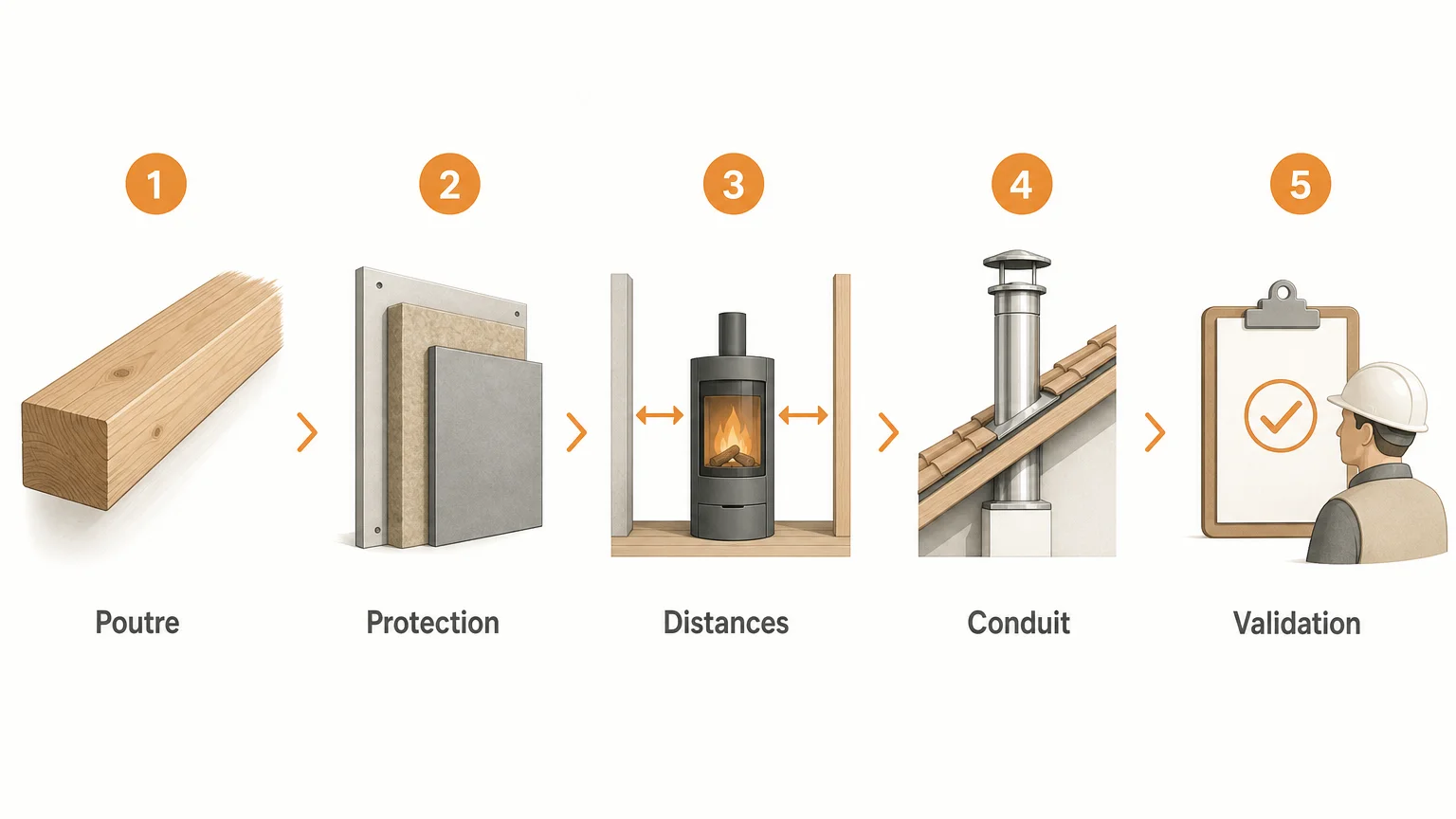
A non-compliant beam is often just a symptom. To avoid fixing a single element while another defect remains, request a comprehensive inspection of the entire installation.
- The fireplace: Check its type, heat output, condition, and compatibility with surrounding materials.
- The mantel: Check its thickness, fire resistance, and ensure there are no combustible components inside.
- Safety distances: Measure the distance between the heating elements, the beam, the ceiling, the walls, the hardwood floor, and the furniture.
- The flue: Check for leaks, its thermal rating, its connection, and its compatibility with the appliance.
- Air intake: Ensure the appliance receives sufficient combustion air, especially in an airtight home.
- Ventilation: Check the convection grilles and pressure-relief devices, if required.
- Documentation: Gather technical data sheets, plans, photos, certificates, and inspection reports.
This method prevents you from replacing a flue section prematurely when the real problem lies with the duct or the flue lining. It also allows you to identify multiple defects during a single inspection.
What to do after receiving a non-compliance report?
First, stop using the fireplace if the report indicates a ban or a hazard. Do not dismantle the firebox before photographing the installation and gathering information about the appliance, the flue, and any previous renovations.
Next, request a comprehensive inspection. The professional must identify the cause of the non-compliance, explain the necessary work, and specify which components will need to be checked after the work is completed.
There are generally three possible solutions. The first is to keep the fireplace and replace or protect the hearth. The second involves a more extensive renovation of the mantel, flue, or ventilation system. The third is to replace the old fireplace with a newer model, which can sometimes be connected to the existing flue after modifications.
The least expensive solution is not always the most appropriate. If the fireplace is old, if the flue is deteriorated, or if the required clearances cannot be met, a complete renovation may offer a more reliable result that is easier to maintain.
We can assist you in planning a fireplace or stove project when bringing your system up to code provides an opportunity to overhaul your entire installation. The choice takes into account your home, the available space, your budget, and your preferred fuel.
Do the rules vary depending on the home and the project?
In a single-family home, building or renovating a fireplace already requires an inspection of the supporting structure, the flue, and adjacent materials. In an apartment, feasibility can be more complex, as the flue often runs through multiple floors and may involve common areas.
Installation in a condominium may require approval from the property management or the homeowners’ association. Modifications to the roof, the exterior wall, or a shared flue may also require additional steps with the relevant local authority.
For older homes, the original plans are sometimes incomplete. Professionals must therefore inspect the existing structure, the materials of the rear wall, the condition of the flue, and the stability of the mantel. This step is particularly important when the fireplace has been modified several times.
Masonry chimneys can also pose challenges regarding anchoring and stability. In a 2023 publication, the FOEN notes that certain non-structural elements, including masonry chimneys, can sustain damage during an earthquake and require appropriate anchoring.
What steps should be taken before putting the chimney back into service?
Do not consider the retrofit complete simply because the new beam has been installed. The completion of the project must include an inspection of the installation, verification of the flue, and submission of the necessary documents to the chimney sweep or the relevant authority.
In Switzerland, the required procedures may vary depending on the canton, the municipality, the type of appliance, and the scope of the work. A new installation or a modification affecting fire safety may require notification or authorization. You should therefore verify the applicable procedure before work begins.
Keep the following documents on file:
- the initial non-compliance report;
- pre-construction plans and photographs;
- the technical data sheets for the protective materials;
- the appliance and ductwork documentation;
- invoices and service reports;
- the final inspection certificate or report.
Regular maintenance remains essential after renovation. Chimney sweeping, cleaning, and draft checks help minimize soot buildup and detect issues early. They also help document that the system is properly maintained for your insurance provider.
Compliance Depends on the Entire Chimney
A decorative beam in Valais cannot be assessed separately from the fireplace, the mantel, the flue, and the surrounding materials. The classification of the wood, thermal protection, clearances, and ventilation must all be verified together. If you receive a non-compliance report in 2026, have a comprehensive assessment conducted before deciding between protective measures, partial replacement, or a complete renovation. This will ensure your system is safe while preserving—where possible—the warm, inviting aesthetic of your fireplace.
Take action with Carron-Lugon
A beam flagged as non-compliant may indicate a broader need, such as renovating the mantel, modifying the flue, or replacing the firebox. To avoid making decisions in isolation, we assess your specific setup and help you compare solutions tailored to your home, your space, and your budget.

Our support includes consultation, a feasibility study, project-related procedures, installation, and post-installation follow-up. If you’re considering a new installation or a complete renovation, explore our fireplaces and consult with our team to define a solution that meets the specific requirements of your home.
Frequently Asked Questions
Is an oak beam automatically compliant?
No. The type of wood alone is not sufficient to ensure compliance. You must also verify its classification, safety measures, clearances, the mantel, and the flue.
What does an RF2 decorative beam mean?
The RF2 classification indicates a low fire contribution according to the fire reaction classification. However, it must be installed and protected in a manner compatible with the specific fireplace.
Do I have to replace the entire chimney if the beam is non-compliant?
Not necessarily. Depending on the assessment, you can sometimes replace the beam, add appropriate protection, or renovate the mantel. Complete replacement becomes necessary when several components are old or incompatible.
Can a fireplace in an apartment be brought up to code?
Yes, under certain conditions. In particular, you must check the flue, common areas, the necessary permits, and whether safety distances can be maintained.
Who can confirm compliance after the work is completed?
Validation depends on the nature of the work and the relevant authorities or professionals in your municipality. We can assist you with project planning, installation, and the necessary follow-up after the work is completed.