

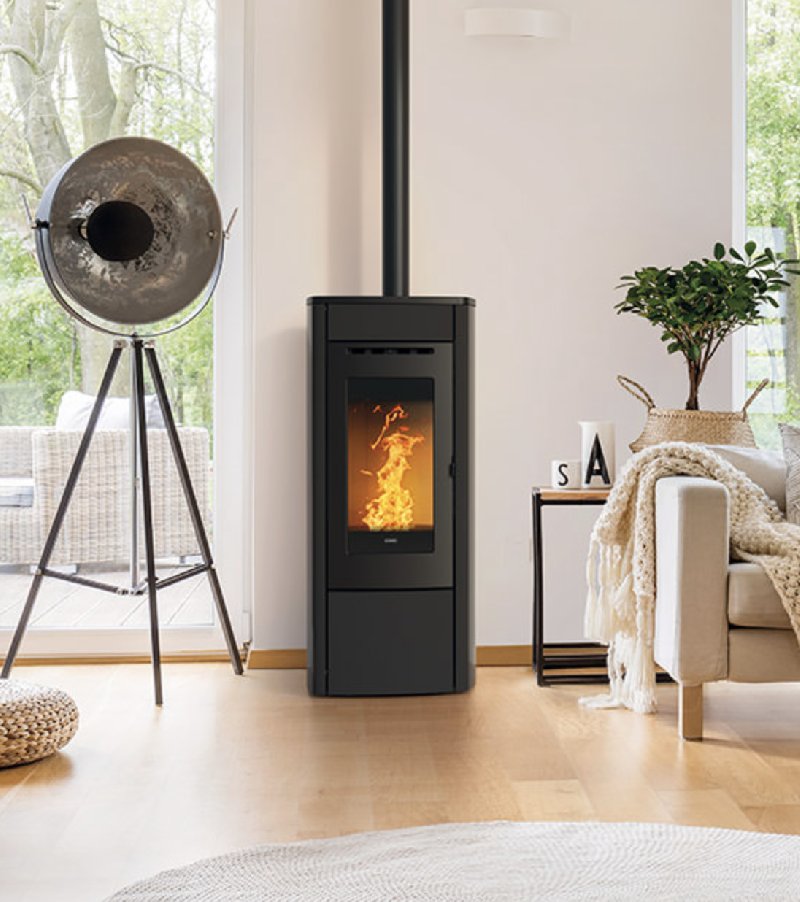
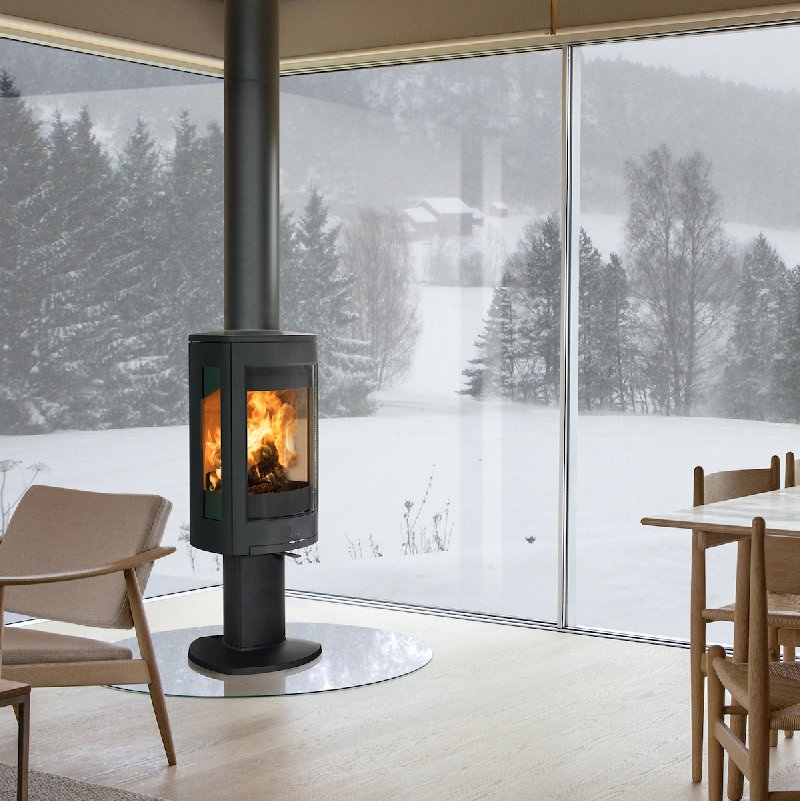
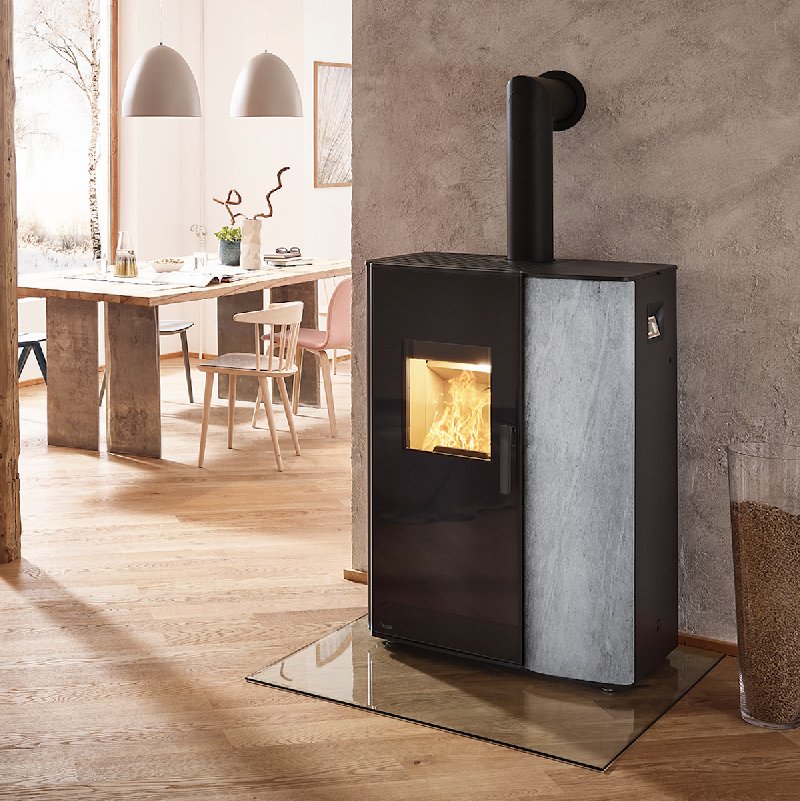
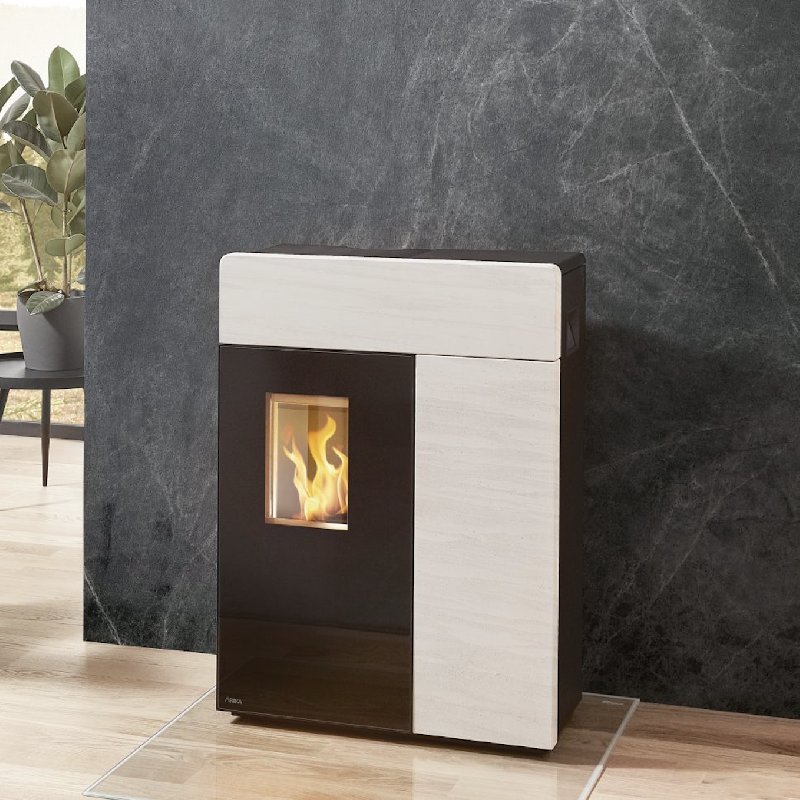
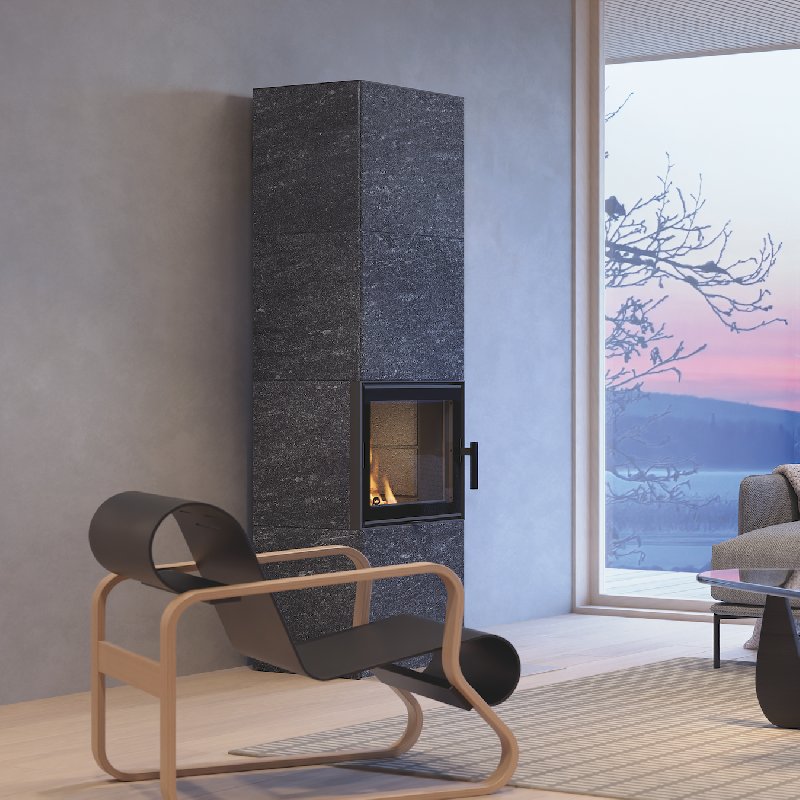

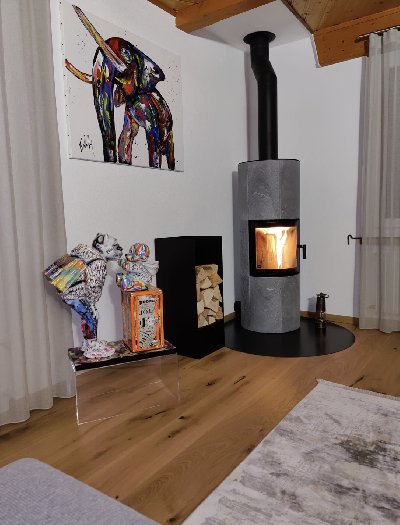
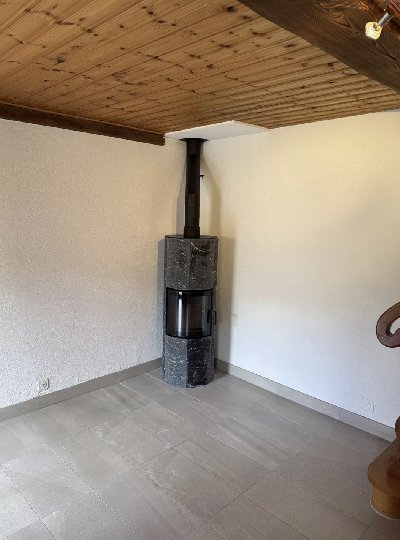
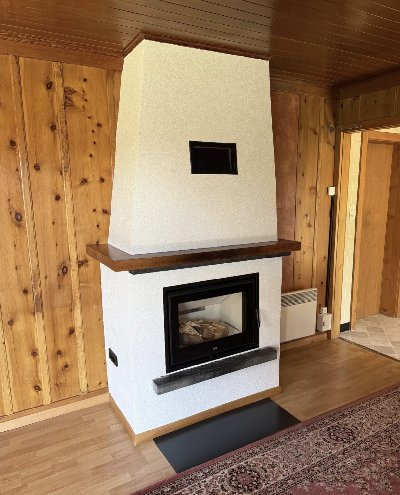
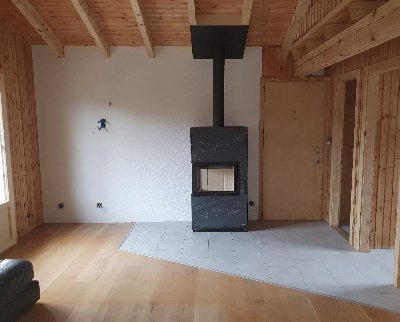
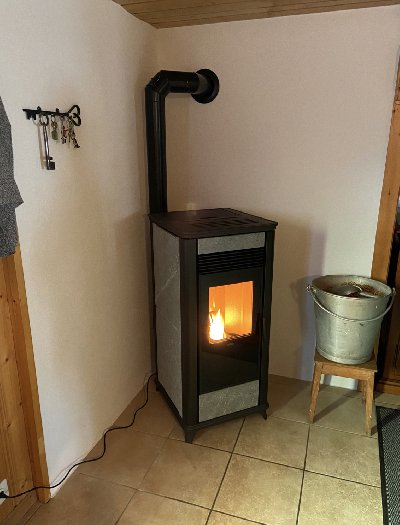
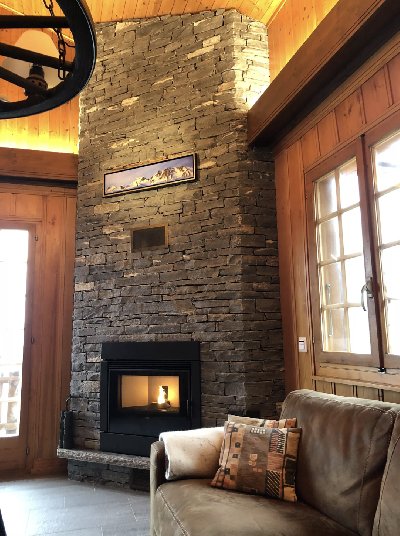
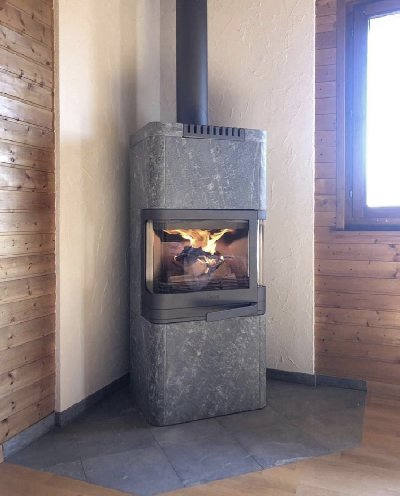
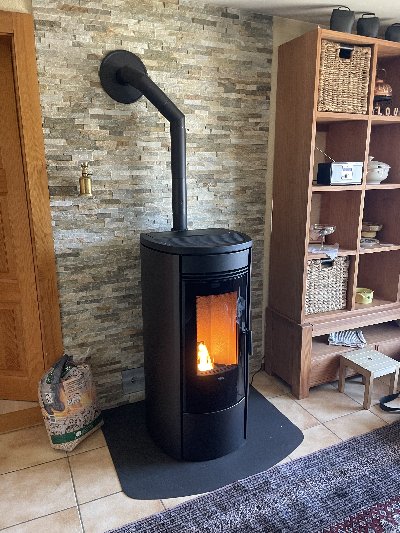
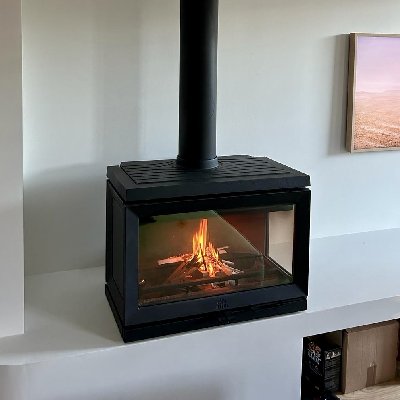
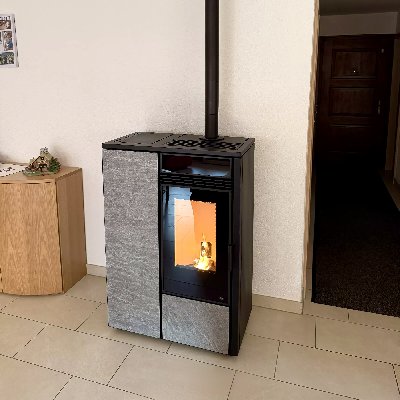
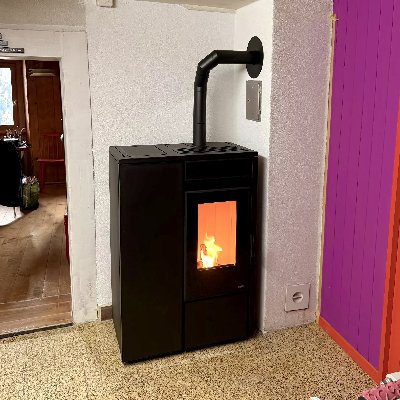

Nearly 1.5 million pellet stoves are already installed in homes, and the trend shows no signs of slowing down. This figure speaks volumes about the appeal of a heating system that is automatic, economical, and renewable. Before you get started, the first step is to understand the appliance and carefully plan your project—something our teams detail in the technical specifications for the RIKA CONNECT PELLET 22.
The principle behind a pellet stove is simple: small cylinders of compressed wood continuously feed a firebox controlled by smart electronics. In French-speaking Switzerland, where winters demand reliable heating, this solution appeals to homeowners seeking the comfort of a fire without the hassles of burning firewood. In 2026, the market is confirming its recovery after several challenging years. According to Proxi-TotalEnergies, this heating method is gaining ground, particularly in single-family homes.
How Does a Pellet Stove Work?
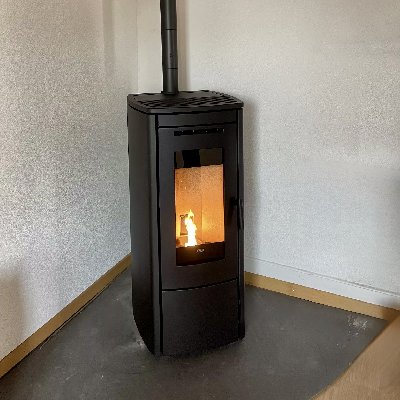
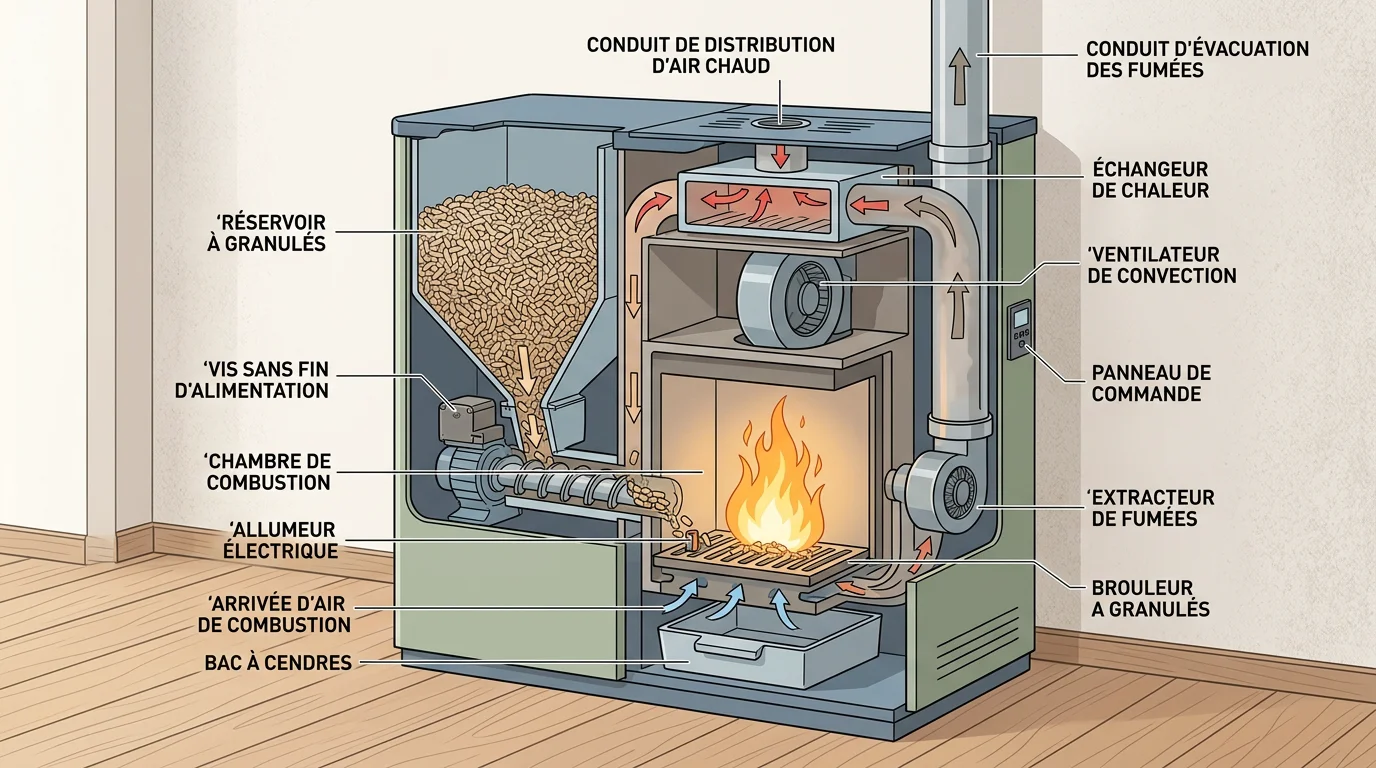
The heart of the system is a screw conveyor. It transports the pellets from a hopper to the combustion chamber at a rate controlled by the appliance. A pilot igniter ignites the air-pellet mixture, and the combustion then sustains itself.
A flue gas extractor vents the fumes into the chimney, while a fan (or natural convection) distributes the heat. The entire system operates without manual intervention: you set a target temperature, and the electronics adjust the output and fuel supply. It is this automation that distinguishes the unit from a traditional wood-burning stove.
Three heat distribution technologies are available depending on your needs:
- Ventilated stoves: a blower quickly circulates hot air throughout the room.
- Natural convection: quieter, the air circulates without a fan but heats a smaller area.
- Ducted stoves: An additional fan channels heat to an adjacent room.
Efficiency and Performance: What to Expect
Pellet stoves are among the most efficient wood-burning heating systems. Their efficiency typically ranges from 85% to 90%, thanks to optimized combustion controlled by sensors that regulate air and fuel in real time.
This efficiency translates to tangible savings on your bill. According to market data, pellets will cost around 7.5 to 8 cents per kWh in 2025—a price often lower than that of electricity and, in many cases, natural gas. Since the fuel is renewable, the carbon footprint also remains very low compared to fossil fuel heating.
Be careful, however: an oversized unit sees its efficiency drop when operating at low capacity. It’s therefore best to precisely calibrate the output based on the room to be heated, as we’ll explain in more detail below.
Proper Sizing and Selecting the Power Output
The output of a pellet stove is measured in kW and typically ranges from 6 to 14 kW. A key point to remember: the stove primarily heats the room in which it is located. It should therefore be sized for the living room and any open spaces connected to it, never for an entire house with closed-off bedrooms.
A common rule of thumb is to calculate approximately 40 W per m³ for a well-insulated home in a temperate climate. For an 80 m² living room with a 2.5 m ceiling height (200 m³), a heating capacity of about 8 kW is generally sufficient. This estimate is only a guideline: only a technical inspection can determine the exact requirement.
The choice also depends on the hopper capacity, noise level, and smart controls. Recent models can be controlled via touchscreen or smartphone. To compare specific features, see, for example, our technical data sheet for the RIKA EDGE PELLET 26, which details output, runtime, and control functions.
Installation and Standards: A Step You Can’t Afford to Overlook
A successful installation is essential for both the safety and efficiency of the unit. Two elements are critical: a sufficient air supply for combustion and proper flue gas venting. Depending on the configuration, installation may be done using an existing flue or may require the creation of a suitable vent.
Sealed models allow for a vented flue, which is less restrictive, while a traditional installation vents the flue gases above the roof ridge. Adhering to safety distances, protecting combustible flooring, and ensuring proper air intake require genuine expertise. This is precisely where our support makes a difference: our installation teams handle the removal of the old system, the new installation, and the finishing touches (tiling, plastering, painting), all while protecting your home and cleaning up after the job is done.
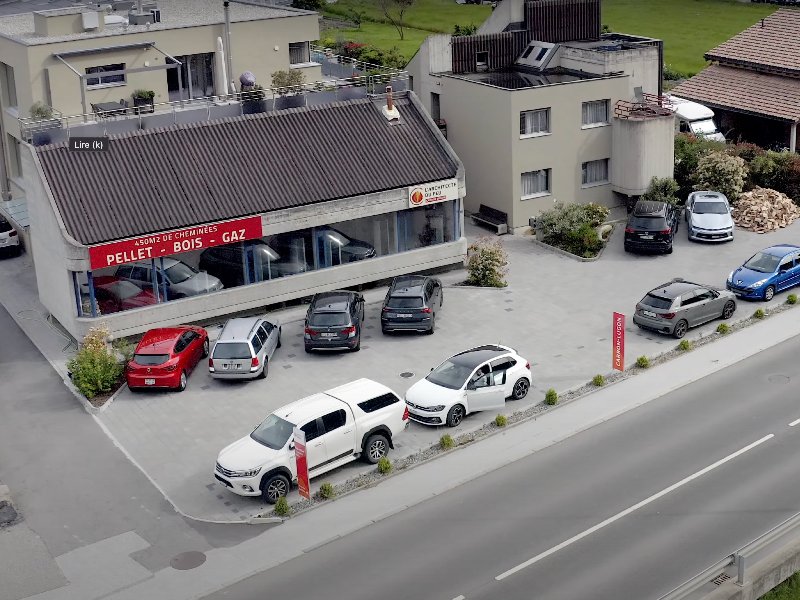
When it comes to commissioning and adjustment, each unit has its own specific requirements. Our user manual for the RIKA CONNECT PELLET 22 clearly illustrates the logic behind configuring a modern stove. From our showrooms in Fully (Valais) and Etoy (Vaud), we also coordinate the installation project with architects and other trades.

Price and Budget for a Pellet Stove
The budget consists of two parts: the unit itself and installation. For the unit alone, you can generally expect to pay between 1,500 and 6,500 francs, depending on the output, design, airtightness, and smart features. Installation costs vary depending on the complexity of the project and the type of exhaust system.
Fuel accounts for the operating cost. Prices per metric ton on the French market were around 350 to 390 € in 2025, with a trend toward stabilization following the price volatility from 2021 to 2023. This lull gives households greater predictability regarding their heating budget.
When choosing your purchasing channel, the level of service varies significantly. The table below summarizes the main options.
| Channel | Personalized advice | Installation | After-sales service |
|---|---|---|---|
| Our Carron-Lugon showrooms (Fully and Etoy) | Free consultation and needs assessment | In-house installation teams | In-house after-sales service for pellet, wood, and gas appliances |
| Large home improvement store | Limited; quotes often require a fee | Outsourced | Sometimes provided by a third party |
| Online shopping | Virtually nonexistent | At your own expense | Varies by site |
Our consultation is free and non-binding: we’ll assess your needs based on blueprints or on-site to help you find the best solution.
The Pellet Stove Market in 2026
After a turbulent period, the industry is regaining its footing. In 2023, sales of pellet stoves had plummeted by 73%, a historic shock linked to soaring pellet prices and economic uncertainty.
The recovery is now clear. According to Propellet, sales of pellet stoves rose by 35% in the first half of 2025 compared to the same period in 2024, a sign of renewed consumer confidence. Pellet consumption, estimated at approximately 2.4 million metric tons in France in 2025, confirms the enduring popularity of this energy source.
This surge in popularity is part of a broader trend toward wood heating. According to a comparison published in 2026, wood remains the leading renewable energy source for households, with nearly 1.5 million pellet stoves in use. Recent innovations have focused primarily on reducing emissions and ensuring long-term reliability.
Maintenance: Maintaining Efficiency Over Time
A pellet stove requires less attention than a wood-burning stove, but it is not maintenance-free. Regular cleaning of the firebox—which takes just a few minutes with the stove turned off—prevents residue from clogging the air intakes. The glass should be cleaned as needed, and the ash pan should be emptied about every two weeks.
Annual maintenance by a qualified technician is essential to ensure performance and safety. The flue must also be swept once a year. These steps maintain efficiency and extend the appliance’s lifespan. If you have any issues with a pellet, wood, or gas appliance, our in-house customer service team is here to help.
Conclusion: a cost-effective choice, provided you have the right support
The pellet stove combines automation, high efficiency, and competitive operating costs—around 7.5 to 8 centimes per kWh in 2025. With nearly 1.5 million units installed and a market set to rebound significantly in 2026, this solution stands out as a safe bet for heating a living space in French-speaking Switzerland. The key to a successful project lies in precise sizing and installation that complies with standards. That’s exactly what we do: from a free site visit to a clean job site, including coordination with other trades, we handle every step to guarantee you a durable and safe result. To help you make an informed decision, review our performance declaration for the RIKA EDGE PELLET 26 and plan your project with complete peace of mind.
Frequently Asked Questions
Can a pellet stove heat an entire house?
No, it is designed primarily to heat the room where it is located and the adjoining open spaces. A ducted model can distribute heat to an adjacent room, but closed-off rooms require supplemental heating.
How long does the hopper last?
A standard hopper holding about 20 kg requires daily refilling in the middle of winter. The largest models hold up to 50 kg, providing up to three days of operation. Our advisors in Fully and Etoy can help you choose the capacity that best fits your lifestyle.
Does installation require an existing flue?
Not necessarily. If a compliant flue is already in place, the connection is simplified. Otherwise, a suitable exhaust system—either conventional or vented for sealed models—must be installed in accordance with safety standards.