

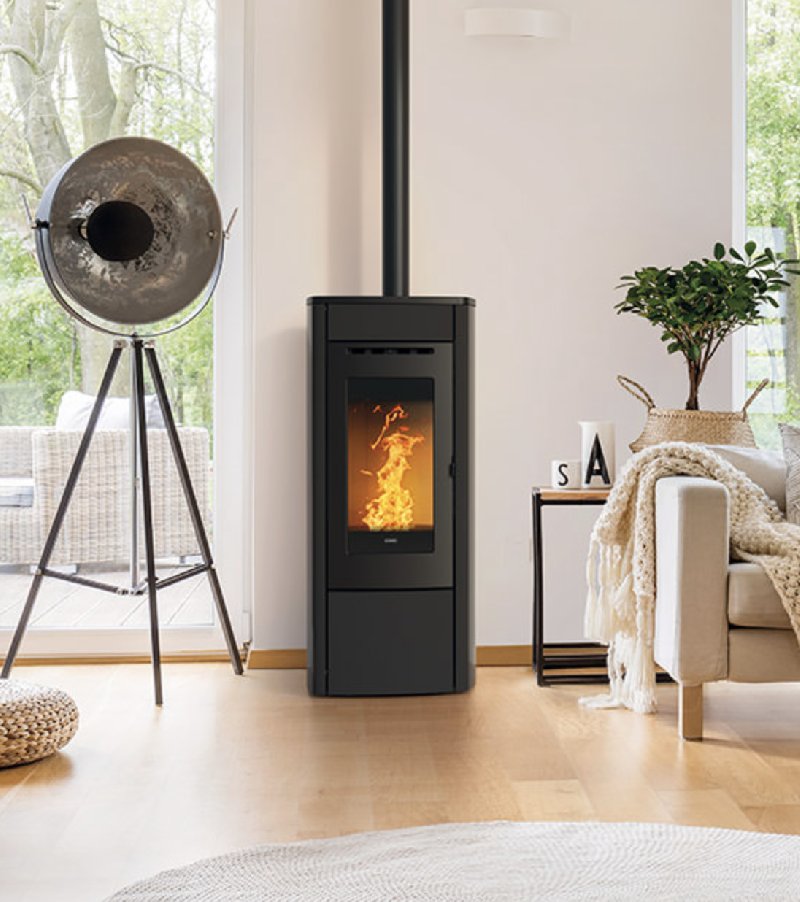
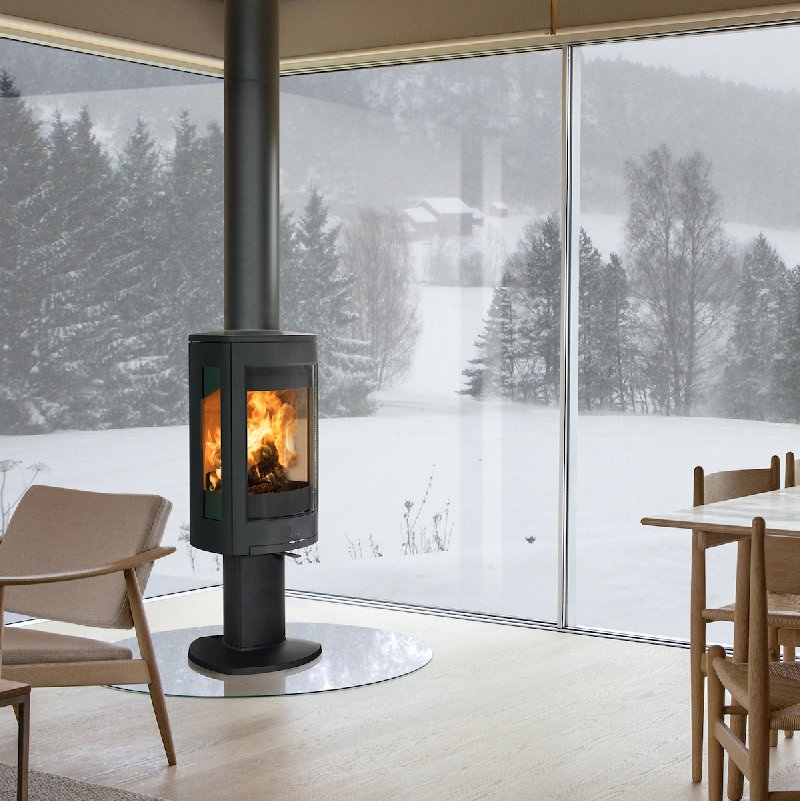
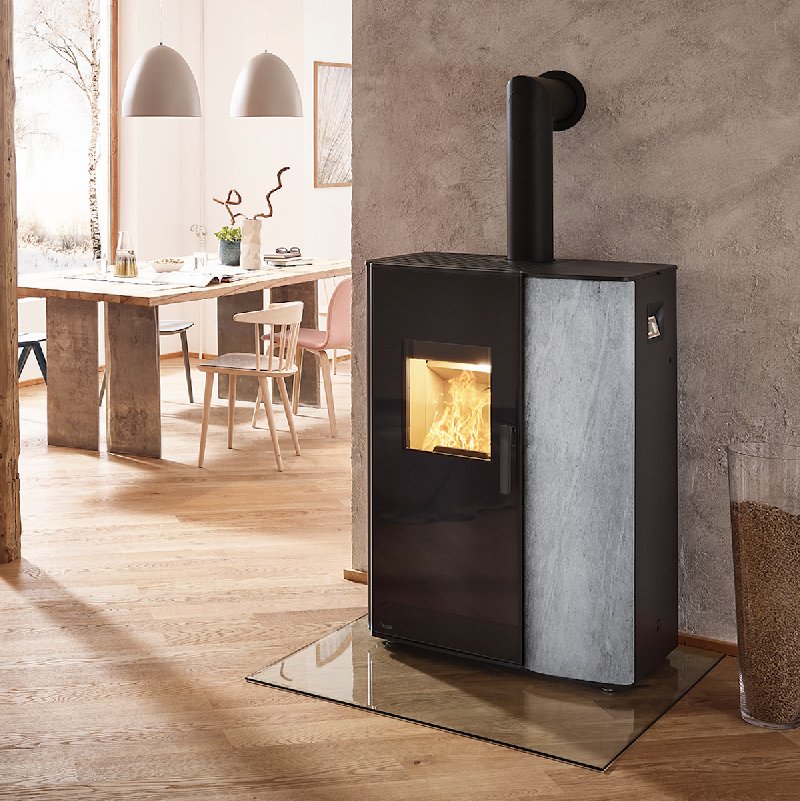
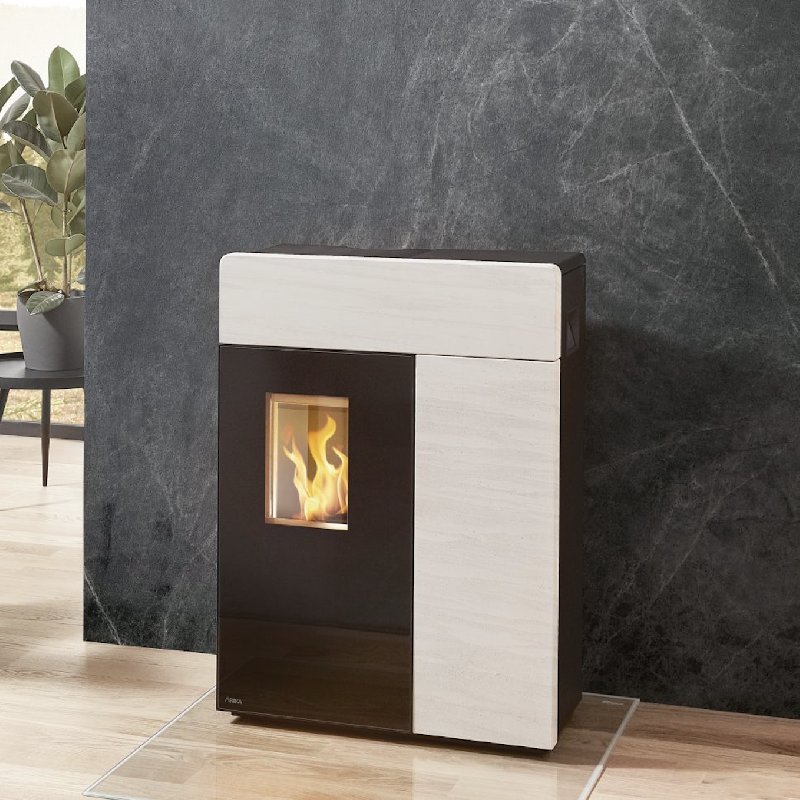
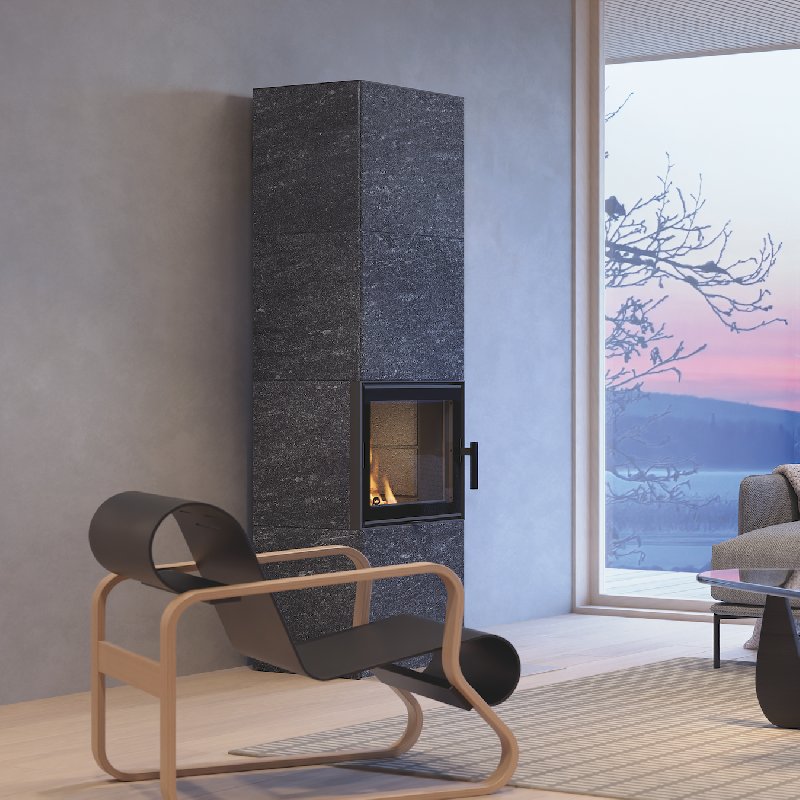
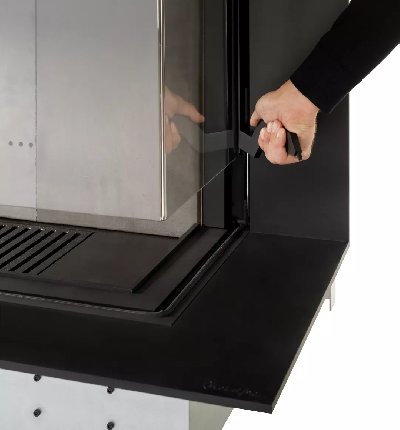
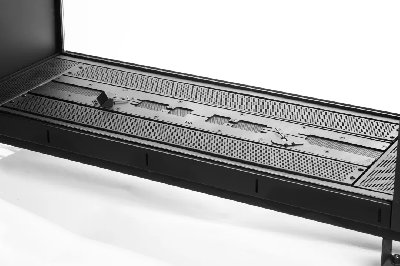
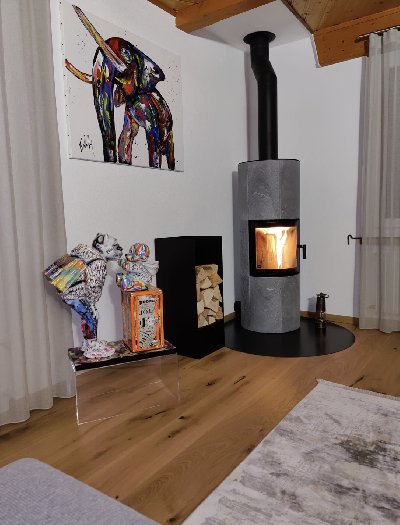
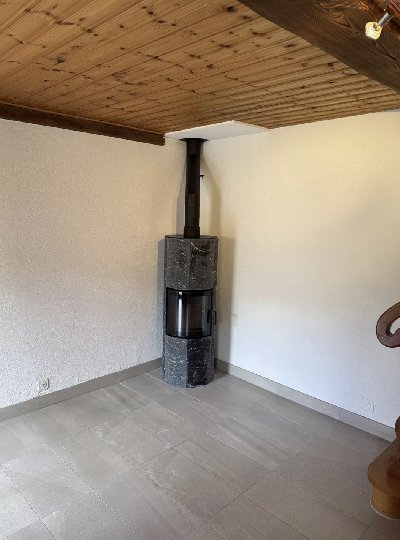
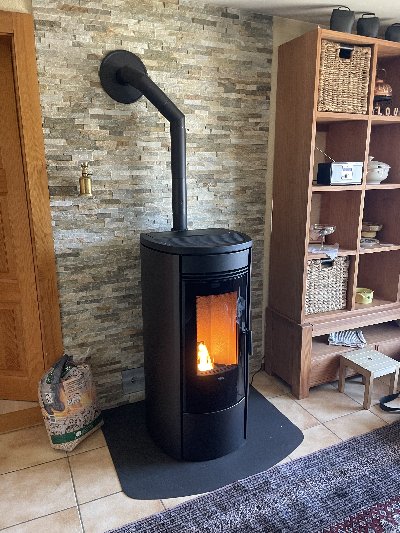
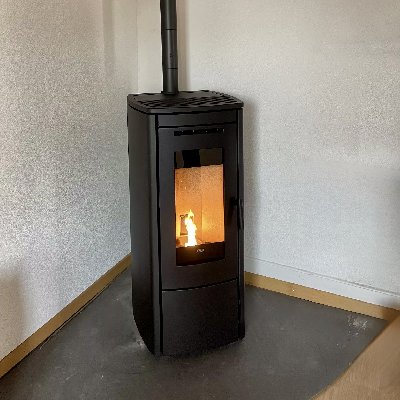
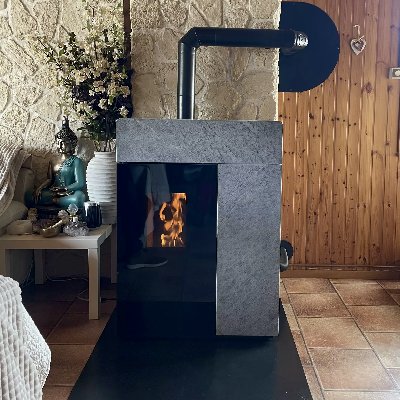
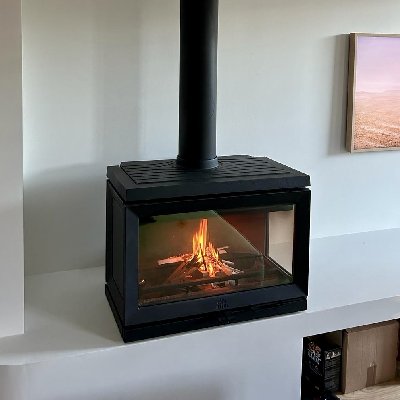
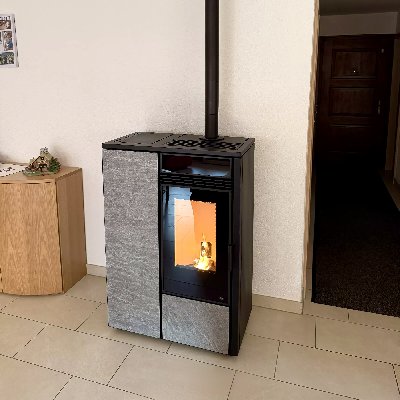
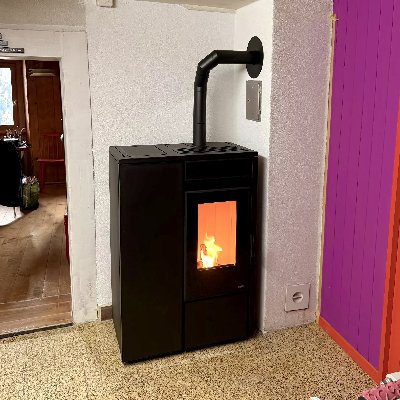

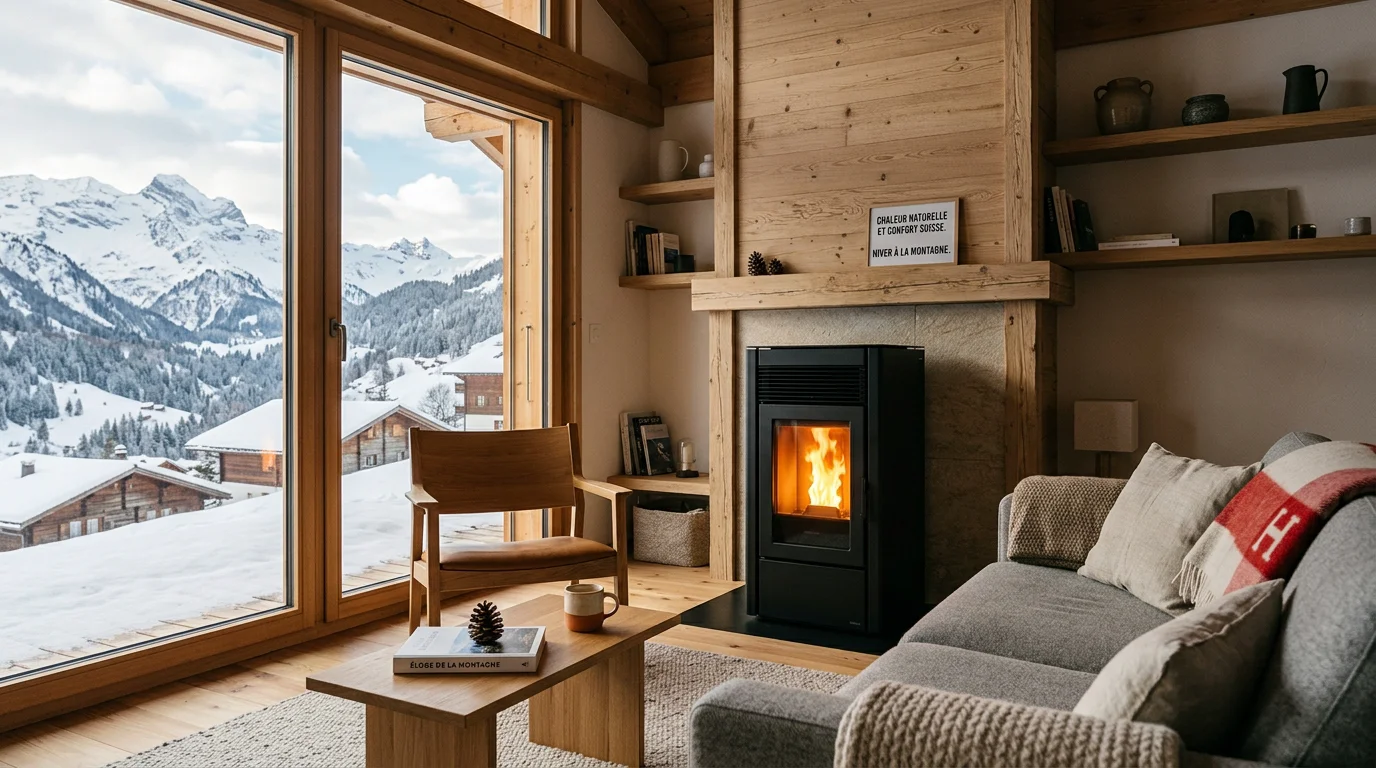
A heating appliance capable of operating independently, maintaining a constant temperature, and being controlled via a smartphone: that’s what a modern pellet stove offers. To understand exactly how to start it, program it, and maintain it, the user manual for the RIKA CONNECT PELLET 22 pellet stove details each step of daily use.
In Switzerland, heating accounts for a major portion of household energy consumption, prompting many homeowners to reconsider their heating systems. In this context, the pellet stove stands out as a credible alternative to fossil fuels. According to proPellets.ch, the price of pellets has remained stable at between 7 and 9 centimes per kWh over the past ten years, whereas the price of heating oil has fluctuated between 6 and 13 centimes. This stability is a game-changer for anyone looking to keep their heating budget under control.
How does a pellet stove work?
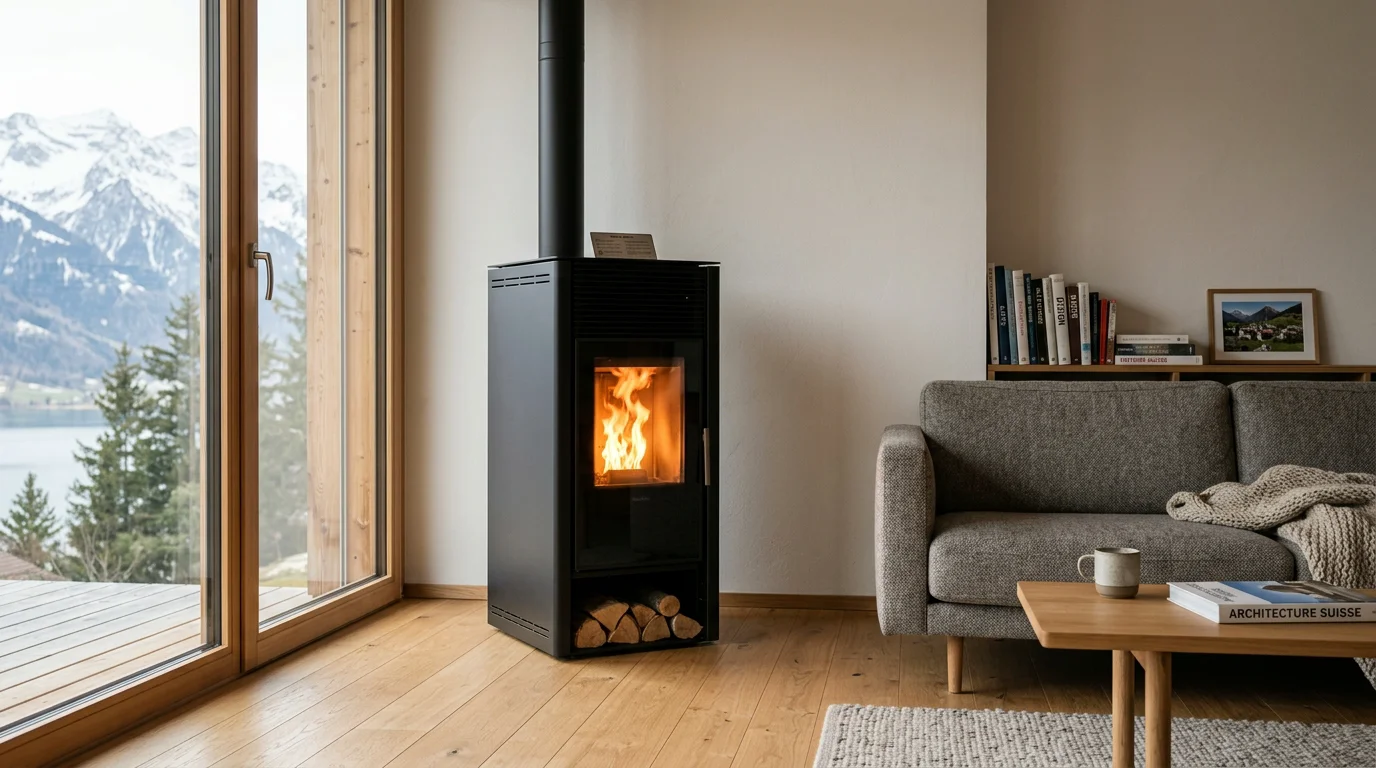
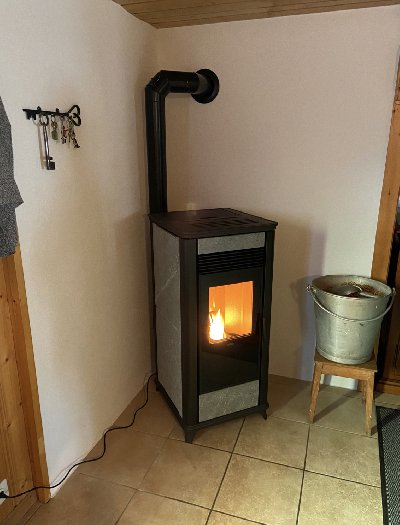
The principle is simple. Wood pellets, stored in a built-in hopper, are continuously fed into the combustion chamber by an auger. Ignition, fuel feeding, and air regulation are fully automatic. Once programmed, you don’t have to touch a thing.
This automation is what makes it so convenient to use. A hopper can hold several dozen kilograms of pellets, which means you don’t have to refill it as often. Some models even feature a self-cleaning system for the firebox, reducing maintenance to a weekly or monthly check, depending on usage.
Modern controls enhance this benefit. Whether it’s a touchscreen, a mobile app, scheduling by time slots, or regulation based on room temperature, you stay in control—even remotely. This is particularly useful for preheating a second home before your arrival.
What are the benefits of a pellet stove?
The primary benefit is environmental. Pellets are made from wood waste and sawdust, a renewable and locally available raw material. Combustion releases no more CO2 than the tree absorbed during its growth, making the carbon footprint virtually neutral.
The figures confirm this difference compared to fossil fuels. According to an industry analysis, CO2 emissions from pellets range from 26 to 33 g/kWh, compared to 480 g/kWh for heating oil and 222 g/kWh for natural gas. The environmental benefit is therefore considerable.
Efficiency is the second key benefit. A pellet stove makes better use of the fuel than a wood-burning stove and emits fewer fine particles, as noted by ADEME. High-performance models commonly achieve an efficiency of 90% or more. To view these technical specifications for a specific model, consult the technical data sheet for the RIKA EDGE PELLET 26 pellet stove.
Finally, energy independence is a major draw. By choosing a fuel produced primarily in Switzerland, you reduce your exposure to the geopolitical fluctuations that affect oil and gas.
How much does a pellet stove and its pellets cost?
Let’s talk budget. The purchase price of a pellet stove varies depending on its output and finish. ADEME estimates the average price of a stove at between 2,000 and 6,500 euros, including delivery but excluding installation. The initial investment is higher than for an electric radiator, but it pays for itself over time.
The price of fuel deserves special attention, as it has experienced significant volatility. The Fédération romande des consommateurs notes that in October 2021, 6,000 kilos cost an average of 2,077 francs, before climbing to nearly 4,000 francs in 2022—an increase of more than 90%. This surge was linked to explosive demand and a cold winter.
Since then, the market has stabilized. Pellet prices have leveled off thanks to increased local production capacity and improved logistics. This lull provides greater predictability for households considering this heating method.
A practical tip: buy your pellets in the summer. Prices are traditionally at their lowest during the off-season, so it’s worth filling up your storage area before winter.
Pellet Stove or Another Heating System?
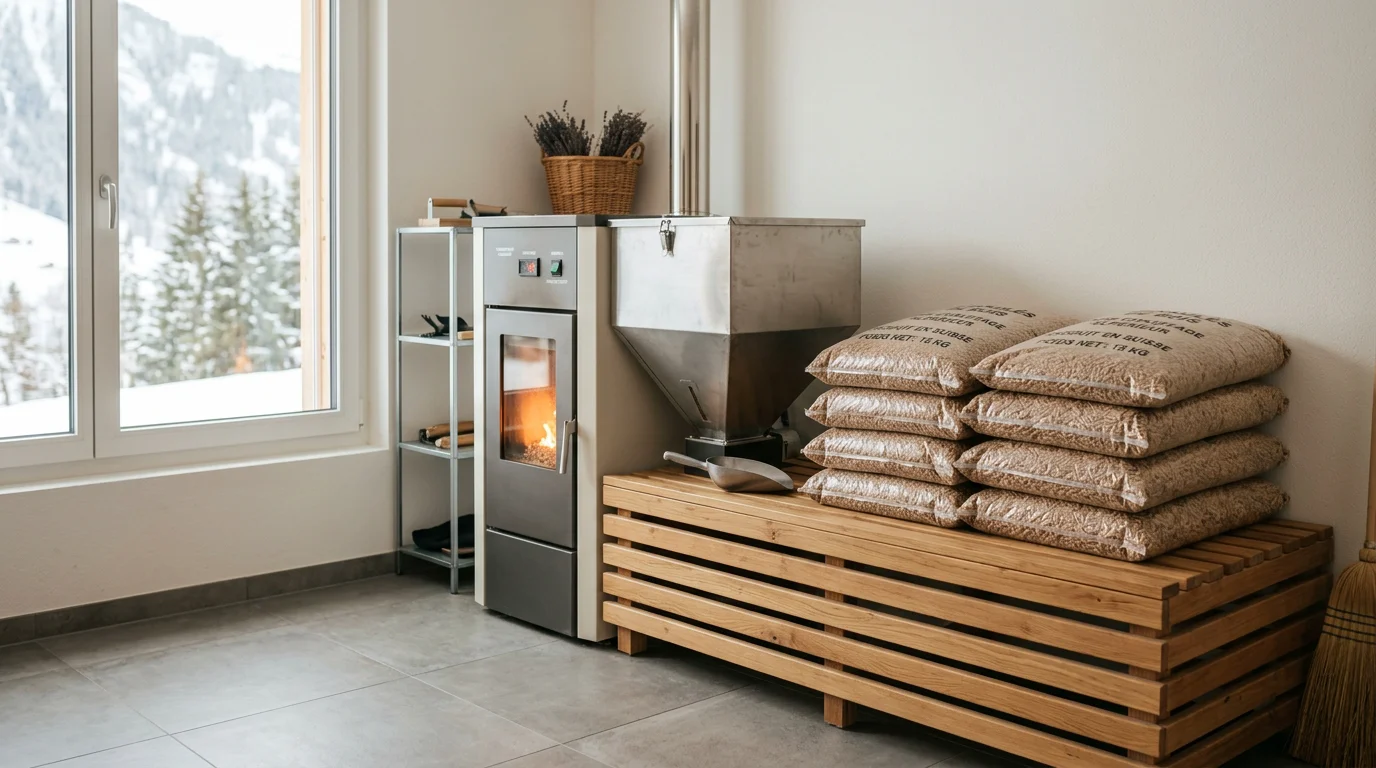
Each solution has its strengths. A wood-burning storage stove provides gentle, long-lasting heat but takes a long time to heat up. A wood-burning convection stove heats up quickly but retains heat for a shorter period. A pellet stove, on the other hand, combines automation with high efficiency.
Here’s a brief comparison of the main options to help you decide.
| Criterion | Pellet Stove | Log-burning stove | Oil-Fired Heating |
|---|---|---|---|
| Efficiency | Greater than 90% | 70–85% | Variable |
| Automation | Full | Manual | Full |
| CO2 Footprint | 26 to 33 g/kWh | Low | 480 g/kWh |
| Local fuel | Yes (Switzerland) | Yes | No (imported) |
| Carron-Lugon Support | Consulting, installation, after-sales service | Consulting, installation, after-sales service | Not applicable |
One thing to keep in mind: most pellet stoves require electricity to operate, which makes them vulnerable to power outages. In contrast, a wood-burning stove remains self-sufficient. This factor may be important depending on your location in French-speaking Switzerland.
To decide between these options, nothing beats personalized advice. We offer a free, no-obligation assessment of your needs—based on your floor plans or during an on-site visit—to help you choose the solution best suited to your home.
Choosing and Installing the Right Pellet Stove
The choice depends first and foremost on the heating capacity. The heating output of a pellet stove generally ranges from 2.5 to 10 kW depending on the model, which can heat everything from a small room to a large space. Oversizing the unit leads to excessive fuel consumption, while undersizing it leaves areas that remain cold.
The quality of the pellets is just as important. Look for recognized certifications such as ENplus A1 or DINplus, which guarantee low moisture and ash content. Certified fuel causes less buildup inside the unit and maintains its efficiency over time.
Finally, installation is not something to be done haphazardly. Flue connections, ventilation, floor protection, and finishing touches all require expert know-how. Our installation teams handle the removal of an existing system and the restoration of your home (tiling, plastering, painting), while protecting your interior and cleaning up after the job is done. To evaluate a model’s official performance, the performance declaration for the RIKA PARO (Pellet) wood pellet stove provides certified data.
Maintenance and Lifespan of a Pellet Stove
A well-maintained appliance lasts a long time. Regular cleaning of the combustion chamber, ash pan, and hopper is essential, even on models equipped with a self-cleaning feature. These simple steps ensure clean combustion and optimal efficiency.
Professional chimney sweeping and maintenance are in addition to routine upkeep. This professional support extends the appliance’s lifespan and ensures safe operation. In case of a problem, we provide in-house after-sales service for pellet, wood, or gas stoves, so you don’t have to scramble to find someone to help in an emergency.
Good to know: If you move, a pellet stove can be easily removed and then reinstalled. This portability makes it an investment that moves with you—not equipment you have to leave behind when you change homes.
Conclusion
The pellet stove checks many boxes: full automation, efficiency exceeding 90%, locally sourced fuel, and a nearly carbon-neutral footprint. The stability of pellet prices—which have remained between 7 and 9 centimes per kWh over the past decade—makes them a sustainably economical solution compared to more volatile fossil fuels. All that’s left is to properly size the unit, choose certified pellets, and have the installation carried out by specialists. This is precisely where our end-to-end support—from free consultation to careful installation and after-sales service—makes the difference in turning your project into a lasting success. To move forward with confidence, review the RIKA PARO’s Declaration of Performance and prepare for your future installation.
Frequently Asked Questions
Can a pellet stove heat an entire house?
Yes, under certain conditions. Thanks to hot-air forced-air technology, some models can distribute heat to up to two or three adjacent rooms. For an entire house, a hydronic stove connected to the central heating system is more suitable.
How much should you budget for a pellet stove?
According to ADEME, expect to pay between 2,000 and 6,500 euros on average for the unit itself, excluding installation. Installation costs depend on your home. Our free, no-obligation needs assessment provides you with a precise estimate tailored to your situation.
Does a pellet stove work without electricity?
No, in most cases. The automatic pellet feed and electronic controls require electricity. In the event of a prolonged power outage, plan for a backup solution, especially in remote areas.