

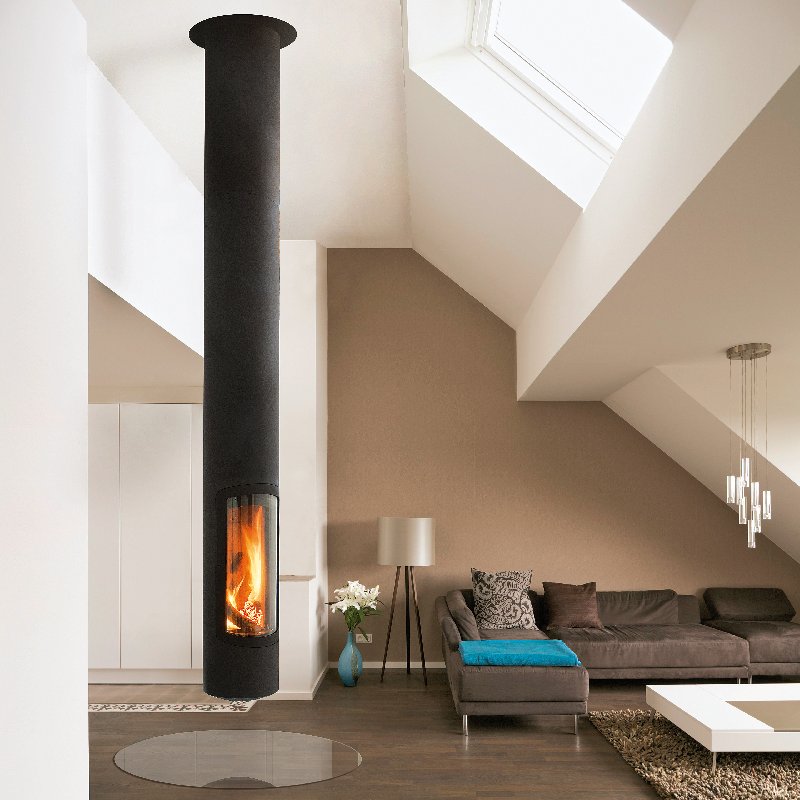
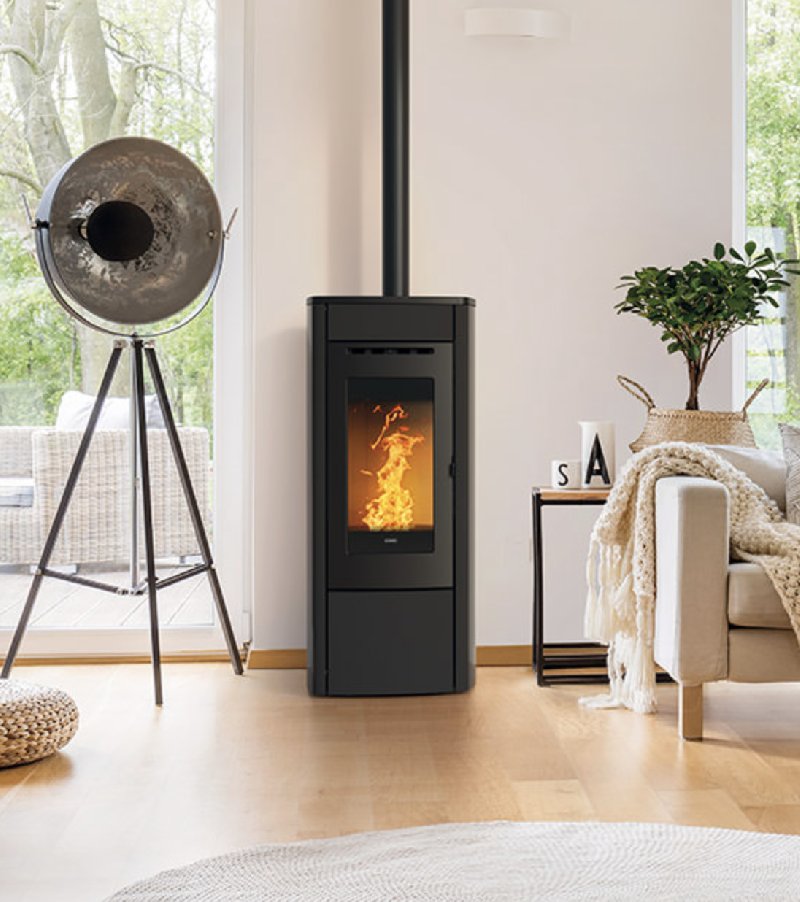
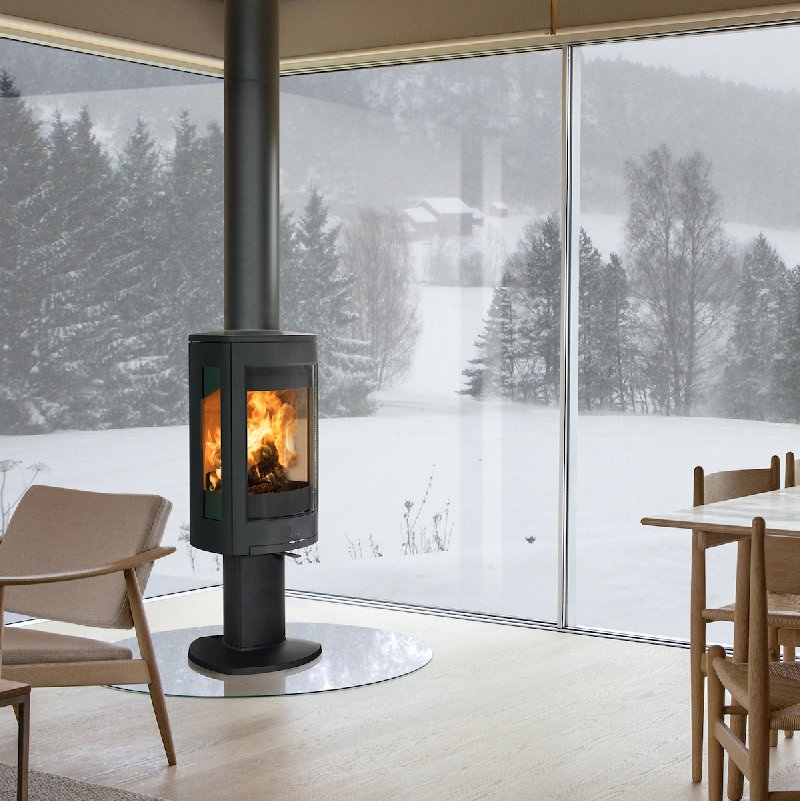
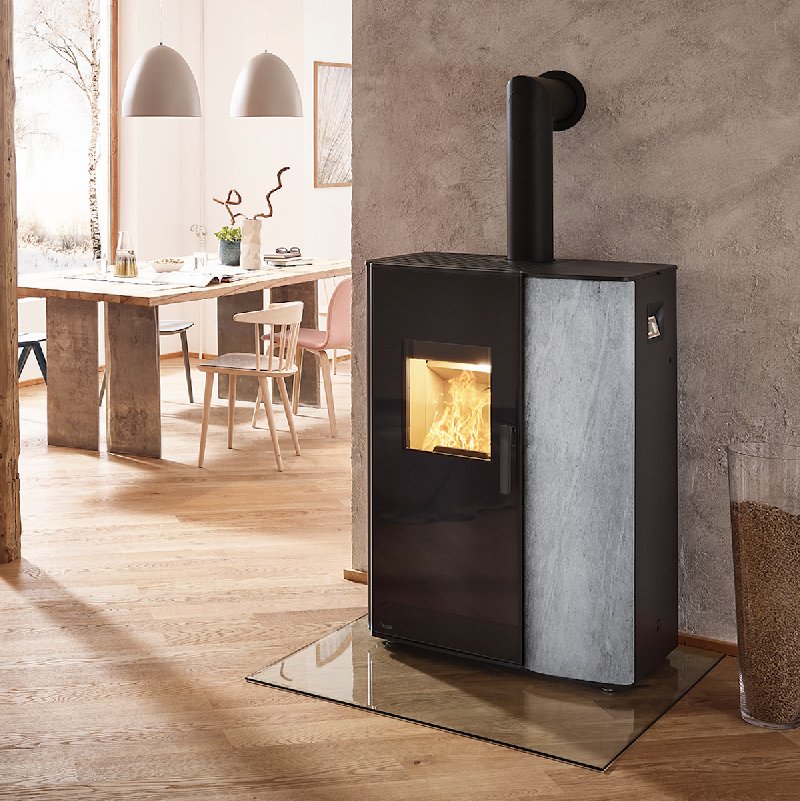
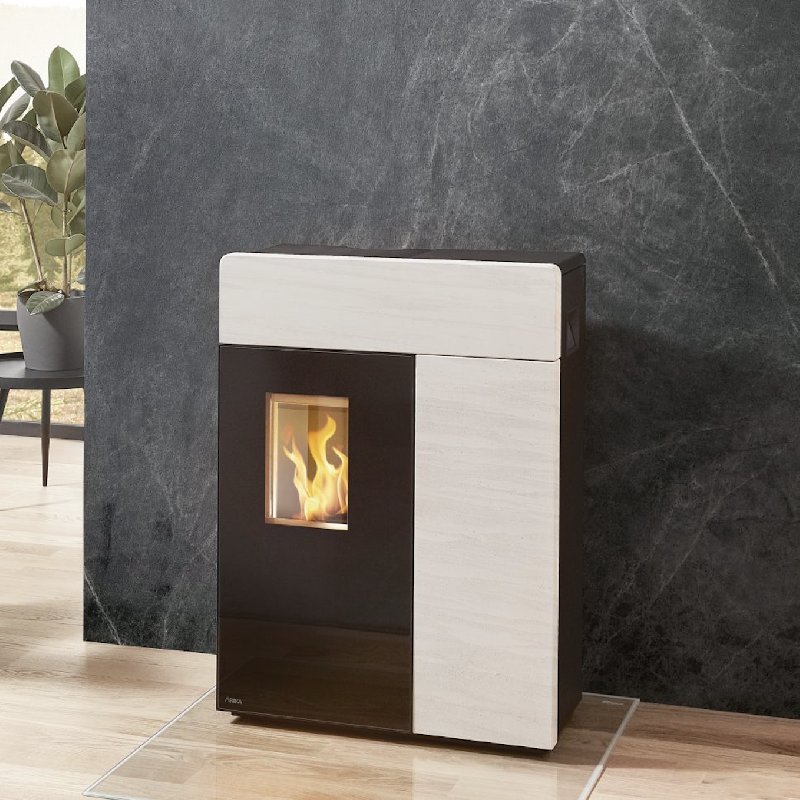
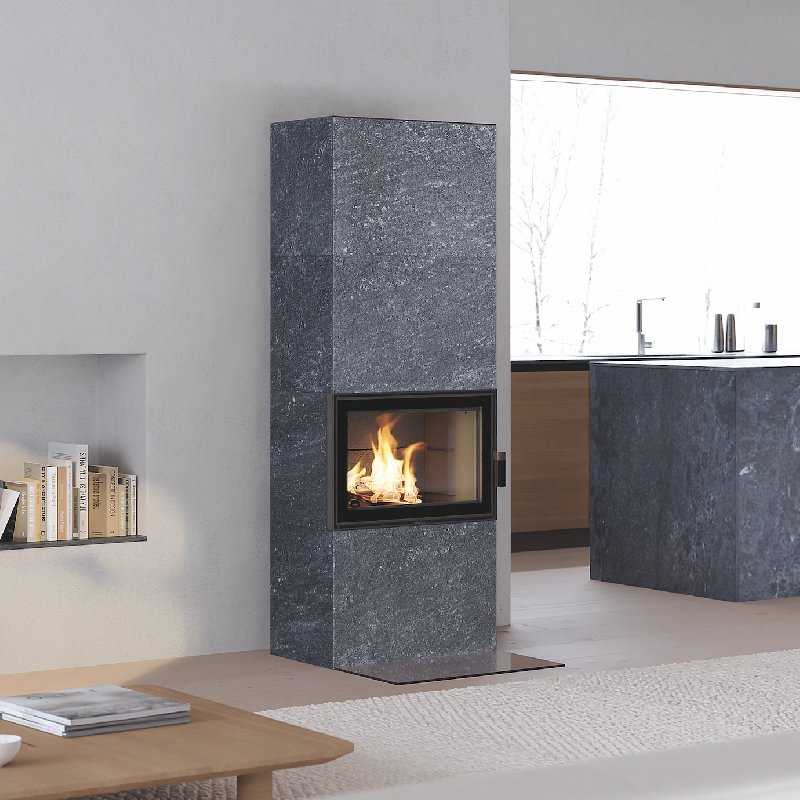
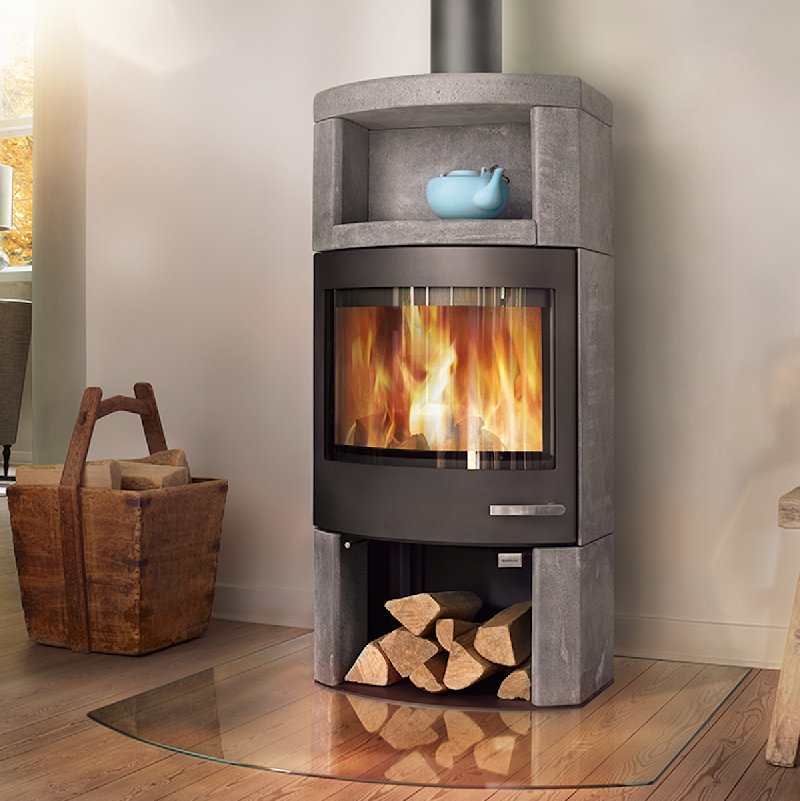
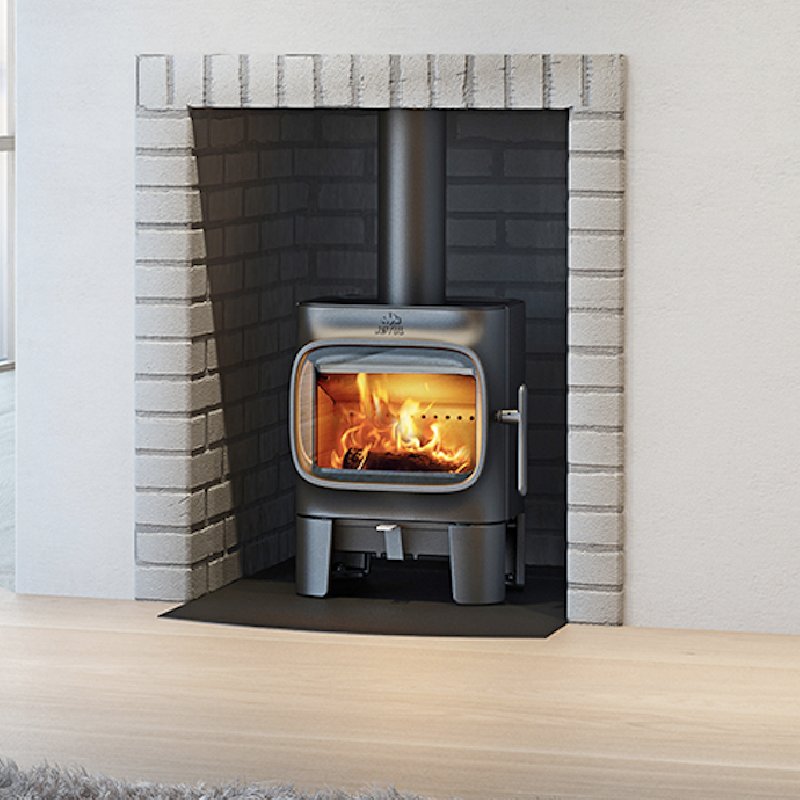
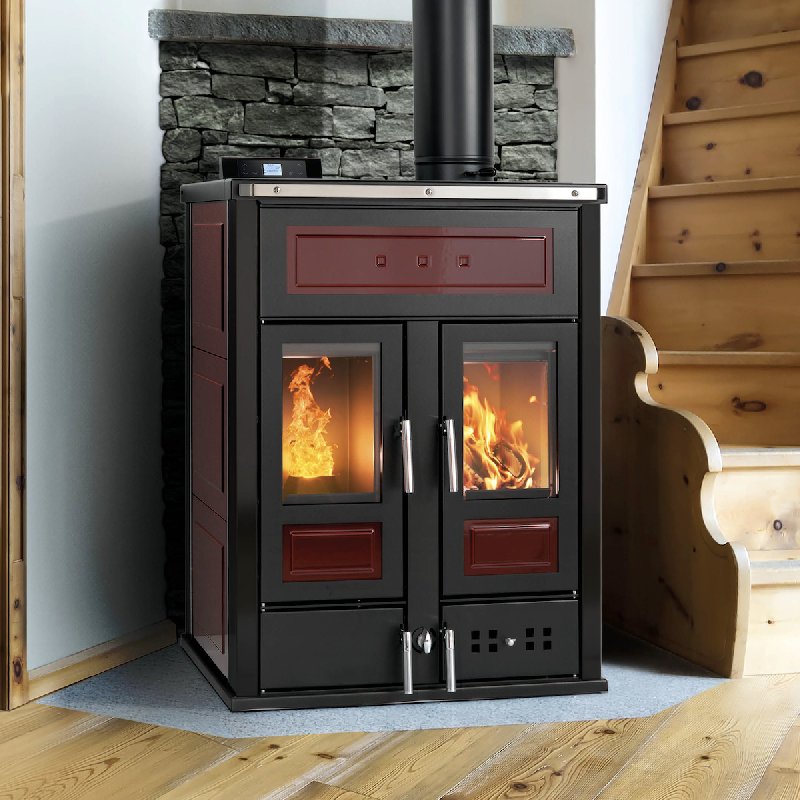
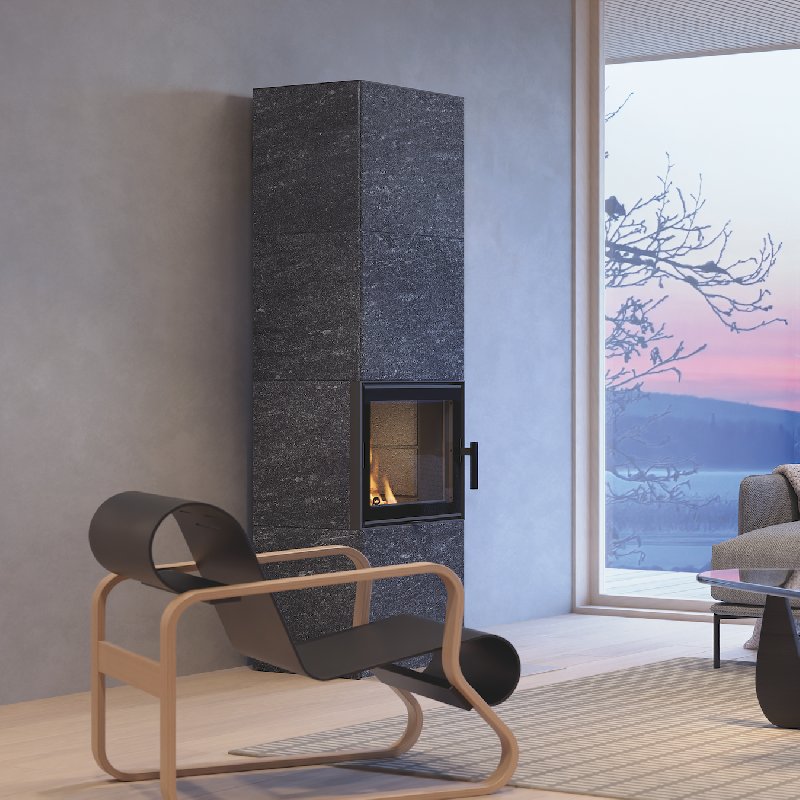
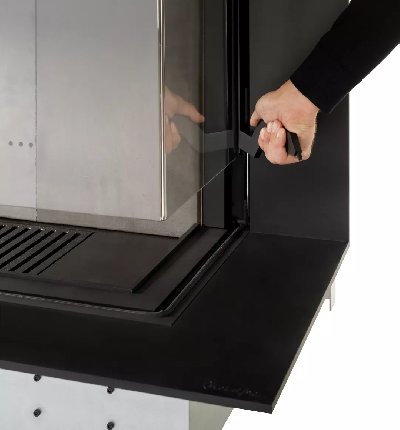
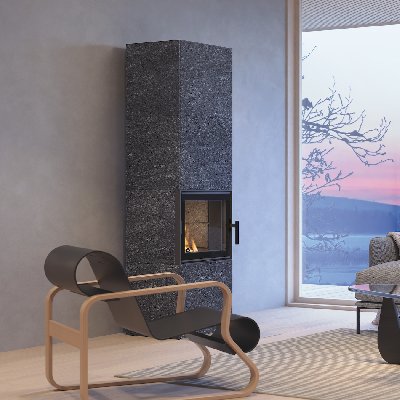
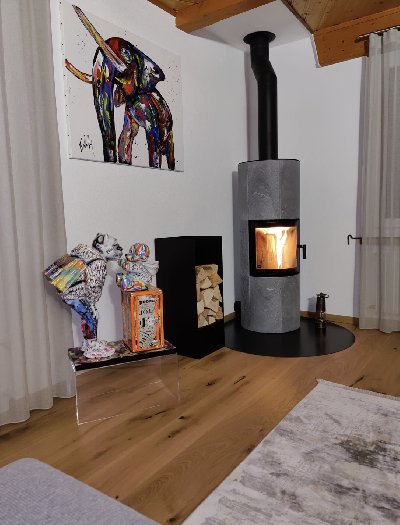
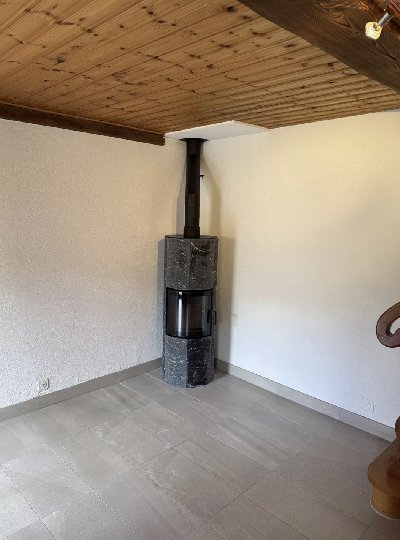
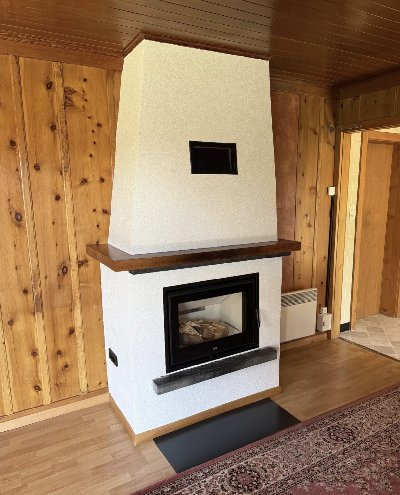
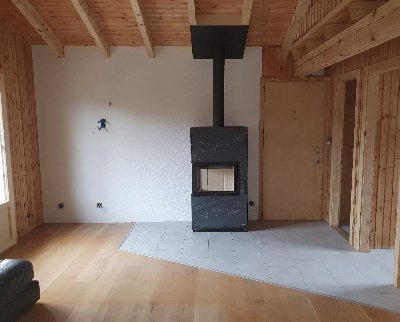
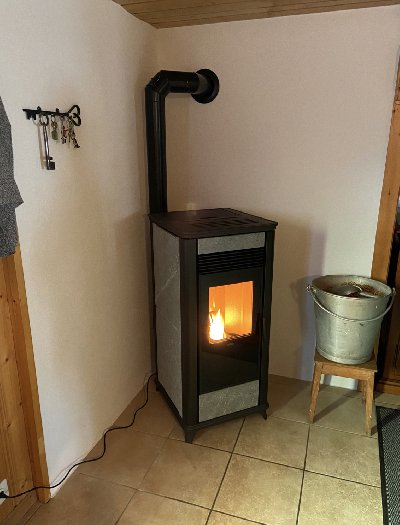
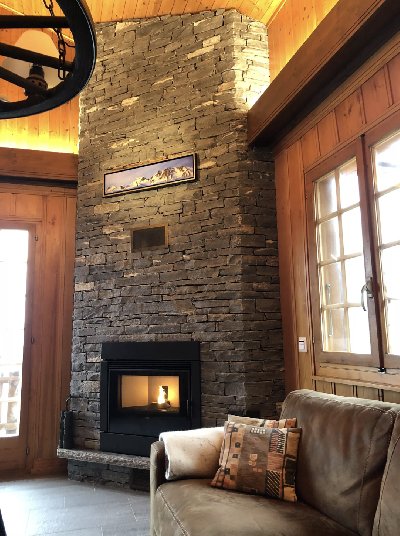
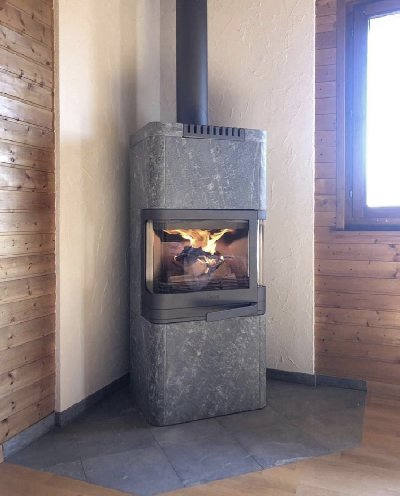
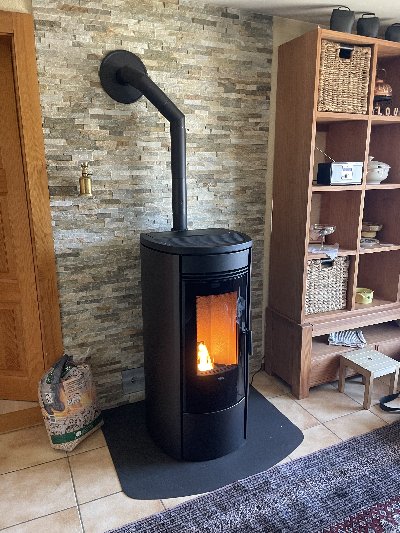
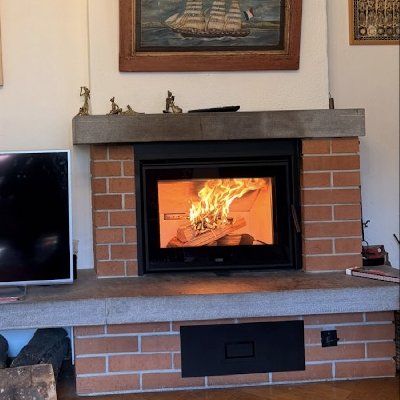
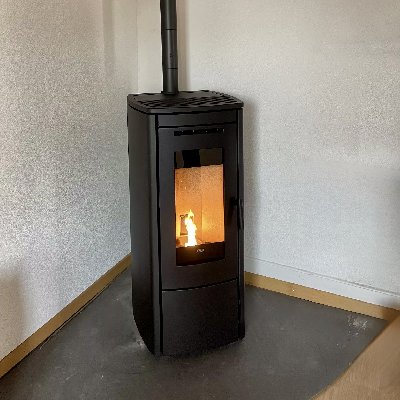
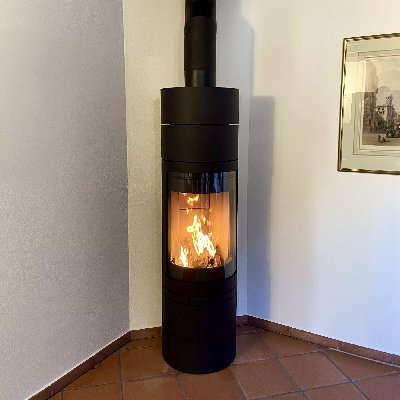
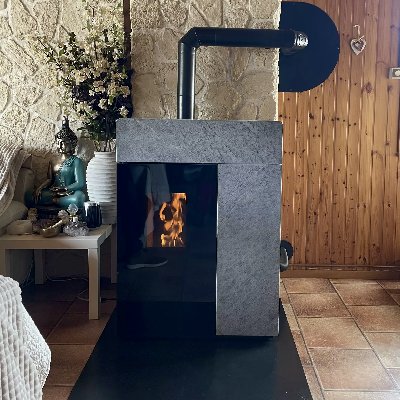
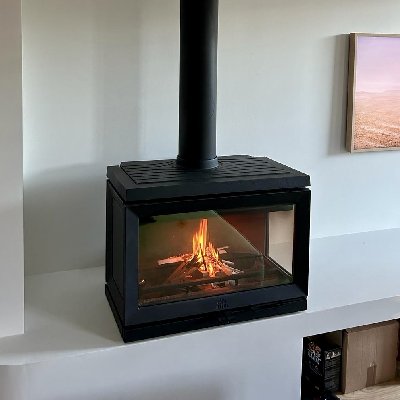
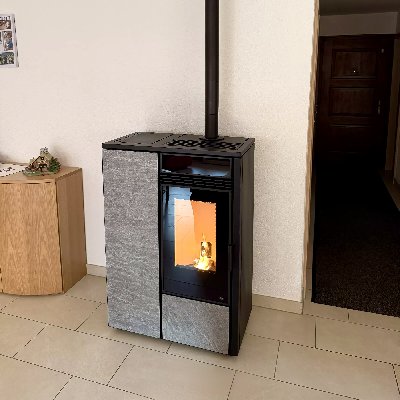
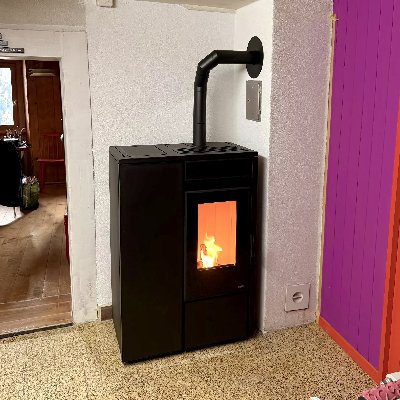

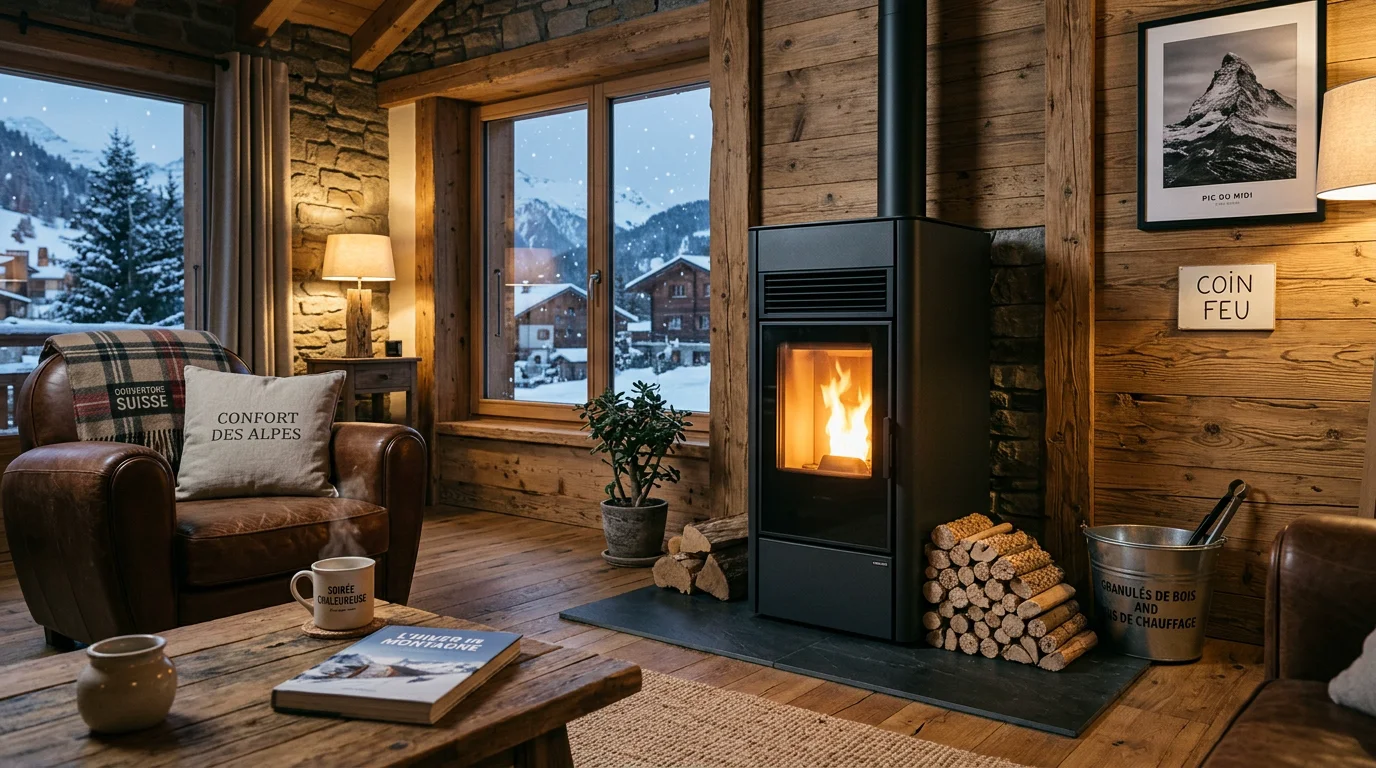
A pellet stove converts small cylinders of compressed wood into heat, with an efficiency that often exceeds 85%. However, with dozens of models to choose from, figuring out how to select a pellet stove can quickly become a headache. Before making a purchase, it’s best to understand the appliance and plan your project; our practical tips for lighting and commissioning lay a solid foundation.
The market confirms this trend. According to Propellet data, sales of pellet boilers rose by 22% in the first half of 2025 compared to the same period in 2024. In French-speaking Switzerland, where harsh winters demand reliable heating, this trend is translating into concrete installation projects in homes.
Why Invest in a Pellet Stove
The concept appeals because of its simplicity. A screw conveyor continuously feeds the firebox from a hopper, while an electronic control system regulates the fuel and air to maintain the set temperature. This is why it’s worth consulting a pellet stove buying guide before making a decision: to understand how automation changes your daily life.
Three key benefits stand out. First,energy savings, thanks to optimized combustion. Second, thermal comfort, with consistent, programmable heat. Finally, there’s the renewable aspect, since pellets have a low carbon footprint. Advanced combustion technologies are also pushing efficiency ever higher: some models achieve nearly 95% efficiency, according to manufacturers.
There is, however, a trade-off: the unit relies on electricity and requires regular maintenance. These two factors do not negate the benefits of pellet heating, but they should be factored into your decision from the outset.
The Different Types of Pellet Stoves
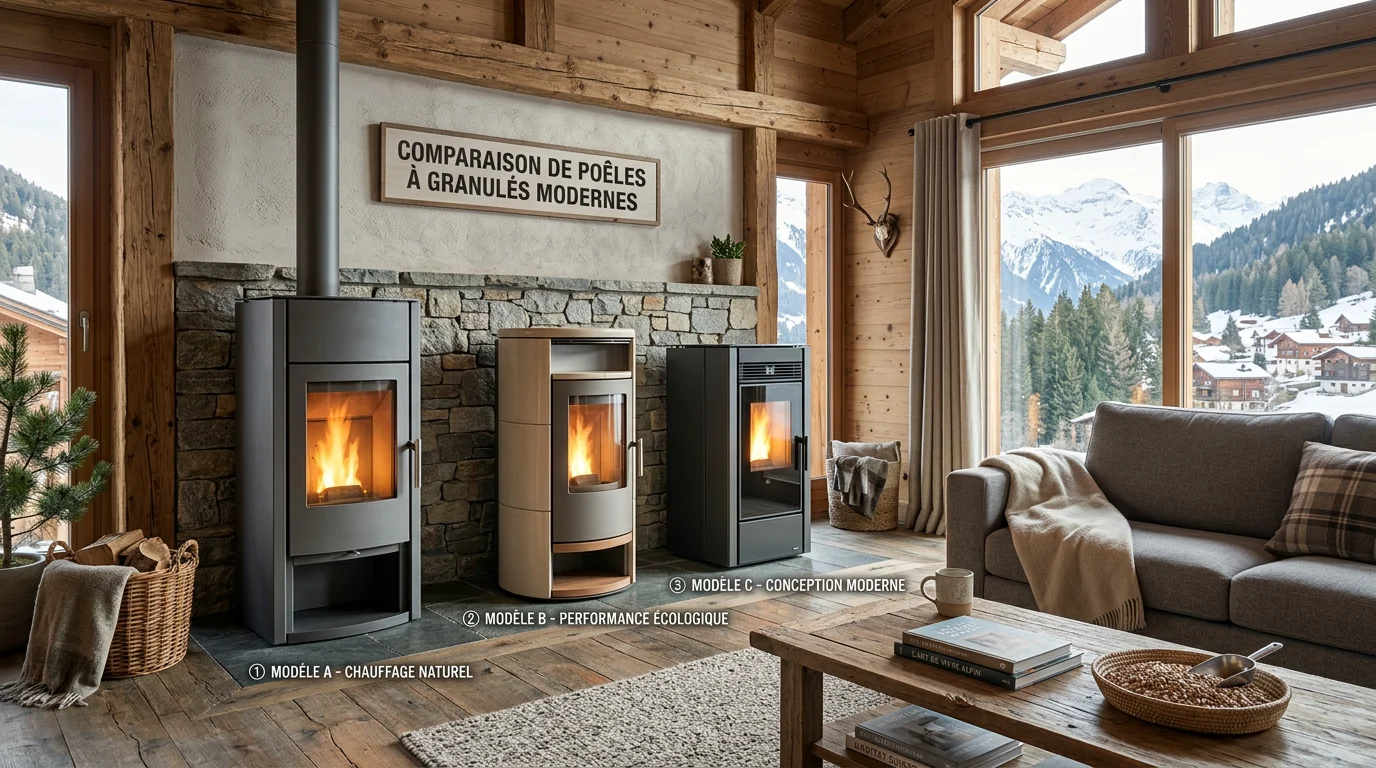
The right model depends on your home. Here are the main types available.
- Natural convection stove: It distributes heat without a fan, making it quieter and ideal for a small, well-insulated space.
- Forced-air stove: Equipped with a blower, it quickly heats a large room or open space.
- Ducted stove: An additional fan directs hot air to an adjacent room, useful for a home with partitioned rooms.
- Hydro stove (boiler): Connected to the central heating system, it supplies radiators or underfloor heating, and sometimes domestic hot water.
- Sealed-fireplace stove: It draws combustion air from outside, allowing it to be installed in rooms where a conventional model would be prohibited.
A pellet stove primarily heats the room in which it is located. For a multi-story home or one with many partitioned rooms, opt for a ductable or hydronic model. For an open-concept living room, a vented or convection-style stove is often sufficient.
Selecting the Right Capacity
Output is measured in kilowatts and generally ranges from 6 to 14 kW. An appliance that is too powerful will overheat and operate at reduced capacity, which reduces its efficiency; an undersized model will not provide enough heat. Choosing the right size is therefore crucial.
As a general guide, use these ranges based on the size of your living room and any adjoining open spaces:
| Area | Recommended Power |
| 20 to 40 m² | 4 to 6 kW |
| 40 to 70 m² | 7 to 10 kW |
| 70 m² and above | 10 to 15 kW |
These values are theoretical. Insulation, ceiling height, and local climate all play a significant role. In Valais and the Lake Geneva region, only a technical inspection can accurately determine the power output required for your home.
Autonomy, Pellet Quality, and Storage
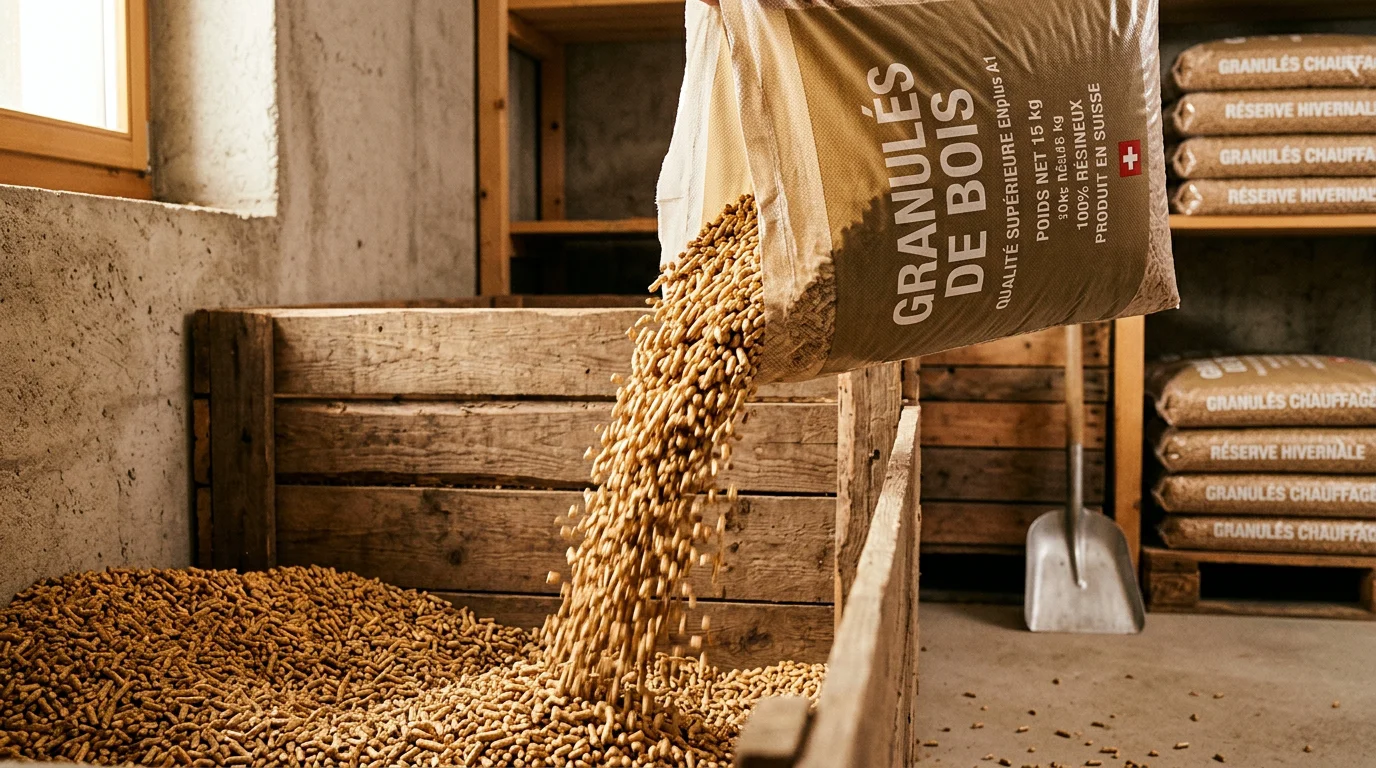
Operating time depends on the tank’s capacity and consumption. A standard hopper holds about 20 kg, which is enough for one refill per day in the middle of winter, while the largest models hold up to 50 kg, providing nearly three days of autonomy. If the stove is your primary heating source, opt for a large capacity.
Pellet quality affects efficiency and maintenance. In 2026, ENplus A1 or DINplus certified pellets remain the gold standard for clean combustion; their moisture content must remain below 10%, ideally between 6% and 8%. Damp pellets clog the appliance and reduce efficiency.
Storage is just as important. Pellets must be stored in a dry place and, if possible, near the stove to minimize handling. In Switzerland, the issue of supply warrants attention: according to the Fédération romande des consommateurs, 77% of pellets are produced domestically, but their prices remain sensitive to the international market. To plan ahead, our recommendations for storing pellets will help you ensure a smooth heating season.
Installation, Standards, and Features
A pellet stove requires a supply of combustion air and a flue gas exhaust system. The standard installation vents above the roof ridge; the ventless installation, which is less restrictive, is reserved for certified airtight appliances. A professional must always verify that the flue meets safety standards.
In terms of comfort, recent models offer programmable timers, a built-in thermostat, and often remote control via a mobile app. These features optimize fuel consumption and ensure you wake up to a warm room. A heavier cast-iron hopper also reduces the noise of pellets falling.
Since each unit has its own specific settings, commissioning requires a systematic approach. From our showrooms in Fully and Etoy, we coordinate the installation with architects and other trades, then provide follow-up support. You can also explore our pellet-specific solutions to compare possible configurations.
Budget and Operating Costs
The budget consists of two parts: the unit and installation. For the unit alone, expect to pay generally between 1,500 and 6,500 francs, depending on power output, design, airtightness, and smart features. Installation costs vary depending on the complexity of the project and the type of exhaust system.
Fuel represents the recurring cost. After two turbulent winters, the market has stabilized: in the spring of 2025, a metric ton of pellets was selling for around 350 to 420 euros depending on the region, far from the peaks of 2022. This stabilization, driven by increased European production, provides greater predictability for households that purchase early in the season.
On a per-kilowatt-hour basis, pellets remain competitive compared to electricity and often to natural gas. Proper sizing and high-quality pellets remain the best ways to keep your energy costs under control in the long term.
Maintenance and Durability
A pellet stove is not maintenance-free, although it requires far less effort than a wood-burning stove. Daily cleaning of the firebox—which takes about five minutes—prevents residue from clogging the air intakes. The ash pan should be emptied every two weeks.
Annual maintenance by a qualified technician is essential to ensure performance and safety. The chimney must also be swept annually by a professional. When properly maintained, a pellet stove maintains optimal efficiency and a long service life.
Key Considerations for Making an Informed Choice in Switzerland
Choosing the right pellet stove comes down to a few key considerations: a heat output calibrated to the actual room volume, a heat distribution method consistent with the room layout, sufficient operating time, and certified pellets. In French-speaking Switzerland, where the climate demands reliability, these criteria matter more than just the listed price. Take the time to conduct a thorough assessment before making a decision, as a properly sized unit pays for itself over its entire lifespan.
Take the first step with Carron-Lugon
Still unsure about the model, output, or location of your future unit? A pellet heating project requires on-site planning, with an expert assessment of your home and technical constraints. That’s precisely what we specialize in throughout Valais and the Lake Geneva region.
We assess your needs based on blueprints or during a free, no-obligation on-site visit, then ensure a clean installation and in-house after-sales service. Discover our RIKA automatic pellet stoves and let’s work together to build a sustainable solution at our showrooms in Fully and Etoy.
Frequently Asked Questions
What heat output should a pellet stove have?
The output depends on the volume of the space to be heated, the insulation, and the climate. As a general guideline, allow 4 to 6 kW for 20 to 40 m² and up to 10 to 15 kW for areas larger than 70 m². A technical visit is the only way to determine the exact output.
Can a pellet stove heat an entire house?
A standard model primarily heats the room where it is located. To heat multiple rooms or floors, you’ll need a ducted or hydronic stove connected to the central heating system. Closed-off rooms typically have their own independent supplemental heating.
Which pellets should you choose in 2026?
Opt for ENplus A1 or DINplus certified pellets with a moisture content below 10%. These certifications guarantee clean combustion, high efficiency, and less clogging. Storing them in a dry place preserves their quality until use.
How much does it cost to install a pellet stove?
For the unit alone, expect to pay between 1,500 and 6,500 francs, depending on the options. Installation costs are additional and vary based on the complexity of the project and the type of exhaust system. An on-site assessment will provide a precise estimate of your project’s total cost.
What daily maintenance is required?
A quick cleaning of the firebox is recommended every day the stove is used, and the ash pan should be emptied about every two weeks. Annual maintenance by a professional and a regulatory chimney sweep round out the routine care. Our in-house customer service team is here to support you over the long term.