



A single-family home that consumes the equivalent of 2,000 liters of heating oil per year burns about four metric tons of pellets each winter. At several hundred francs per metric ton, the annual bill is worth considering carefully before filling your tank. A well-sized wood pellet storage system allows you to buy in bulk and at the right time.
Understanding the price of wood pellets requires looking at current Swiss prices, the factors that drive them, and the ideal purchasing schedule. Below, we break down what makes up the cost, how pellets compare to fossil fuels, and practical steps you can take to pay less without sacrificing quality.
How much will a metric ton of pellets cost in Switzerland in 2026?
The question of pellet prices in Switzerland comes up every fall, when it’s time to restock. Current Swiss market data puts the price per metric ton delivered between 445 and 500 CHF, including VAT and shipping, with a volume-based discount depending on the quantity ordered.
The larger the quantity, the lower the price per metric ton. Here is an indicative range of prices for certified bulk pellets in 2026.
| Quantity Ordered | Estimated Price for 2026 (CHF/metric ton, including VAT and delivery) |
| 3 metric tons | approximately 490 to 500 CHF |
| 5 metric tons | approximately 470 to 485 CHF |
| 8 metric tons | approximately 455 to 470 CHF |
| 15 to 17 metric tons | approximately 445 CHF |
| Order with Carron-Lugon support | Consulting and logistics organized in French-speaking Switzerland |
These prices apply tobulk purchases delivereddirectly into a silo. Packaging in bags or big bags, which is more convenient for smaller volumes, is significantly more expensive per kilogram. Quality also plays a role: a premium EN Plus-certified pellet yields approximately 4.8 kWh per kilogram and provides better protection for your appliance.
Why did prices skyrocket and then stabilize?
Memories of 2022 remain vivid. In the neighboring French market, the price per metric ton of pellets rose from about €285 in 2019 to spectacular peaks two years later. According to Kelwatt’s data, the price even reached €800 per metric ton for industrial-grade pellets in November 2022.
There were multiple causes: soaring demand, a cold winter, overstocking due to fears of shortages, and rising production costs. As Propellet data released in 2026 shows, this historic spike was followed by a significant easing of prices, which nevertheless remain above pre-crisis levels.
In Switzerland, the situation remains more stable than elsewhere. A large portion of the wood pellets consumed is produced domestically, which limits exposure to international market pressures. Swiss prices are nonetheless dependent on European markets, the availability of raw materials, and transportation costs.
Bulk, bags, or big bags: which packaging should you choose?
The delivery method has a significant impact on the final cost. There are three options, each suited to a different situation.
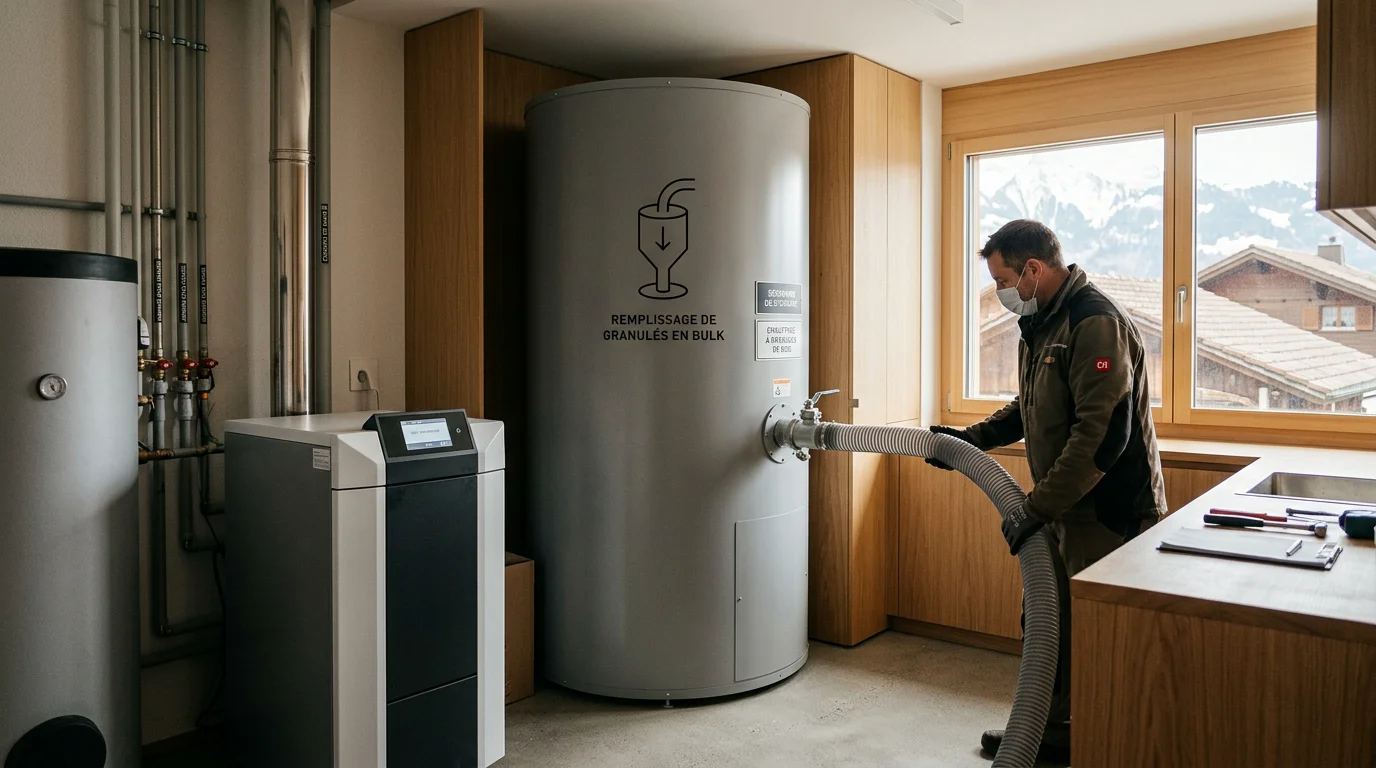
- Bulk delivery: the most economical per metric ton, ideal if you have a silo or dedicated storage area.
- Big bags (around 900 kg): a practical compromise when truck access is limited but the volume is still substantial.
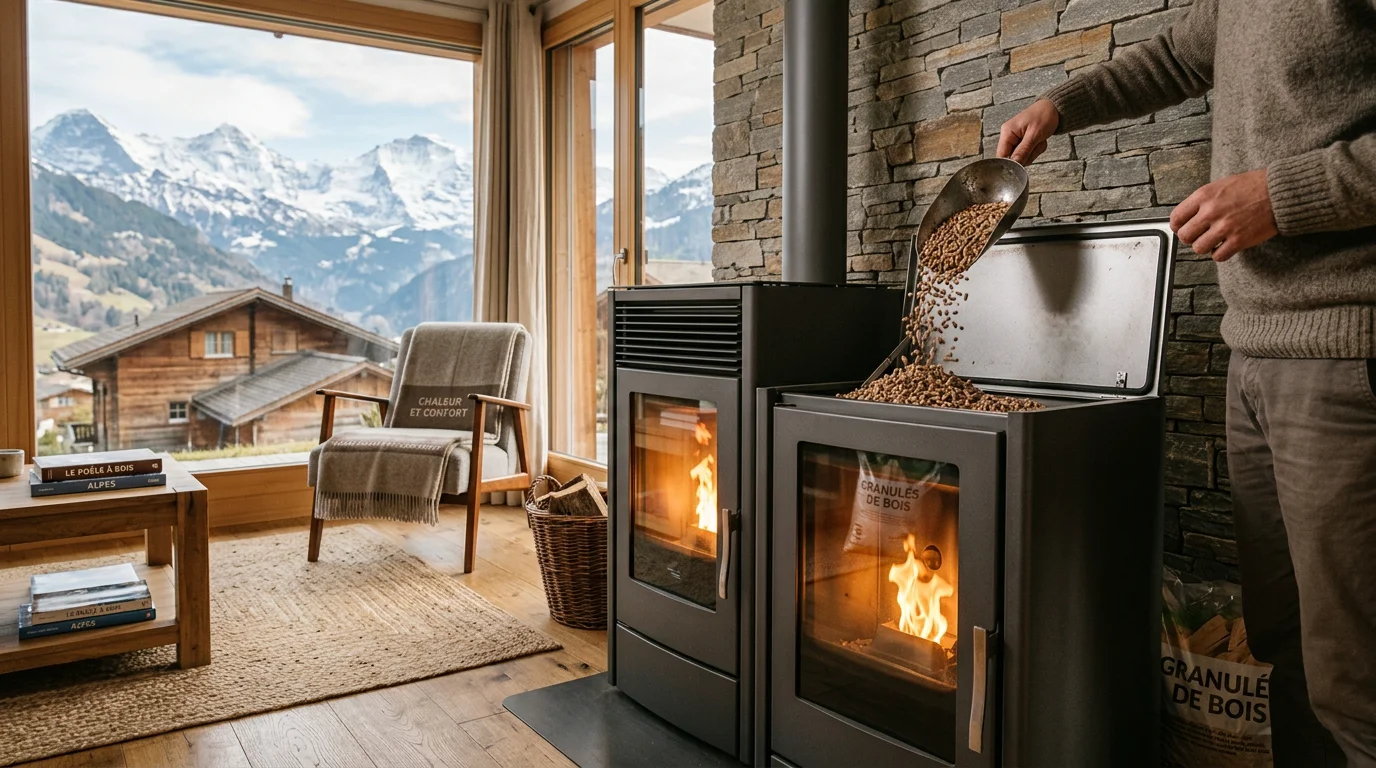
- 15-kg bags on a pallet: the most flexible option for a supplemental stove, but the price per kilogram rises significantly.
A prefabricated 8 m³ silo holds about four metric tons, which is the typical annual consumption for a home. Before you set up your system, a suitable shovel makes occasional handling easier: our pellet shovel prevents damage to the pellets when manually filling the hopper.
Are pellets still competitive with heating oil and natural gas?
This is the key selling point of pellet heating systems. Despite price increases in recent years, pellets still offer a cost advantage over fossil fuels. On the French market, a 2026 analysis estimates the cost per kilowatt-hour of pellets at between €0.07 and €0.10, making them one of the most competitive heating fuels after firewood.
In Switzerland as well, independent data show that pellets remain significantly cheaper than natural gas and heating oil per kilowatt-hour. Added to this is a non-financial benefit: pellets are a local and renewable energy source, and their price has historically been more stable than that of imported oil or gas.
When should you buy to get the best price?
Timing makes all the difference. The market’s seasonality is well documented: every fall, orders pile up, prices rise, and delivery times get longer. According to RIKA, June, July, and August are historically the cheapest months.
The logic is simple: demand is low in the summer, inventories are full, and suppliers offer discounts. Planning your bulk purchase in the spring or early summer for the upcoming heating season therefore ensures both the best price and availability. It’s always a good idea to compare several Swiss distributors before placing an order.
Storing Pellets Properly to Preserve Their Value
Buying at the right price is pointless if the pellets deteriorate. Moisture is their worst enemy: a pellet that swells loses its heating value and can jam your stove’s feed screw. Dry, well-ventilated storage, protected from impact, is therefore essential.
To get the most out of every metric ton you buy, we detail best practices in our guide on how to preserve and store pellets. Proper pellet storage protects your investment and extends the lifespan of your system.
Key Takeaways on the Swiss Pellet Market
In 2026, the price of wood pellets in Switzerland remains within a reasonable range, well below the peaks seen during the energy crisis but still higher than pre-2020 levels. To keep your budget under control, opt for bulk purchases in large quantities, buy in the summer, and store your pellets properly. These three habits, combined with a well-maintained system, make wood pellets one of the most economical and sustainable heating solutions on the Swiss market.
Take action with Carron-Lugon
Choosing a pellet heating system also means properly sizing your unit and storage capacity to take advantage of the best purchase prices. In French-speaking Switzerland—from Valais to Vaud via Geneva—we support your project from in-showroom consultations through to a clean, coordinated installation.

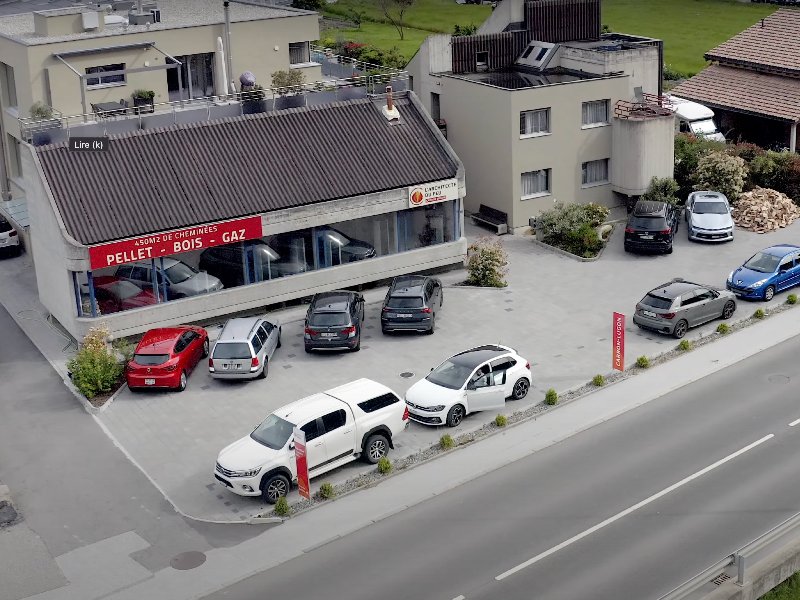
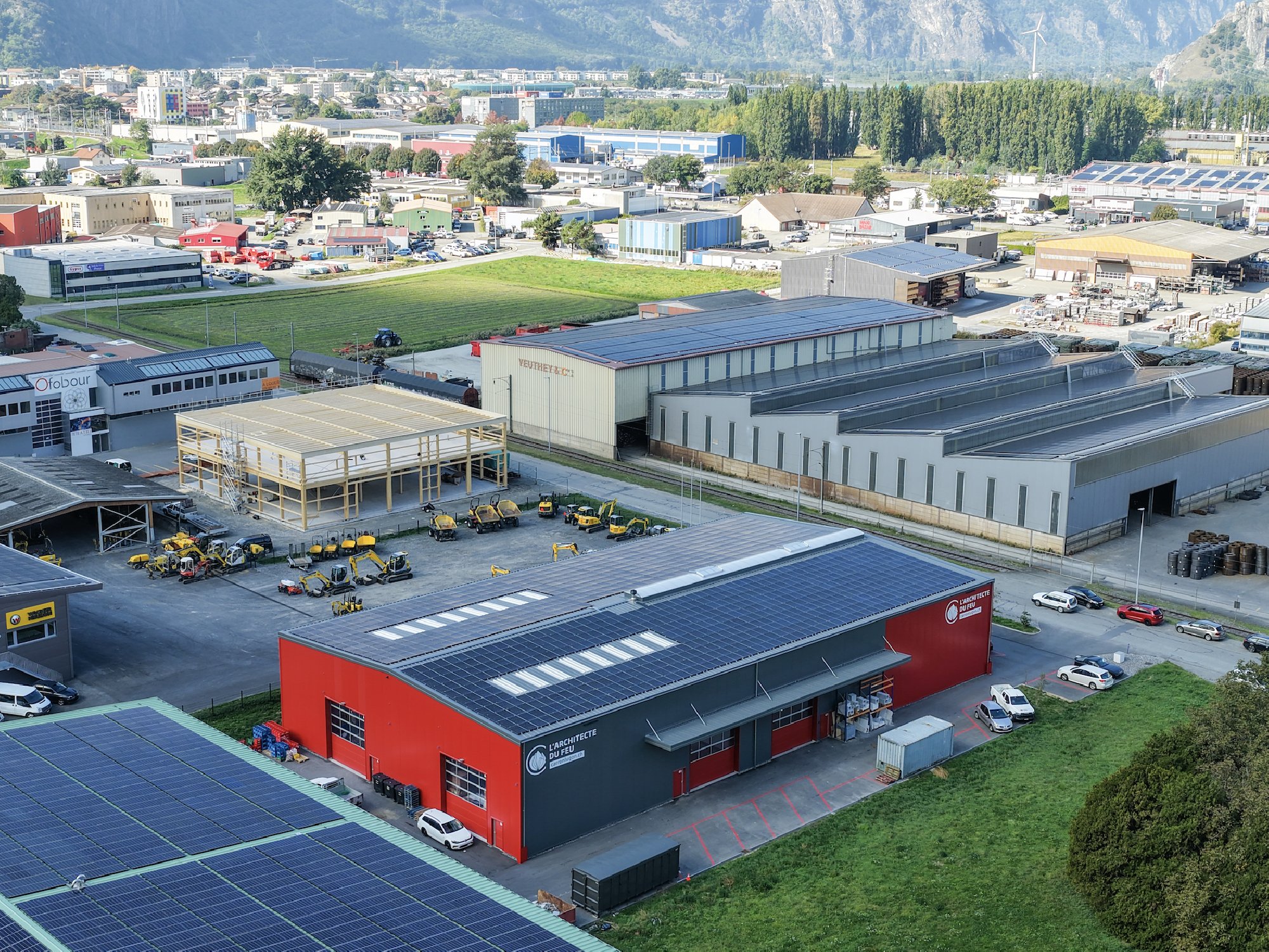
Our showrooms in Fully and Etoy, open 24/7, and our free, no-obligation in-home consultation help you choose the solution that best suits your needs. Discover our selection of pellets and pellet stoves and benefit from in-house after-sales service for your appliances.
Frequently Asked Questions
What is the average price of a metric ton of pellets in Switzerland in 2026?
On average, expect to pay between 445 and 500 CHF per metric ton, including VAT and delivery. The price decreases with the volume ordered and depends on the packaging option chosen, with bulk being the most cost-effective.
How many pellets does a single-family home consume per year?
A home that uses the equivalent of 2,000 liters of heating oil requires approximately 20,000 kWh, or about four metric tons of pellets. An 8 m³ silo is sufficient to store this amount for an entire heating season.
Are wood pellets cheaper than heating oil and natural gas?
Yes. On a per-kilowatt-hour basis, wood pellets remain significantly more competitive than heating oil and natural gas. They also offer greater price stability, as they are primarily produced locally.
When is the best time of year to buy pellets?
Summer, between June and August, is historically the cheapest time to buy. Demand is low, inventories are full, and suppliers often offer attractive discounts before the heating season begins.
How should you store your pellets once they’re delivered?
Store them in a dry, well-ventilated area, protected from impact, as moisture reduces their heating value. A silo or dedicated storage area protects the quality of the pellets and ensures your appliance operates properly.