

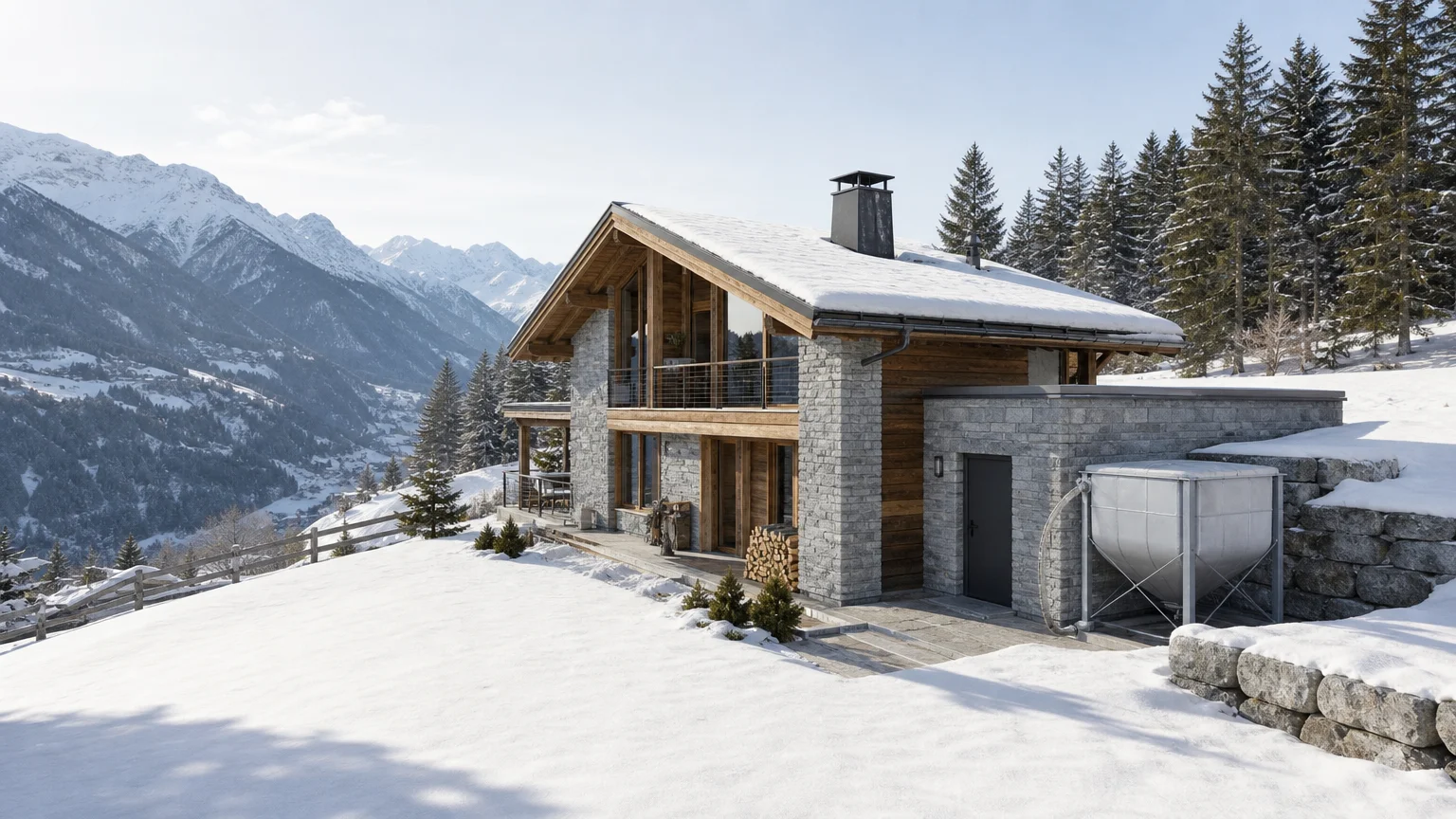
Replacing an oil-fired boiler involves more than just choosing a unit. You must determine the required output, inspect the utility room, plan for storage, and coordinate heat distribution. To compare pellet systems, you can review our Klover eCompact pellet boiler and then evaluate its specifications against your building’s requirements.
Automatic pellet heating is particularly well-suited for homes with an existing hydronic system. According to SuisseEnergie, however, you’ll need to provide adequate storage space, ensure accessible delivery, and select a properly sized boiler.
How much should you budget for a pellet boiler in Valais?
For a residential project planned for 2026, a budget ranging from CHF 25,000 to CHF 45,000 is often appropriate. This is a rough estimate, not a fixed price. The final cost depends primarily on the boiler’s output, the silo, the flue, and the condition of the hydronic system.
| Item | Order of magnitude | Variation Factors |
|---|---|---|
| Boiler and control system | CHF 15,000 to 25,000 | Capacity, efficiency, automation |
| Silo and feed system | CHF 4,000 to 8,000 | Volume, suction, auger, access |
| Installation and commissioning | CHF 6,000 to 12,000 | Removal, connections, adjustments |
| Ductwork and modifications | Depending on configuration | Piping, drainage, masonry work |
| Estimated total | CHF 25,000 to 45,000 | To be confirmed after a technical assessment |
An old fuel oil tank can sometimes provide a suitable space for the silo. However, its accessibility, ventilation, and distance from the boiler must be assessed. In some buildings, removing the tank or modifying the ductwork can significantly increase the budget.
The overall cost must also include maintenance, the electricity required for the control systems, and the purchase of pellets. The 20-year cost comparisons presented by SuisseEnergie remind us that the initial investment alone is not sufficient to assess the cost-effectiveness of a heating system.
What does installing a pellet boiler involve?
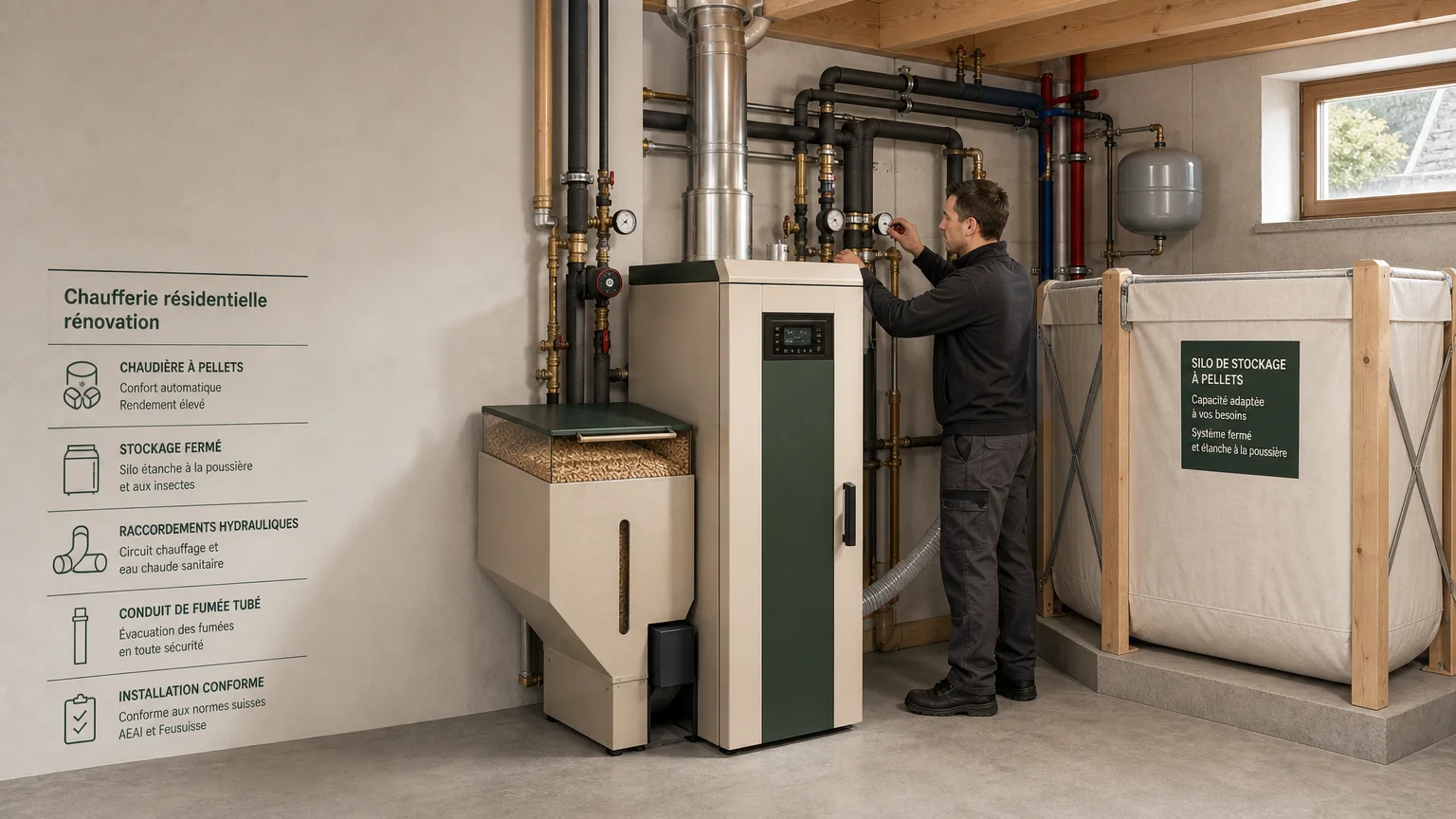
A complete installation generally takes place in several stages. The first step is to analyze the heating needs and determine the actual power required. An oversized boiler may operate in short cycles, lose efficiency, and increase wear and tear on certain components.
- Building assessment: heated area, insulation, elevation, hot water production, and occupancy patterns.
- Inspection of the space: available room for the boiler, the silo, the storage tank, and the piping.
- Flue inspection: condition of the flue, any lining, draft, and safe exhaust.
- Hydraulic connection: connection to radiators, underfloor heating, or the buffer tank.
- Commissioning: adjustments, combustion check, programming, and instructions for use.
The hopper must remain dry, accessible, and sufficiently close to the boiler. The pellet delivery truck must also be able to reach the filling point without difficulty. An installation located in a side valley or on a narrow lot therefore requires a logistical assessment before signing the quote.
To view another pellet boiler model and compare available sizes, see the Klover eCompact 320 pellet boiler. The final choice, however, should be based on the boiler’s output and the building’s layout, not just on the unit’s volume.
Is a pellet boiler suitable for your home in Valais?
An older home equipped with high-temperature radiators may be well-suited for a pellet boiler. The system produces heating water compatible with many existing systems. This can minimize the amount of work required compared to a solution that requires low-temperature heat emitters.
The decision becomes more challenging when the building is very well insulated or when the heat demand is low. In such cases, a boiler that is too powerful may operate far from its optimal operating range. A thermal calculation or energy assessment can help mitigate this risk.
Altitude also plays a role in the subsidy application. The official page for the M-02 program in Valais specifies conditions related to replacing an existing heating system, submitting the application in advance, and the minimum installation altitude for this measure.
The presence of a district heating network can also affect the analysis. In certain areas, connecting to a network powered primarily by renewable energy may be the preferred option. It is therefore important to check local regulations before definitively opting for individual pellet storage.
What subsidies are available in Valais in 2026?
In 2026, the canton of Valais lists several measures for replacing heating systems. The cantonal page dedicated to energy subsidies specifically highlights pellet heating with a daily storage tank and automatic wood-fired heating.
The exact amount depends on the applicable program, the system’s output, the type of building, the energy reference area, and the previous system. Some subsidies may amount to several thousand francs, but they are not automatically combinable and never cover the full cost of a project.
| Point to Check | Key takeaways for 2026 |
|---|---|
| Old heating system | Replacing an oil, gas, or electric system may be a prerequisite. |
| Boiler type | Automatic units and categories recognized by the program are preferred. |
| Altitude | Certain measures in Valais require a minimum altitude of 800 meters. |
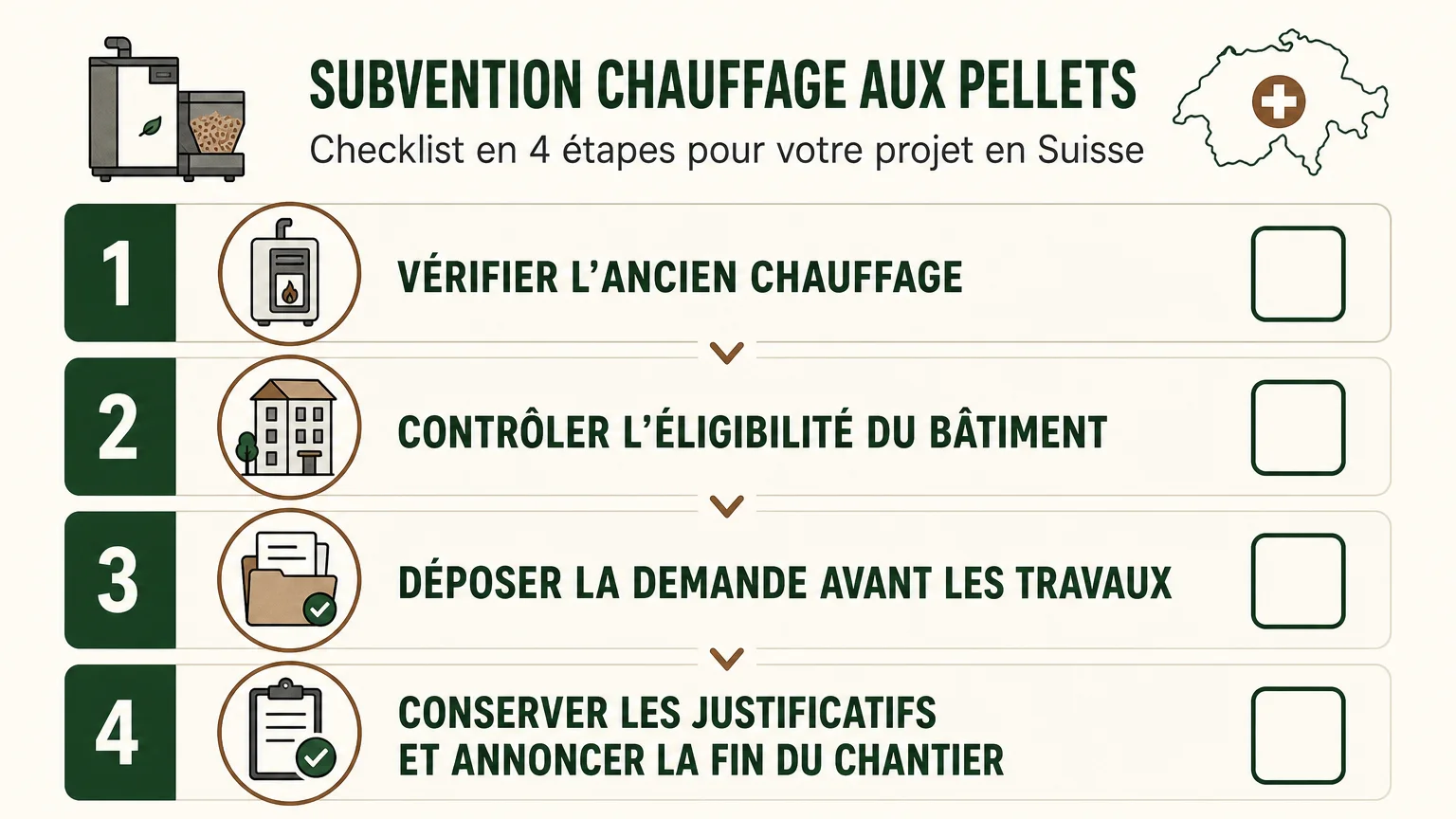
| Submitting the Application | The application must be submitted and approved before work begins. |
| Supporting Documents | Keep the equipment specifications, invoices, and project completion documents. |
| Annual budget | Funding is subject to available appropriations and the terms of the current program. |
Timing is critical. An application submitted after the old boiler has been removed or work has begun may be denied. The 2026 cantonal budget includes funding for energy programs, but this does not replace the need to verify the rate schedule applicable to your municipality and your building.
Energy-related work may also have tax implications. These depend on your personal situation, the allowable deductions, and the net amount after the subsidy. It is best to seek confirmation from the relevant cantonal office or your tax advisor.
How can you manage storage and operating costs?
The storage tank is a central component of the project. It must be sized according to the system’s capacity, projected consumption, and available space. An annual delivery may be convenient, but it requires sufficient storage volume and adequate access for a truck.
As a technical guideline, SuisseEnergie recommends determining storage volume based on installed capacity and the distance to the street. The same source indicates that modern automatic systems generally achieve over 90% efficiency.
To minimize cost fluctuations, order pellets before the peak demand period, provided you have sufficient storage space. Use fuel that complies with the manufacturer’s specifications. Storing pellets in damp conditions can degrade them and disrupt the automatic feed system.
You’ll also find practical tips for preserving and storing pellets. The storage area must remain clean, dry, and well-ventilated, with special attention paid to access points, dust, and refilling operations.
Maintenance generally includes cleaning the combustion chamber, inspecting the burner, checking the feed system, sweeping the chimney, and verifying settings. The exact frequency depends on usage, pellet quality, and the manufacturer’s instructions.
How do you choose an installer and ensure the project goes smoothly?
A comprehensive quote should detail the boiler, the silo, the storage tank, the control system, the flue, the removal of the old system, and commissioning. Also ask about maintenance terms, warranties, timelines, and the documents required for the grant.
We can assess the feasibility of a residential project, inspect the flue, and guide you based on your home, available space, and budget. Our support includes consultation, installation, and post-commissioning follow-up for the relevant equipment.
We bring over 55 years of family-run expertise and installations certified to comply with Swiss VKF and Feusuisse standards. We also offer a free feasibility study, which is useful for verifying technical constraints before comparing quotes.
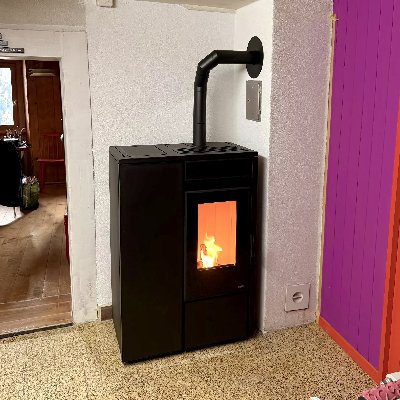
A documented project allows you to visualize the specific steps involved in a job. You can view our exampleof a Klover eCompact pellet boiler installation to better understand how equipment is integrated into a residential project.
What to Keep in Mind Before Signing
The price of a pellet boiler in Valais depends less on the unit itself than on the entire project, including the silo, the flue, the output, and the heating system. In 2026, start by preparing the technical study, verify eligibility for grants, submit your application before work begins, and compare quotes that include the same items. This approach minimizes additional costs and streamlines the commissioning process.
Plan Your Pellet Heating Project
Your home, its elevation, and your heating system determine the most suitable solution. A preliminary study allows you to verify feasibility, plan for storage, and complete the necessary administrative steps before construction begins.
We’ll assist you in assessing your needs, selecting equipment, installing the system, and providing follow-up support after commissioning. Explore our pellet boilers in Valais and request a system tailored to your home.
Frequently Asked Questions
What is the difference between a pellet boiler and a pellet stove?
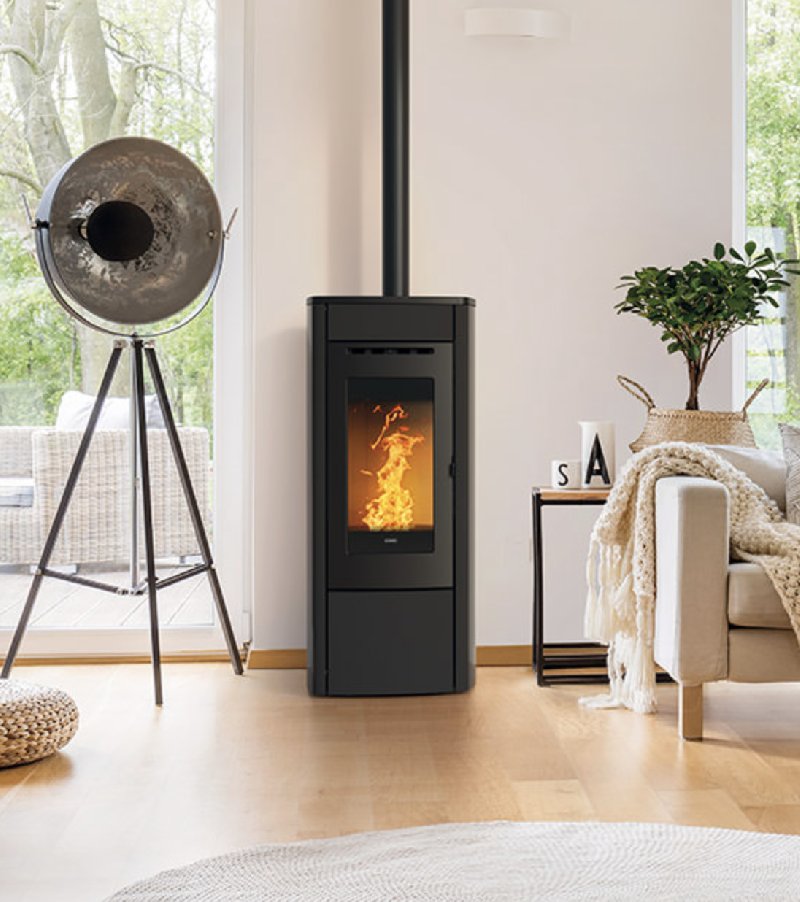
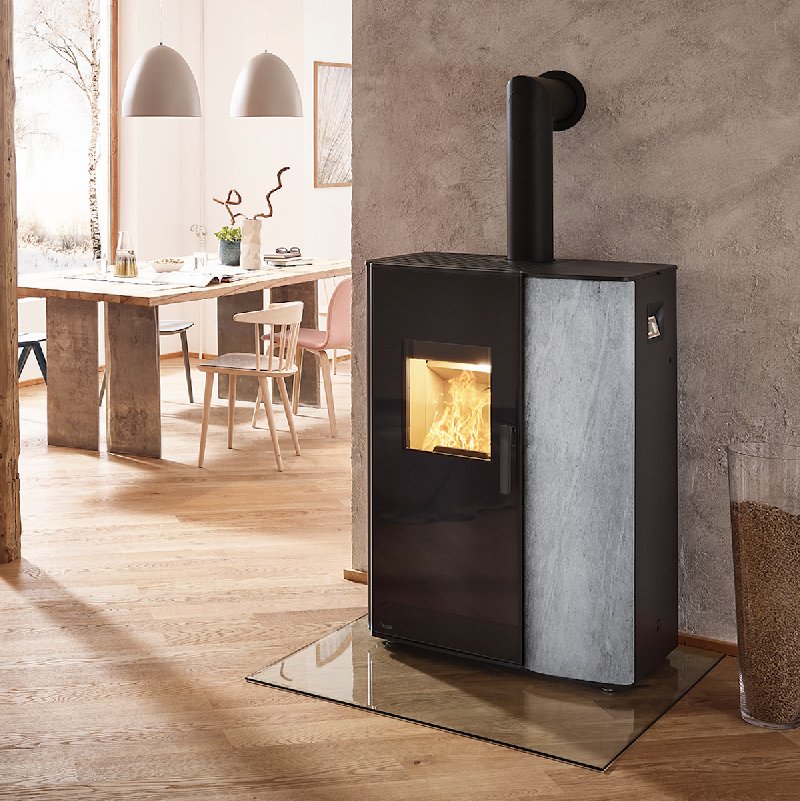
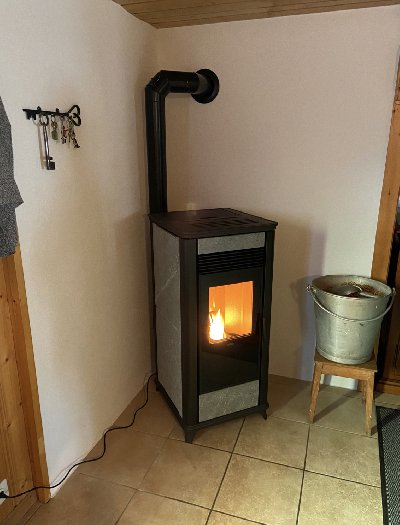
A boiler typically supplies a central heating system with radiators or underfloor heating. A stove primarily heats the room in which it is located, unless it is equipped with a suitable hydronic or air distribution system.
How much should you budget for a complete installation?
You should expect to spend tens of thousands of francs, depending on the boiler’s output, the silo, the flue, and any necessary system modifications. Only a quote prepared after a building assessment can determine the actual cost.
When should you apply for the Valais subsidy?
The application must be submitted and approved before work begins. Therefore, do not remove the old heating system or start installation until you have received the necessary approval.
Can a pellet boiler replace an oil-fired boiler?
Yes, this setup is common, especially when the existing plumbing system can be retained. However, you must verify the output, storage capacity, piping, and the conditions of the grant program.
How can Carron-Lugon help me with my project?
We offer personalized advice and a free feasibility study to assess the constraints of your home. We can then assist you with every step of the process—from selecting the equipment to installation and after-sales service.