

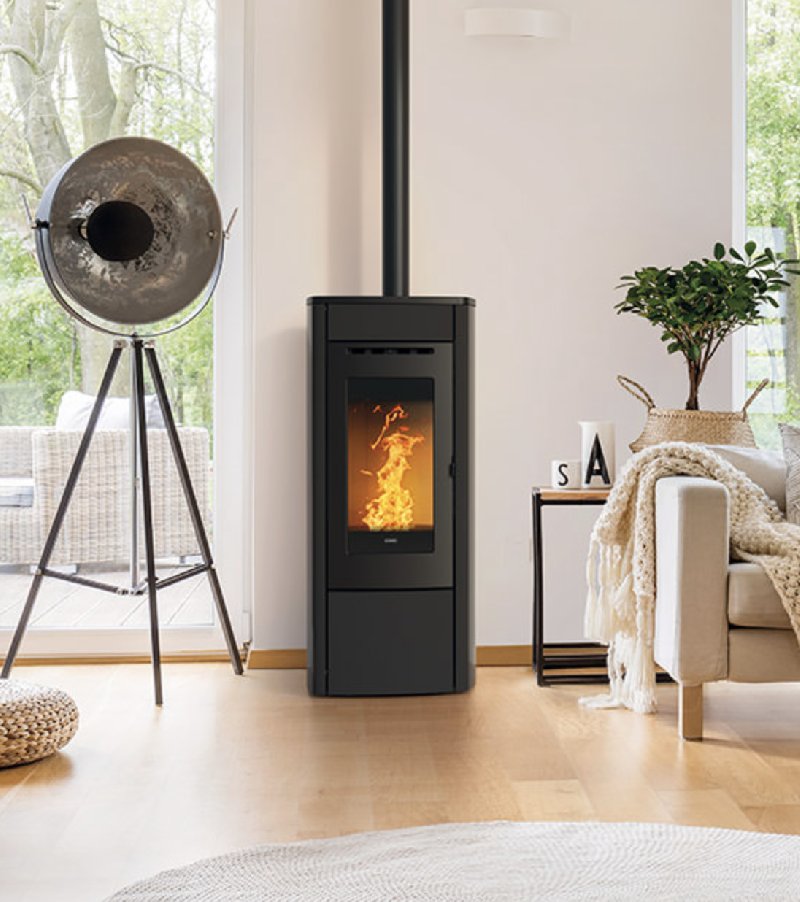
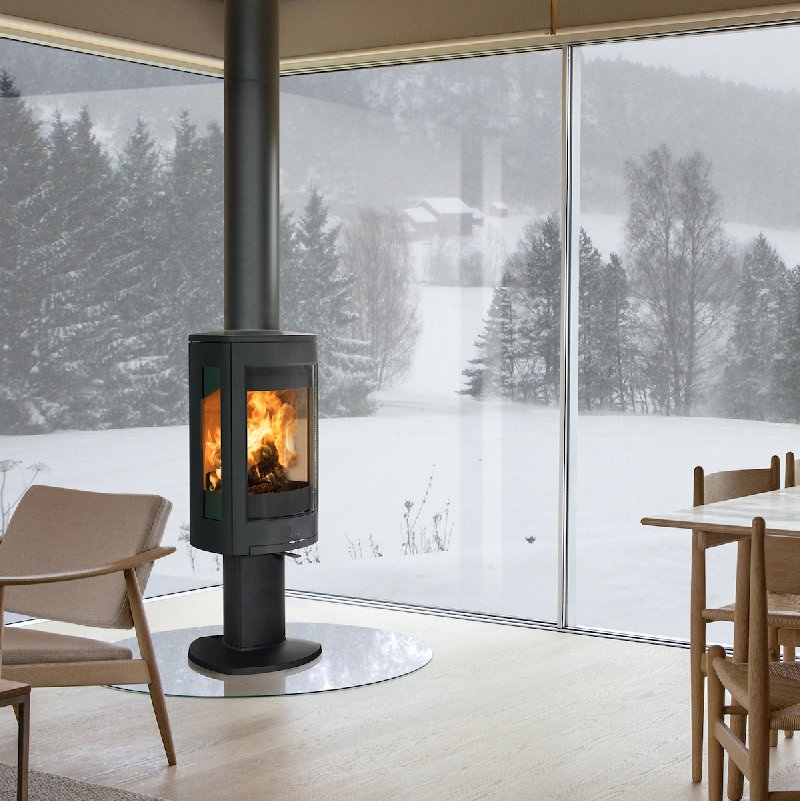
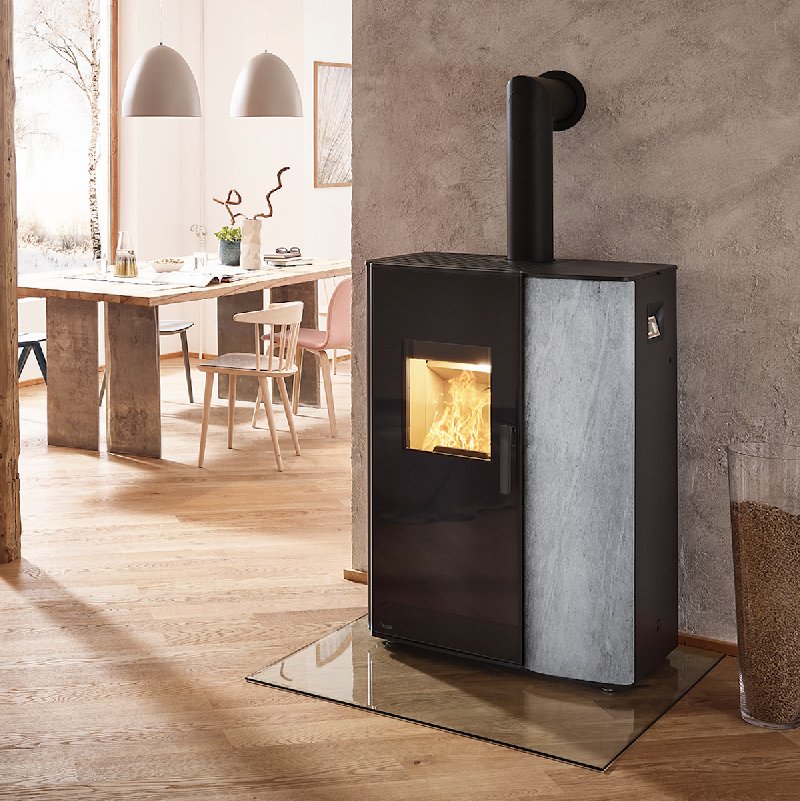
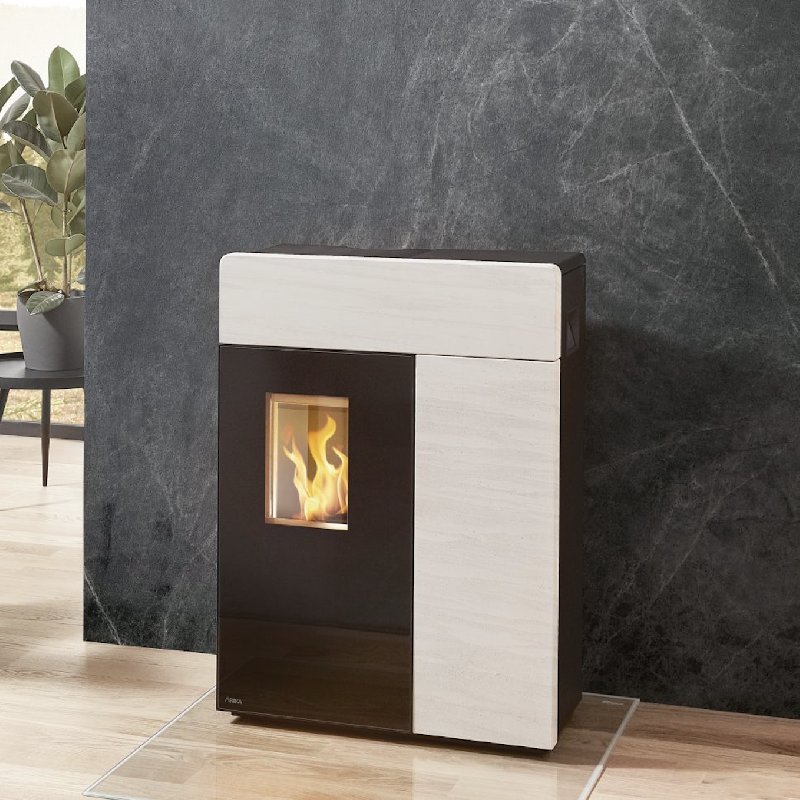
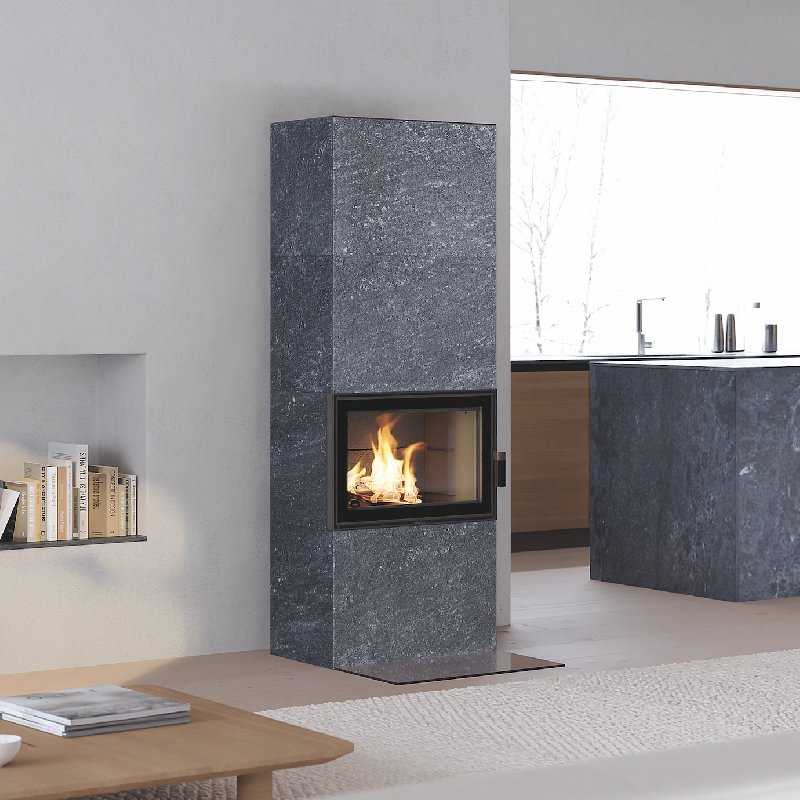
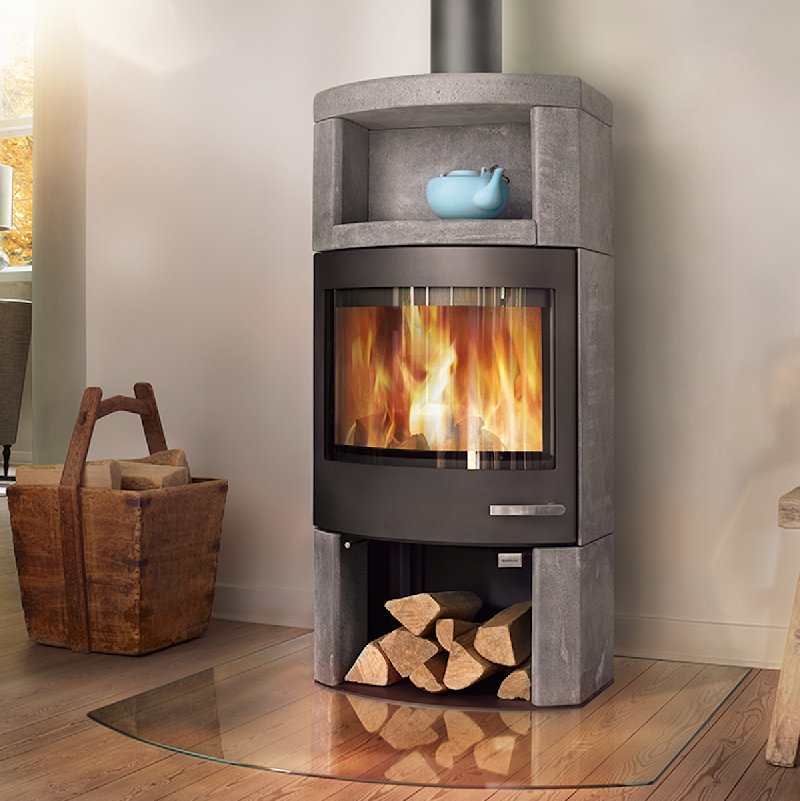
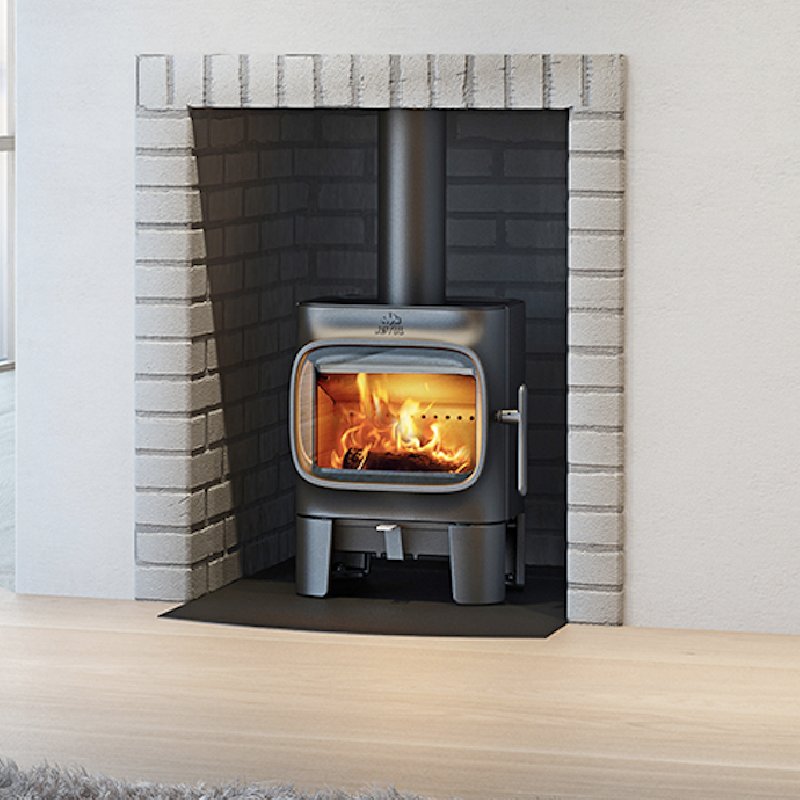
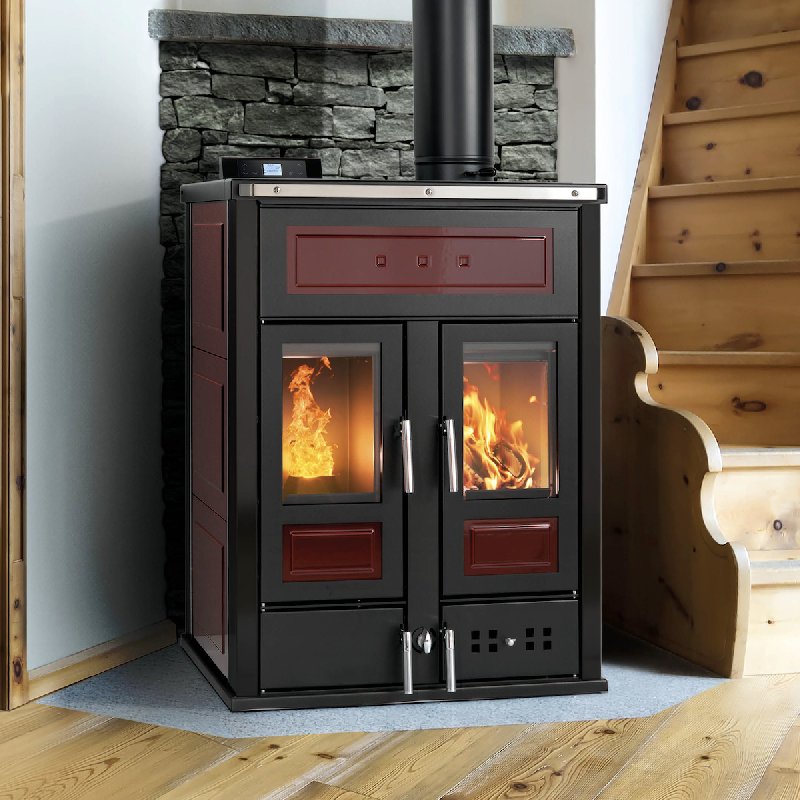
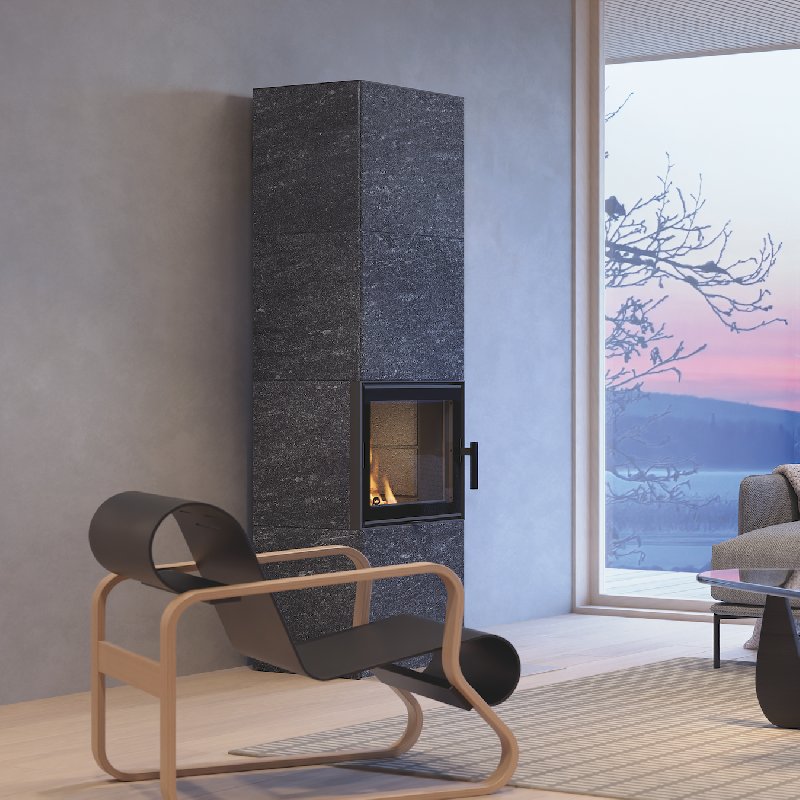
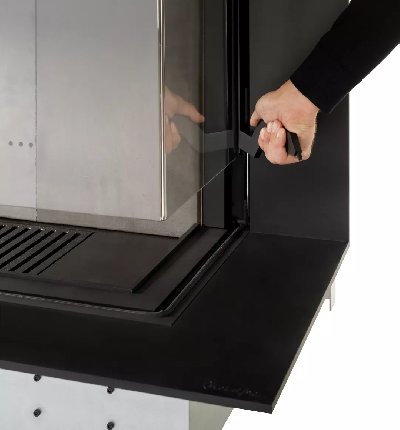
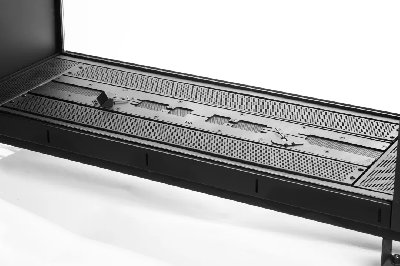

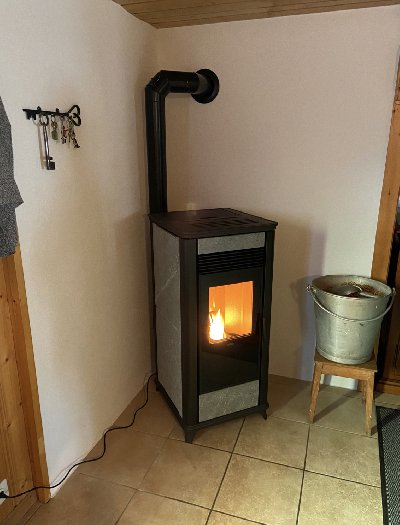
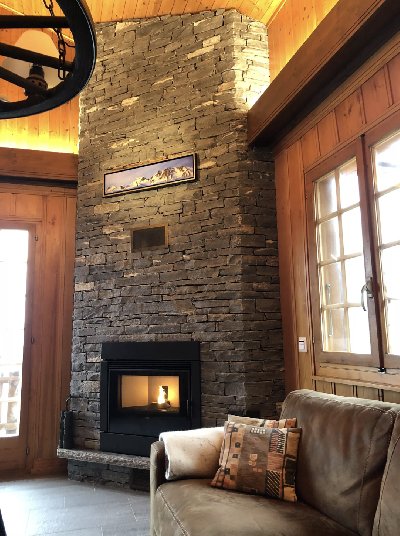
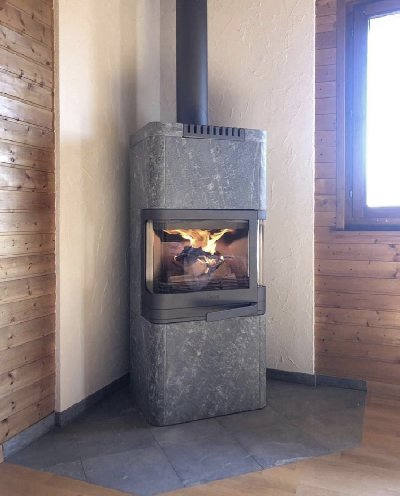
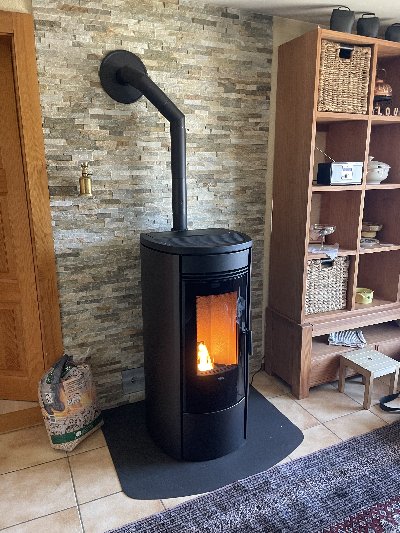
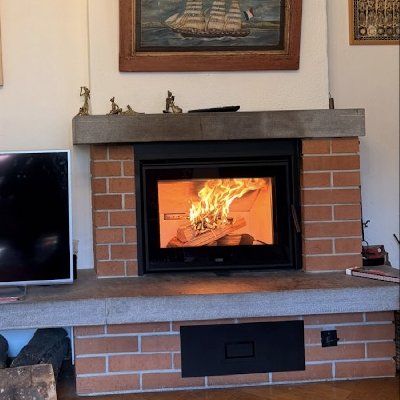
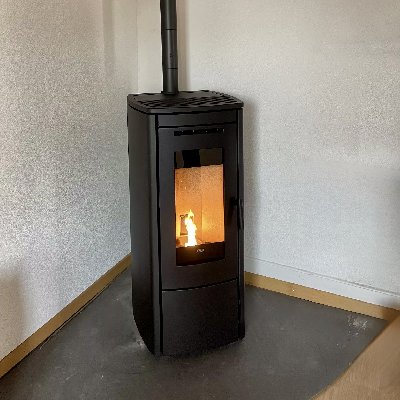
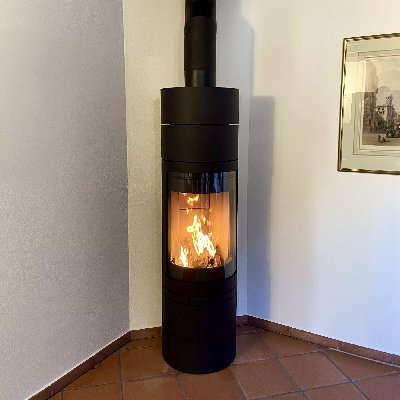
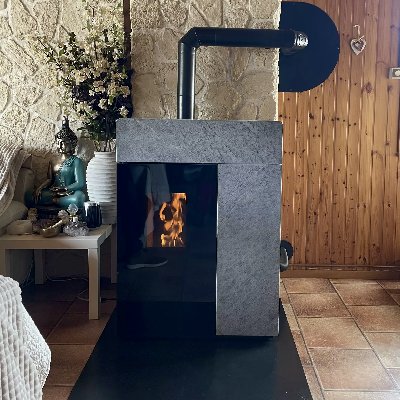
A stove that heats the entire house and almost completely replaces the boiler: that’s the promise of the hydronic model. Before you get started, you need to understand how installing a hydronic pellet stove fits into your existing system. To get a concrete idea of how a modern unit works, consult the pellet stove user manual we provide.
The outlook is promising. After two difficult years, the pellet stove market is rebounding significantly: according to Propellet, 128,000 pellet stoves were sold in 2025, a 36% increase year-over-year. This growth is accompanied by specific technical requirements, as each home requires a customized assessment.
What is a hydro pellet stove?
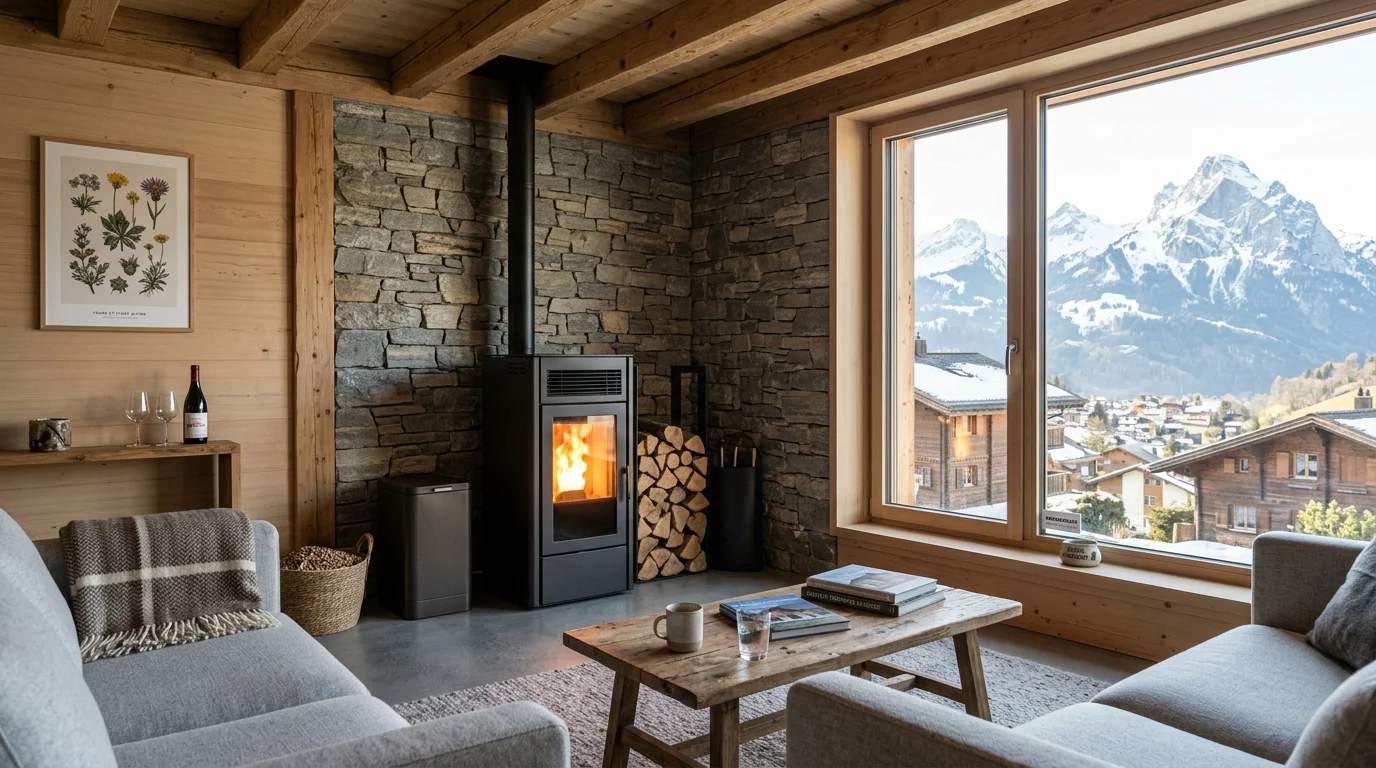
The hydro pellet stove, also known as a boiler stove or thermo-stove, belongs to the pellet stove family. What sets it apart is a heat exchanger that heats the water in your system, rather than simply circulating hot air throughout the room.
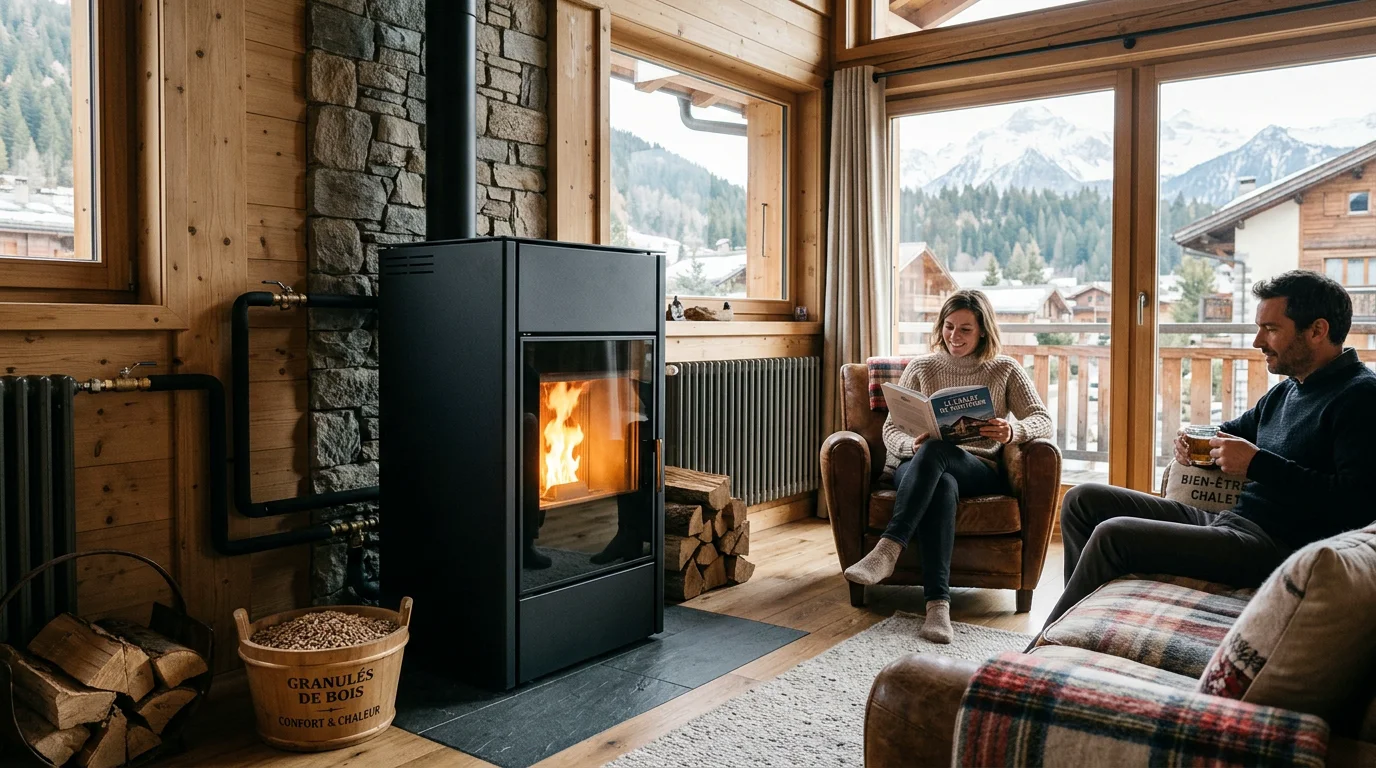
In practical terms, the combustion of the pellets heats an integrated water circuit. This water then circulates to your radiators or underfloor heating, just like a boiler. This is why the search term “pellet stove hydro installation” comes up so often: the appliance becomes a true central heating system, capable—in the most powerful models—of also providing domestic hot water.
The difference from a traditional air-heating stove is fundamental. An air-heating stove primarily warms the living area, while the hydronic version distributes heat throughout the entire home. This versatility explains its growing popularity, particularly in renovation projects.
A Smart Choice for Heating in Switzerland
Why is this type of appliance so appealing to homeowners in French-speaking Switzerland? First, for security of supply. According to this trade magazine, nearly 83% of the pellets consumed in Switzerland come from domestic production, which promotes local value creation.
Second, because of the fuel’s cost-effectiveness. According to Pellet Eco, French production covered approximately 85% of national consumption in 2025—a sign of the European industry’s maturity that helps stabilize prices. On a per-kilowatt-hour basis, pellets are often more economical than electricity or natural gas.
Finally, the environmental argument carries weight. Wood is a renewable energy source, especially when using certified pellets from local supply chains, and a modern hydronic system offers high efficiency that minimizes consumption. The trade-off: installation is more technically complex than that of a simple air-heating stove.
The 5 Types of Pellet Stove-Boiler Installations
There is no single way to connect a hydronic pellet stove. The chosen setup depends on your home, your radiators, and your hot water needs. There are generally five configurations.
| Configuration | What It Offers | Our Recommendation |
|---|---|---|
| Hydro + Radiators (Direct) | Inexpensive installation, minimal equipment | Adjust the capacity to match the home’s heat loss |
| Hydro + buffer tank | Heat reserve, savings, long system life | Highly recommended configuration |
| Hydro + DHW only | Dedicated domestic hot water production | Primarily intended for communal use |
| Direct heating system + DHW | A single unit for both heating and hot water | Capacity to be adjusted to your daily needs |
| Buffer tank + DHW storage tank | Covers all needs, maximum comfort | A complete but bulky solution |
| Design and installation by Carron-Lugon | Free on-site visit, coordination with other trades | We’ll help you choose the optimal configuration |
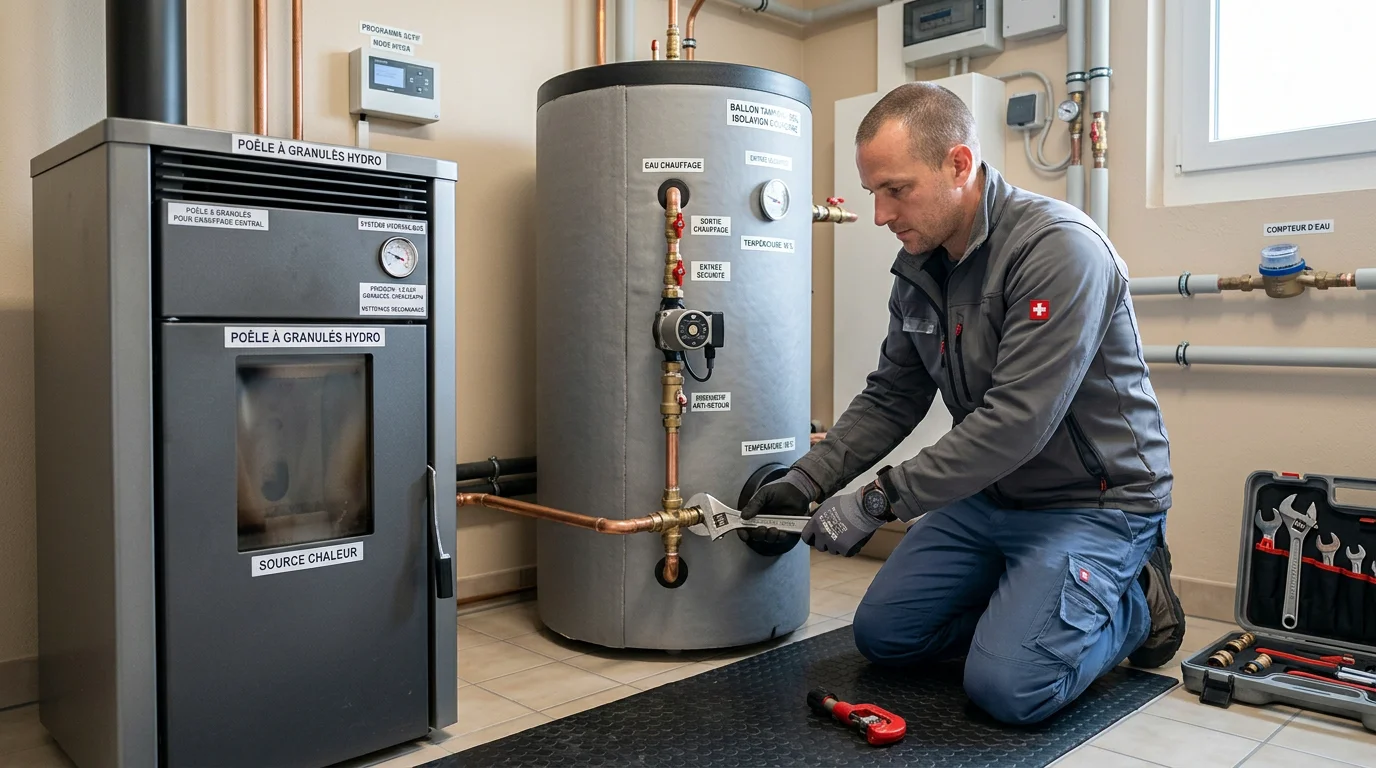
A buffer tank is recommended in most cases. This insulated tank stores the hot water produced and releases it when the stove is turned off. It reduces on/off cycles, improves comfort, and protects the components. Its volume is generally sized at around 20 liters per kW of heat output to the water.
The ideal setup is to replace an old gas or oil boiler with a hydro-coupled stove connected to a buffer tank. To compare the specifications of a specific model, the pellet stove’s Declaration of Performance details the official efficiency and emissions values.
Steps for a Successful Installation
The hydraulic connection must always be performed by a professional. A sloppy installation leads to repeated start/stop cycles, excessive energy consumption, and long-term discomfort. The process consists of three main phases.
- Preliminary assessment: survey of the existing system, identification of radiators, underfloor heating, the hot water tank, and the flue.
- Connection to the system: installation of hydraulic connections, and, if necessary, installation of a buffer tank and safety devices (circulator pump, expansion tank, valves).
- Adjustments and commissioning: configuration of temperatures, scheduling, and safety settings, followed by an explanation of how the system works.
This complexity justifies an on-site inspection before any quote is provided. This is the time to assess the location, the compatibility of the system, and the required capacity. Our team conducts this visit free of charge and with no obligation, then coordinates the project with architects and other trades to ensure a clean and well-managed installation.
Power, Sizing, and Integration
Power output is the key factor. Hydronic stoves designed for heating typically range from 11 to 24 kW, depending on the room’s size and insulation. An oversized unit will overheat the living room and wear out prematurely.
You should also consider how the heat output is distributed between the living area and the hydronic system, as well as the tank’s capacity, which determines the system’s runtime (often 24 to 72 hours). To find these specifications for a specific model, the pellet stove’s technical data sheet is the definitive reference.
Finally, combining the stove with another heat source is worth considering. During very harsh winters, or for hot water in the summer, an air-to-water heat pump or solar thermal panels can effectively take over. A well-planned energy mix ensures comfort without relying on a single energy source.
Maintenance, Lifespan, and Budget
A well-maintained hydro stove is built to last. Regular cleaning of the ash pan, firebox, and glass, along with an annual chimney sweep and inspection, helps maintain the stove’s efficiency and safety.
This maintenance is key to the stove’s longevity. Electronic components and moving parts (circulator, fans, ignition plug) wear out faster than the stove’s main body, but rigorous maintenance significantly extends its useful life. Using ENplus- or DINplus-certified pellets helps minimize clogging.
On the market front, momentum remains strong. According to Xerfi, the market for wood-burning heating appliances in France was estimated at 850 million euros in 2022, driven by the energy crisis and decarbonization requirements. This underlying trend also benefits hydraulic appliances.
Conclusion
When done right,installing a hydro pellet stove transforms a simple stove into a complete central heating system that is both economical and user-friendly. Key takeaways: a power output of 11 to 24 kW tailored to your home, a buffer tank strongly recommended, and a market rebound confirmed by the 128,000 stoves sold in 2025. Success depends above all on a thorough assessment and a professional installation. This is precisely where our support makes a difference: a free on-site visit, full coordination of the project, and in-house after-sales service for your peace of mind. To plan your project with complete peace of mind, consult our pellet stove technical data sheet and compare the models best suited to your home.
Frequently Asked Questions
Can a hydro pellet stove completely replace a boiler?
Yes, in a well-insulated home with the right capacity, it can provide both heating and domestic hot water. However, a supplemental heating source is still recommended for the summer or during extremely cold weather.
Is a buffer tank required?
It’s not mandatory, but it’s strongly recommended. It stores heat, reduces on/off cycles, and extends the appliance’s lifespan. Allow for about 20 liters per kW of heat output to the water.
Who should I contact for installation in French-speaking Switzerland?
A qualified professional specializing in hydronic stoves is essential. We offer a free, no-obligation consultation, including an assessment of your needs based on plans or on-site, in Valais and the canton of Vaud.