

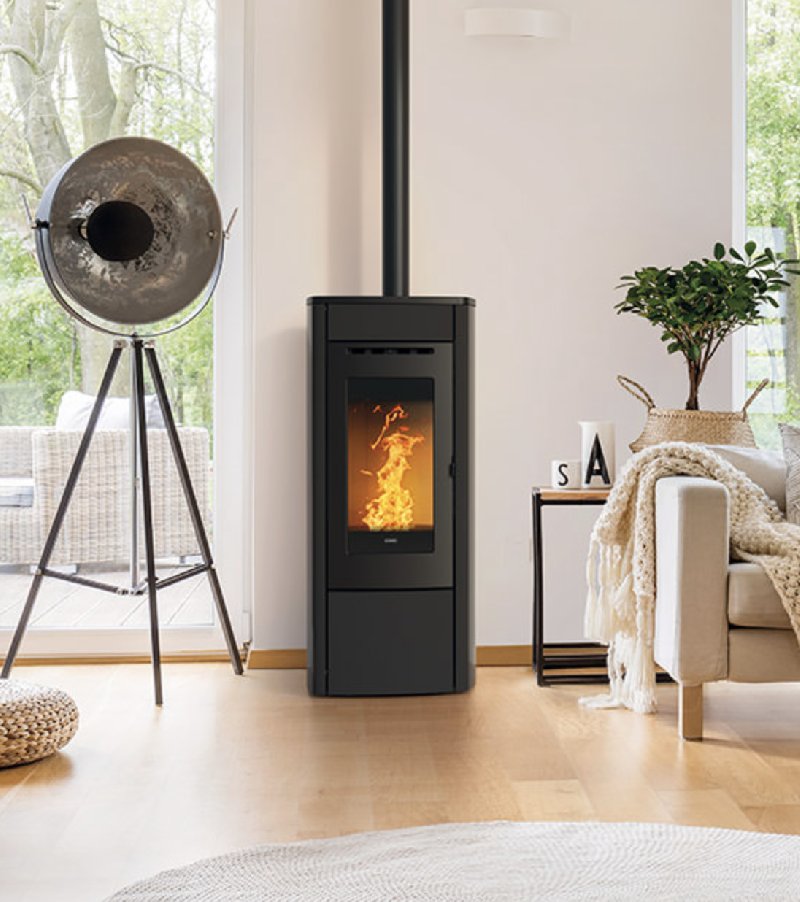
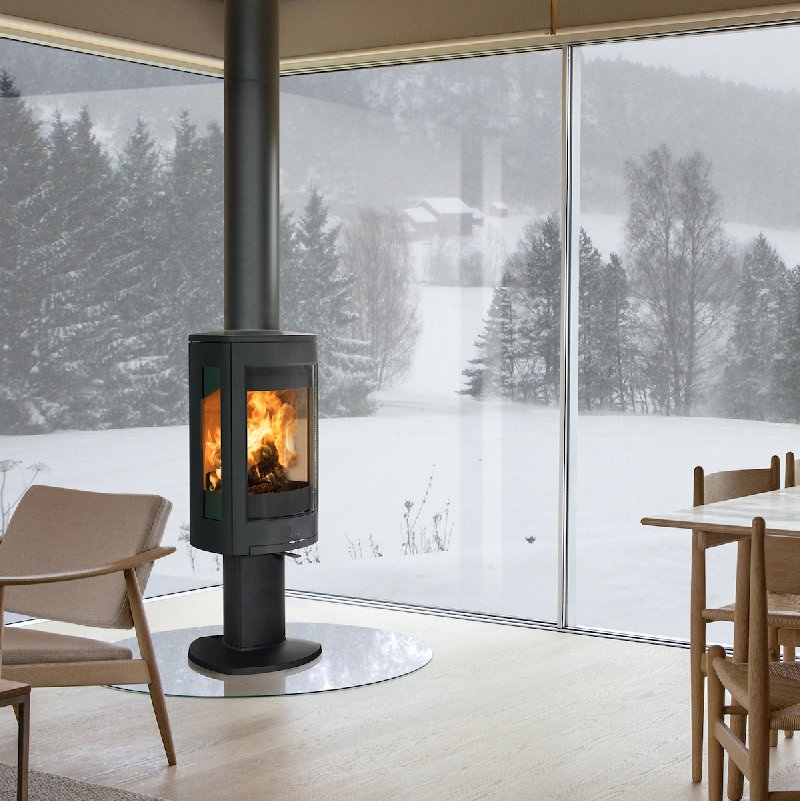
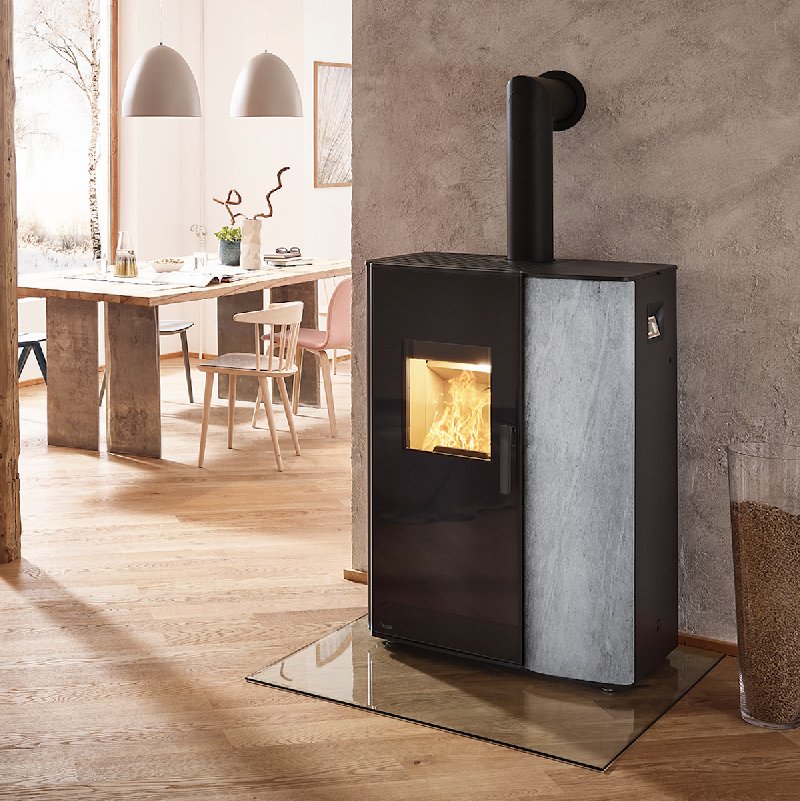
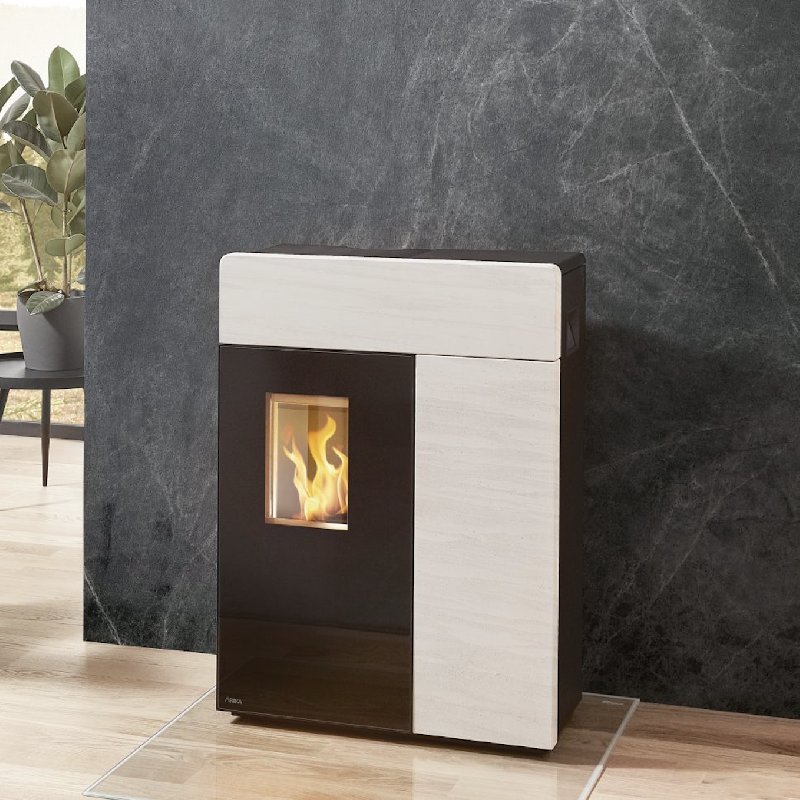
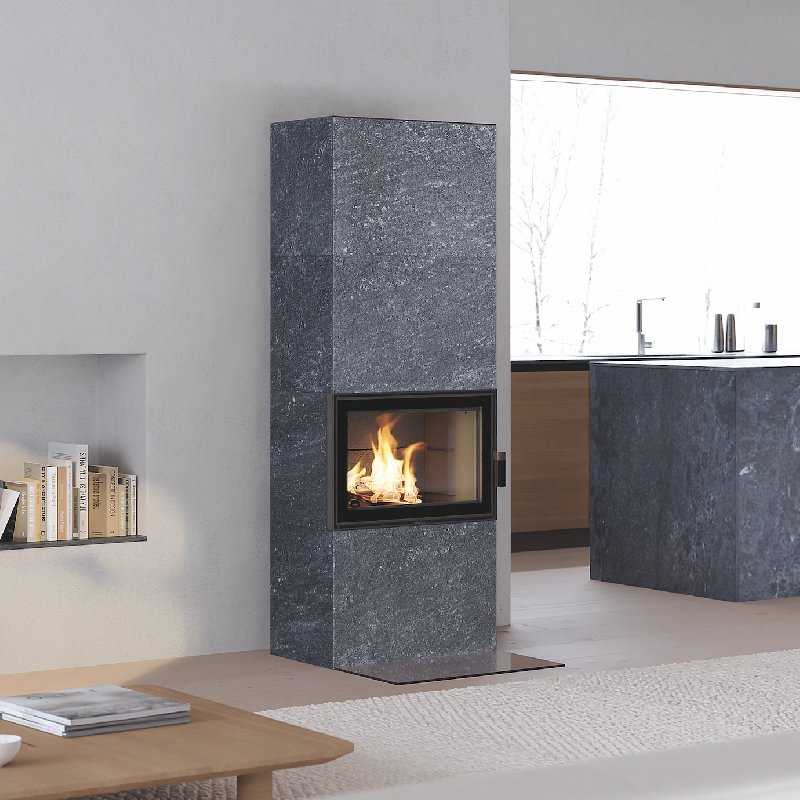
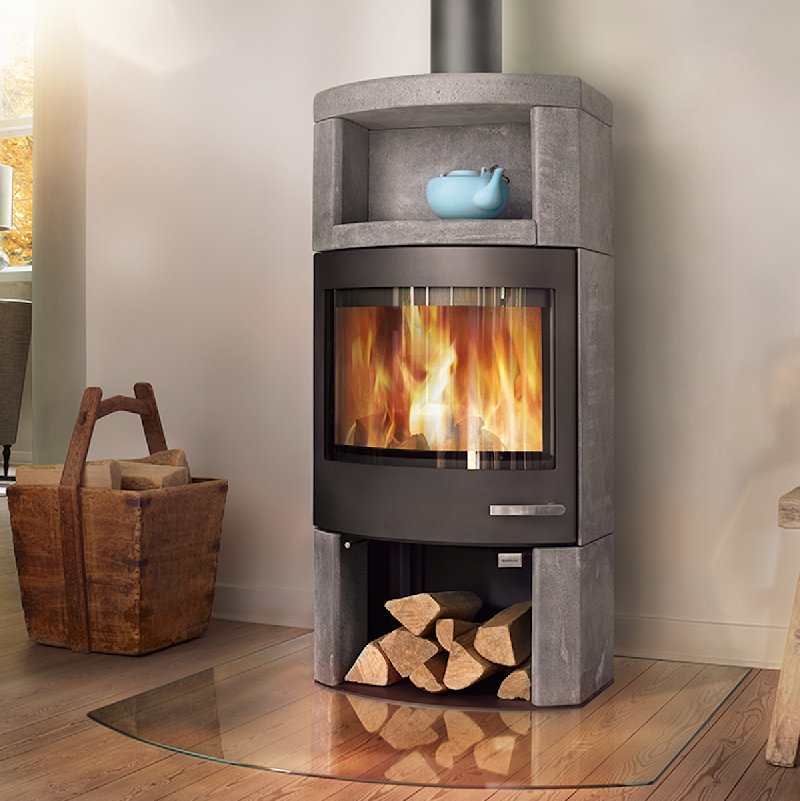
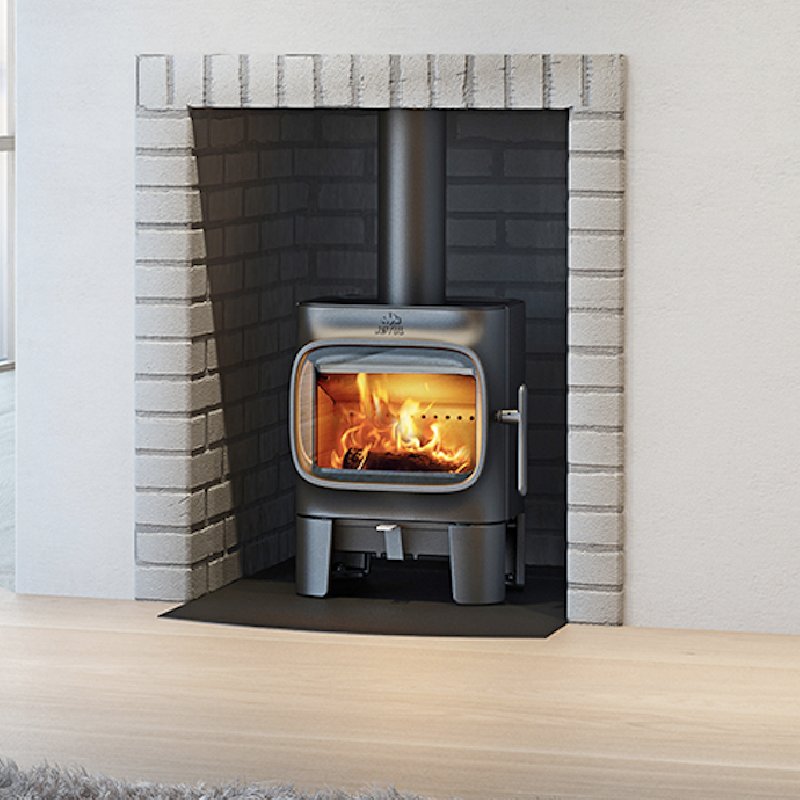
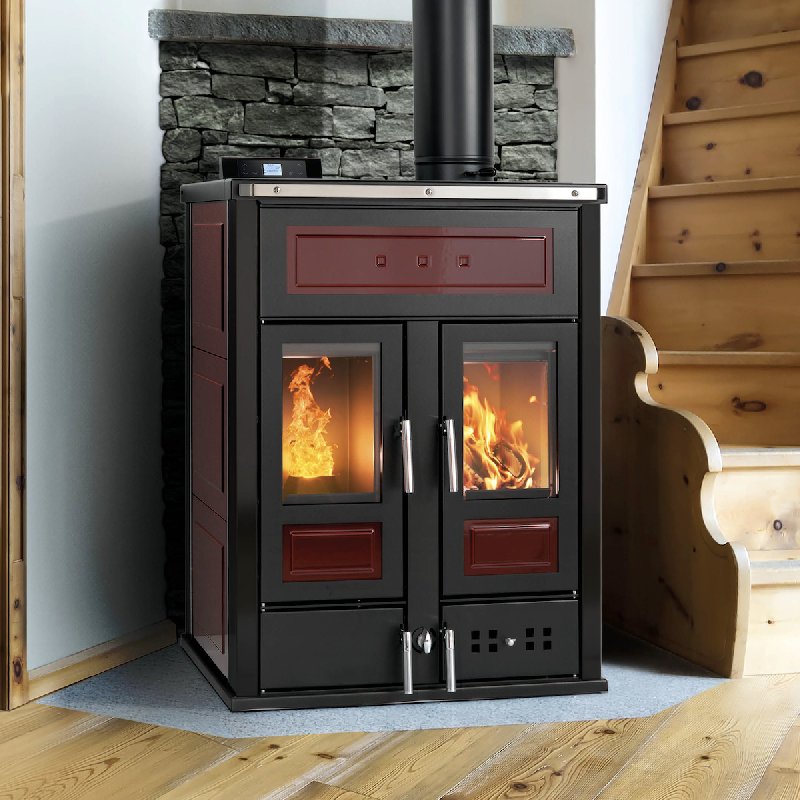
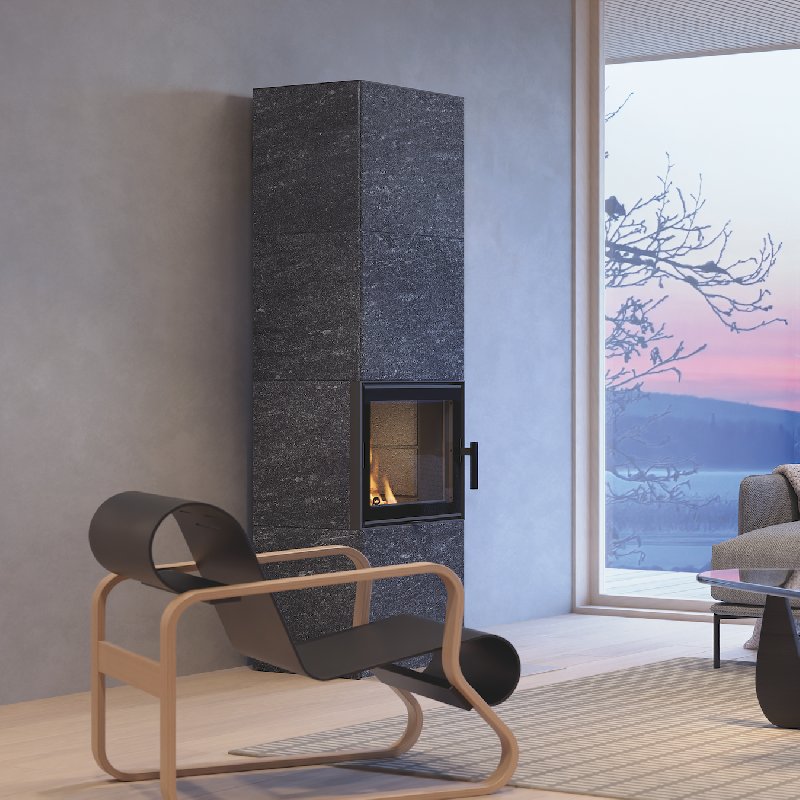
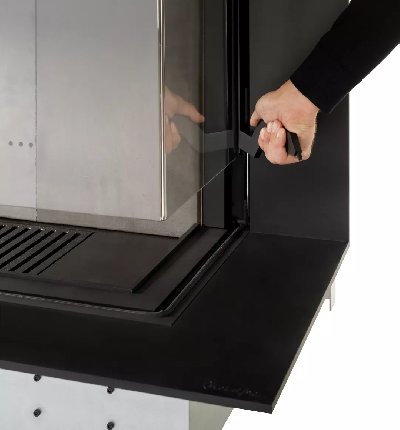
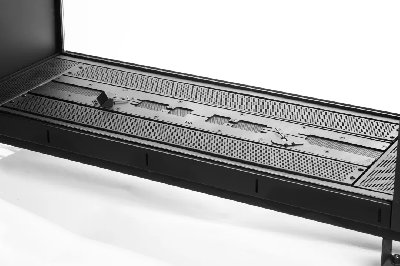
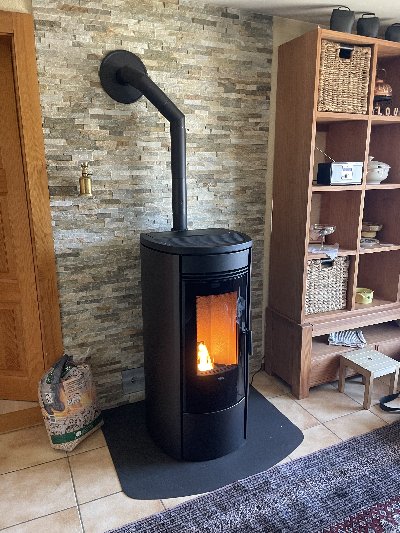
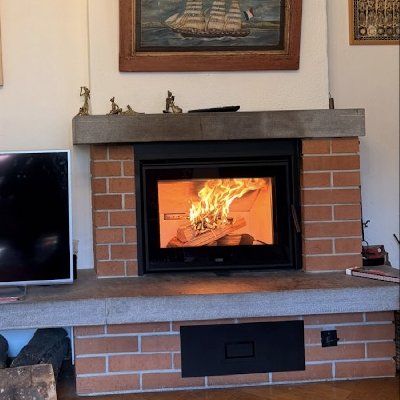
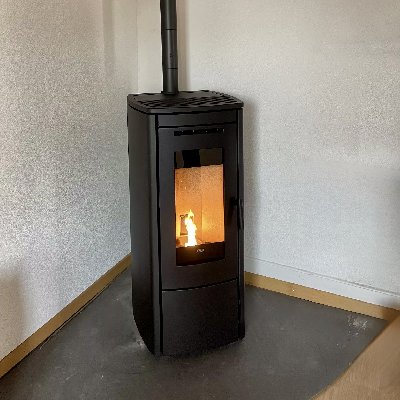
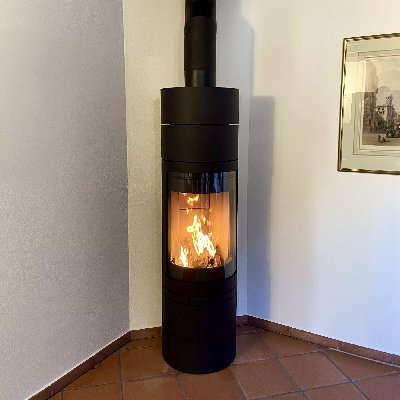
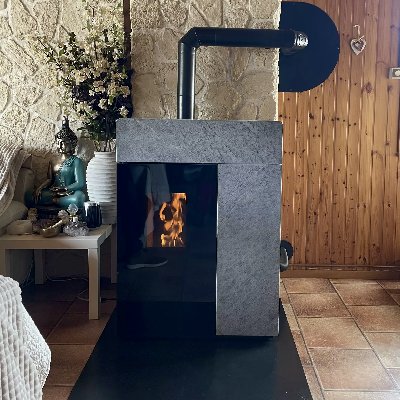
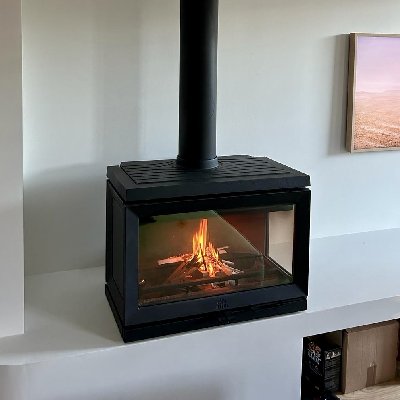
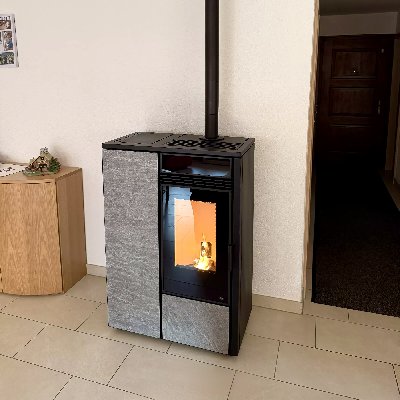
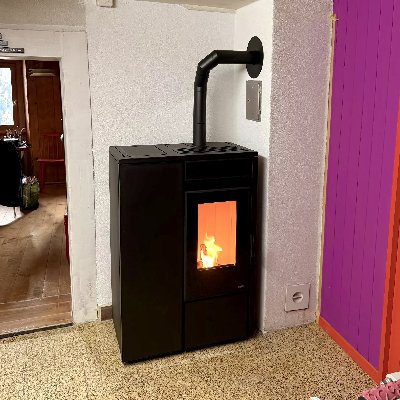

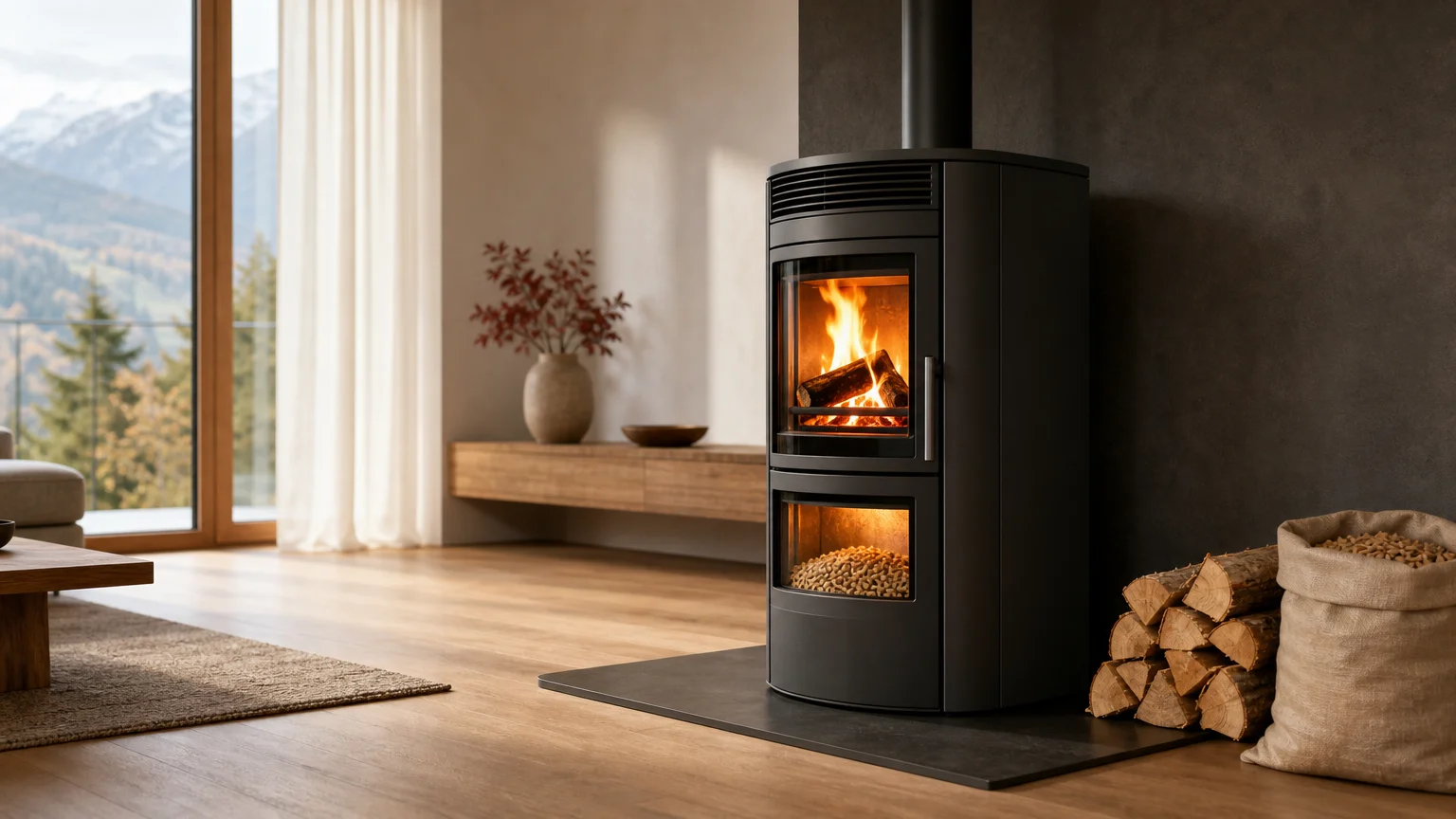
Why choose between a traditional wood fire and programmable heating when both can be combined? A hybrid stove runs on both logs and pellets, depending on the model’s specifications. It allows you to enjoy authentic warmth when you’re home, and automated operation when your lifestyle calls for greater convenience. To compare a dual-fuel solution, check out our Klover Bi-Fire Mid hybrid stove.
However, the energy landscape warrants a nuanced perspective. In 2025, Swiss consumption of wood as an energy source declined slightly—by 0.5%—according to data from the SFOE. This trend does not call into question the benefits of wood heating, but it serves as a reminder that a viable project depends primarily on the home, the available fuel, and your actual usage.
What is a hybrid stove, and how does it work?
Imagine a stove capable of adapting to two different times of day. You light logs to enjoy a lively flame and radiant heat. When the firebox runs out of wood, pellets can take over on models designed for this transition.
A hybrid stove, also known as a wood-and-pellet stove, typically combines a combustion chamber for logs with a burner fed by a pellet hopper. However, the design varies by manufacturer. Some models combine both fuels in a single firebox. Others feature two separate chambers.
In log mode, lighting and loading are usually done manually. Combustion relies primarily on the chimney’s natural draft and air adjustment. In pellet mode, an auger automatically feeds the burner. An electric heating element provides ignition, while the electronics regulate the air supply and fuel feed.
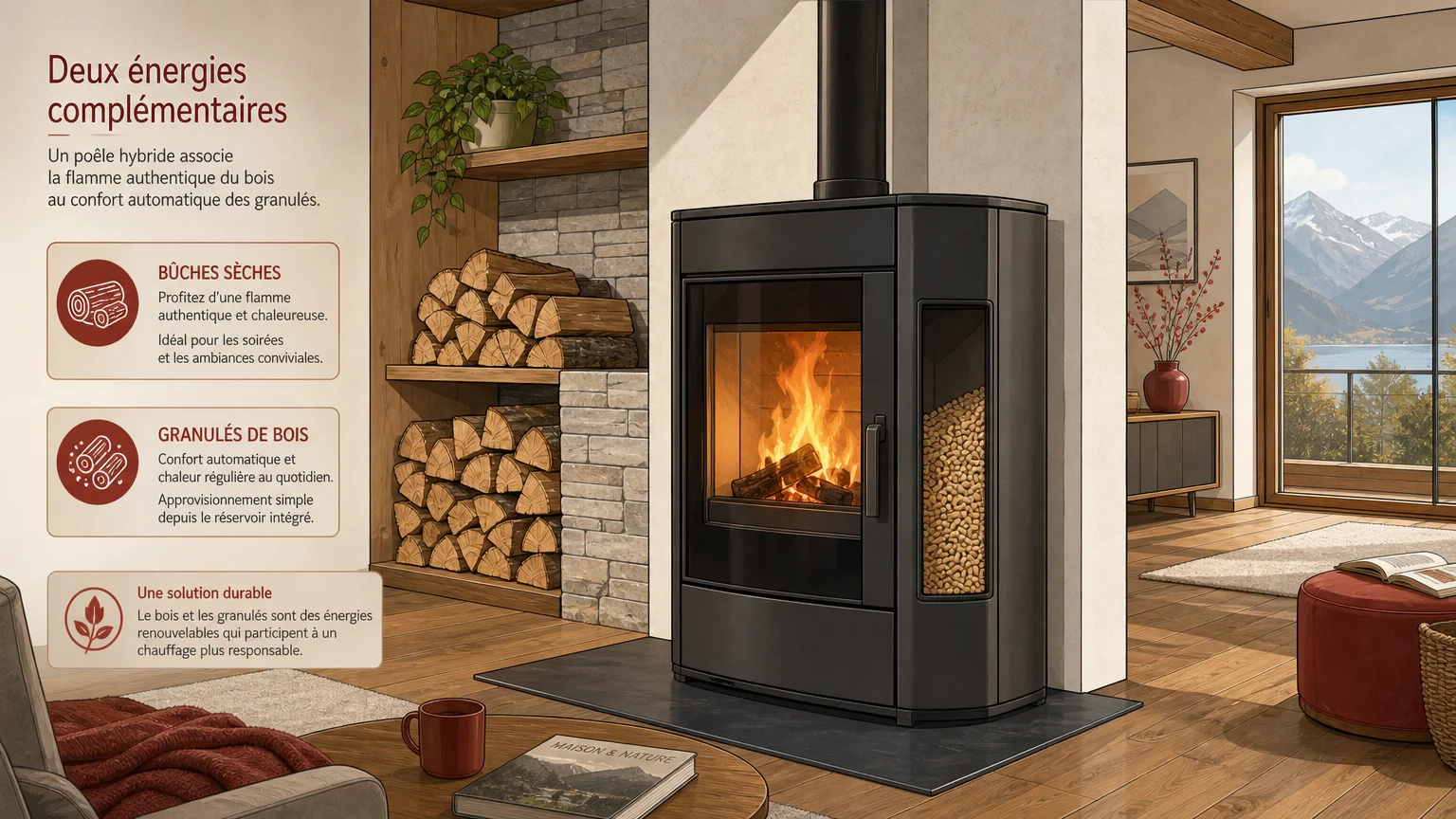
Switching between fuels isn’t the same on every unit. It may be manual, automatic, or limited to using each mode independently. Before comparing prices, be sure to check the manual and the features that are actually available.
What benefits can you expect in everyday use?
A household that’s away during the day can set the system to run on pellets and then switch to logs in the evening. This setup is one of the most effective ways to use a hybrid system. It combines the consistency of automated heating with the enjoyment of a roaring fire when you’re home.
The first benefit is fuel flexibility. You can choose logs for the ambiance they create and their simple operation. You can reserve pellets for times when a more stable temperature or less intervention is needed.
The second advantage relates to operational autonomy. The pellet hopper reduces the need for frequent refills. The log mode, when operating via natural draft, can remain usable in the event of a power outage. However, this capability depends on the model, the flue, and the manufacturer’s instructions.
The third advantage is thermal comfort. Pellets allow for more precise power control. Logs produce direct heat and generally a more dramatic flame. Some units can also distribute warm air to one or more adjacent rooms.
Performance depends heavily on the fuel. Logs that are too damp can cause buildup and reduce combustion quality. Pellets that are stored improperly can degrade and disrupt the burner’s fuel supply. Dry storage is therefore essential for pellets.
The Swiss market has a well-established wood supply chain. In 2024, demand for pellets for stoves and boilers reached approximately 433,000 metric tons, according tothe Forest and Wood Yearbook. The same publication indicates that domestic production accounted for about 70% of final consumption that year.
What compromises must you accept before making a choice?
Versatility comes at a cost. A unit capable of handling two fuels incorporates more components than a traditional wood-burning stove. It may include a feed screw, sensors, a heating element, motors, and electronic controls.
The purchase price isn’t the only factor to consider. You must also factor in installation, the flue, the air intake, floor and wall protection, as well as maintenance. A thorough comparison should include a hybrid solution, a wood-burning stove alone, and a pellet stove alone.
Storage also requires advance planning. Logs take up a significant amount of space and must be protected from moisture. Pellets are more compact, but they require a dry storage area. In an apartment or small home, this constraint can be a deciding factor.
Maintenance is doubly important. You must clean the glass, remove the ashes, and monitor the firebox. The burner, firebox, hopper, and flue must also be maintained according to the manufacturer’s instructions.
A hybrid stove is therefore not automatically the best choice. It makes sense if you truly plan to use both modes. If you only want to program your heating, a pellet stove on its own may be simpler. If you’re looking solely for a standalone, manually operated solution, a wood-burning stove may suffice.
- Wood-burning stove: an authentic flame, simple mechanics, and the ability to operate without electricity, depending on the installation.
- Pellet stove: programmable, automatic feed, and convenient day-to-day control.
- Hybrid stove: a combination of both functions, typically requiring a higher initial investment and more maintenance.
How can you distinguish between hybrid technologies?
Two units with the same brand name may offer very different functions. The first criterion to consider is the number of fireboxes. Two separate fireboxes make it easier to distinguish between modes. A shared firebox can offer a more seamless transition, but its design must be carefully evaluated.
The second criterion is how the system switches between fuels. Some models automatically detect when the firewood runs out and switch back to pellets. Others require user intervention. This difference significantly affects convenience at night or during a prolonged absence.
The third criterion is reliance on electricity. Pellet mode generally requires power for the auger, ignition, and control systems. Log mode can operate without electricity on some models, provided the chimney draft and installation are suitable.
The fourth criterion concerns heat distribution. Natural convection promotes quiet operation but primarily heats the room where the appliance is located. Ventilation or ductwork can accelerate heat distribution, though this comes with additional noise and installation requirements.
For example, the Rika Paro line of hybrid wood and pellet stoves may appeal to those looking for a solution that combines both fuel types. We recommend comparing its actual configuration with the layout of your home, rather than relying solely on the term “hybrid.”
For a different installation scenario, a unit like the Klover Twin hybrid stove illustrates another approach to combining wood and pellets. The use of two fuels alone is not enough to determine a model’s suitability. Output, the flue, available space, and after-sales service remain key factors.
How do you prepare for installation in Switzerland?
Even the best appliance cannot compensate for a poorly sized installation. Start by checking the flue, the air intake, and the safety clearances. The home itself—including its insulation, volume, and the room to be heated—must also be assessed.
In an apartment, feasibility depends in particular on the existence of a compliant flue and the rules applicable to the building. A declaration to the official chimney sweep is generally required in Switzerland. Municipal or cantonal authorities may also require additional steps.
The flue must be compatible with both combustion modes. Operating with logs requires a flue system adapted to natural draft. Operating with pellets adds requirements related to flue gas extraction and electrical power supply.
A combustion air supply must also be provided. In a highly airtight home, an outside air intake may be necessary. This assessment must be conducted before ordering the unit, as it affects the location and feasibility of the installation.
In Switzerland, wood energy accounted for 5.4% of final energy consumption and approximately 12% of heating needs, according tothe Swiss Federal Office for National Economic Supply. The same source indicates that wood pellets accounted for approximately 12% of the wood energy market. While these figures describe the national context, they do not allow for a prediction of your heating costs.
A preliminary study is therefore preferable to a general estimate. We examine the home, the available space, the budget, your lifestyle, and any technical constraints. Our free feasibility study helps, in particular, to assess the viability of a project in an apartment building and to verify the presence of a suitable flue.
We also provide full project support, from consultation and model selection through installation and the associated administrative procedures. Our family-owned business has over 55 years of expertise. We have showrooms in Fully and Etoy where you can see the appliances in real-life settings.
For a project requiring two separate fireboxes, you may also want to consider our Klover Dual Air hybrid stove. We’ll guide you toward a configuration that’s best suited to your home, rather than one based solely on the advertised heat output.
Is a hybrid stove right for your home?
The wood and pellet hybrid stove is best suited for households that actually want to use both fuels. It offers significant flexibility between a traditional open flame, programmable settings, and autonomous operation. On the other hand, it requires more space, a larger budget, more technology, and more maintenance than a single-fuel appliance. Before making a choice, check the flue, air intake, fuel storage, heat output, the process for switching between modes, and the availability of after-sales service. In Switzerland, a feasibility study and professional installation ensure every step of the project is handled safely.
Plan Your Hybrid Heating Project
Are you torn between the flexibility of pellets and the charm of firewood? We can assess your home, your habits, and your technical constraints to help you choose a solution that works for you.
We’ll guide you from start to finish, with a free feasibility study, consultation, installation, administrative support, and after-sales service. Our teams handle maintenance, repairs, and replacement parts for the relevant equipment. Discover our Klover Dual hybrid stove and speak with our advisors at our showrooms in Fully and Etoy.
Frequently Asked Questions
Does a hybrid stove work without electricity?
The log mode can operate without electricity on certain models, thanks to natural draft. The pellet mode generally requires electricity for ignition, feeding, and temperature control.
Is the switch from logs to pellets always automatic?
No, this feature depends on the model. Some units detect when the logs have finished burning, while others require manual intervention.
Do you need to set aside two storage areas?
Yes, you generally need to store logs and pellets separately. Pellets must be kept dry, while logs must be protected from moisture and adequately ventilated.
Is a hybrid stove suitable for an apartment?
It depends on the flue, the air intake, building regulations, and local requirements. We offer a free feasibility study to assess these conditions before you choose a model.
What maintenance is required?
You’ll need to regularly clean the glass, the firebox, the burner, and the ash pan. Professional maintenance of the flue and the stove should also be scheduled according to applicable regulations and the manufacturer’s recommendations.