





An installation can operate even if it is not compliant. An old stove, a modified flue, or a faulty electrical panel therefore requires a structured approach, not a makeshift repair. Start by identifying the item being inspected, the applicable regulation, and the required documentation. For a wood-burning appliance, also see “When to Replace Your Stove’s Gasket,” as a properly sealed door can contribute to safe operation.
In Switzerland, requirements vary depending on the installation, the canton, and the nature of the work.According to the Swiss Federal Office of Energy (OFEN), the OIBT (Swiss Ordinance on Electrical Installations) governs, in particular, low-voltage electrical installations, work performed on them, and their inspections. For heating appliances, other regulations pertain to fire protection, emissions, and flue ducts. Bringing an installation back into compliance does not, therefore, automatically mean replacing the entire system.
What does bringing a system into compliance mean in Switzerland?
Imagine a homeowner who receives a report listing several defects. This document does not always mean that the equipment is unusable. Above all, it identifies the issues that need to be corrected, their severity, and the conditions that must be met to restore compliance.
The first step is to conduct a compliance assessment. This helps determine the condition of the system, the applicable regulations, and the necessary corrections. Work carried out without an assessment may address a symptom while leaving a significant defect unresolved.
Next, three distinct steps must be distinguished. The inspection identifies non-conformities, corrective work resolves them, and then a validation confirms that the corrections have been made. Depending on the field, this validation takes the form of a report, a certificate, a notice of defect resolution, or an official acceptance.
The nature of the non-compliance may be technical, administrative, or documentary. An installation may have an incorrectly sized component, insufficient clearance from combustible material, inadequate electrical protection, or a lack of supporting documentation.
Electrical Systems, Stoves, or Fireplaces: Two Distinct Regulatory Frameworks
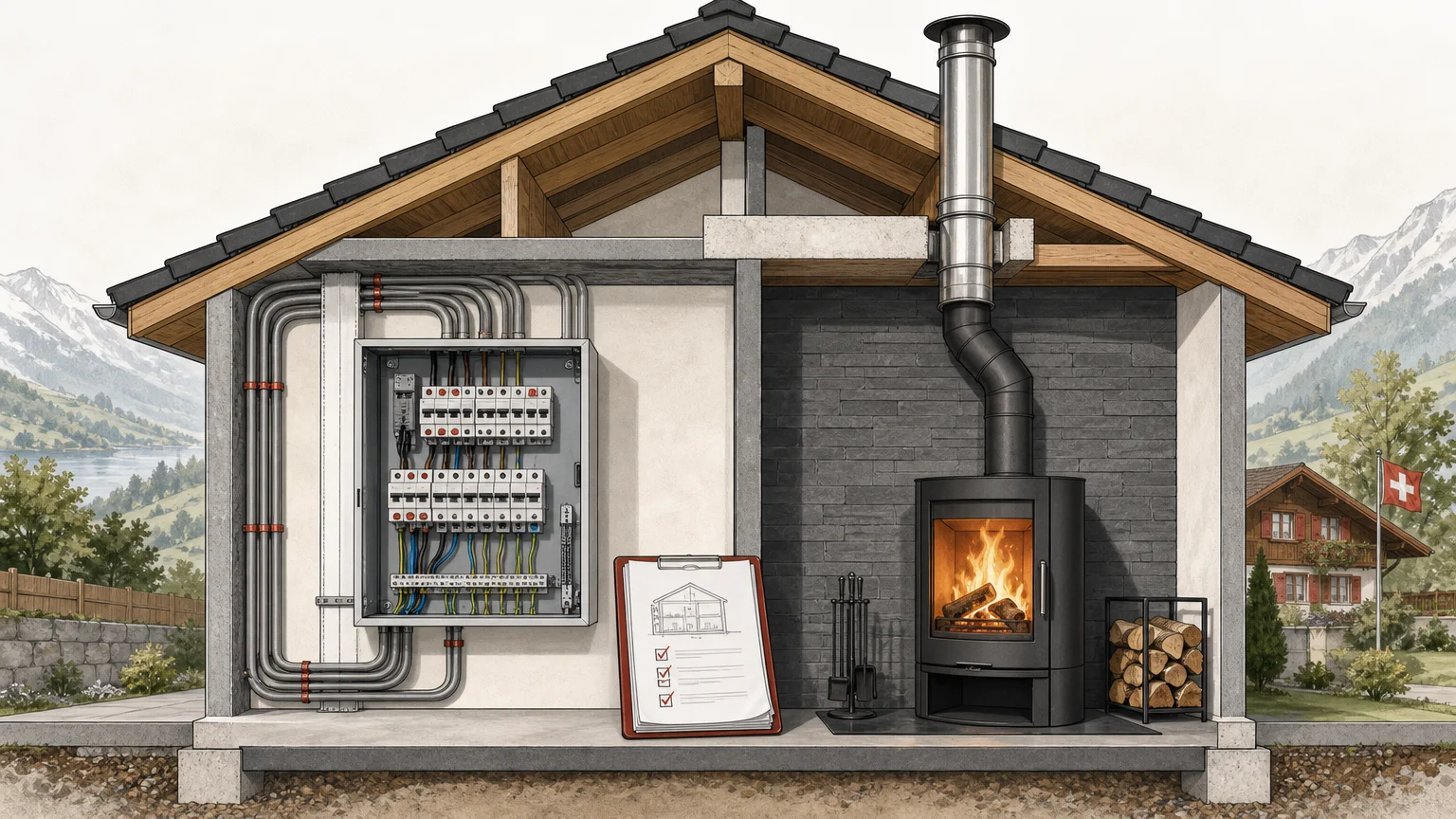
An electrical inspection and a chimney inspection are not governed by the same regulations. Confusing the two can lead to requesting the wrong document or hiring a contractor who does not have the required qualifications.
For electrical systems, the OIBT regulates low-voltage installations, installation and inspection authorizations, as well as initial and periodic inspections. It also imposes rules regarding the independence of certain inspections. For a stove or fireplace, fire safety and the compliance of the combustion system must be assessed according to applicable requirements.
For heating appliances, feusuisse’s guidelines specify, among other things, the role of the OPair and the fire safety criteria. Since 2025, Part B of the document on the state of the art has served as the binding basis for the construction of stoves and living room fireplaces in Switzerland.
- Electrical installation: inspection of circuits, protective devices, connections, and measures required by the OIBT.
- Stove or fireplace: inspection of the firebox, flue, safety distances, and combustion conditions.
- Final document: safety report, notice to correct defects, or supporting documentation tailored to the specific case.
How does the compliance restoration process work?
A homeowner saves time by preparing the necessary documents before the inspection. Available plans, previous reports, invoices for work performed, and the appliance’s serial number can facilitate the assessment.
- Identify the installation and its use, such as a residential unit, wood-burning appliance, or indoor electrical installation.
- Have the inspection performed by a qualified and authorized professional in the relevant field.
- Obtain the defect report, including the observed non-conformities and any deadlines for correction.
- Schedule corrective work, starting with defects that pose a risk to people or the building.
- Have the corrections validated and keep the documents provided upon completion of the work.
In the electrical field, the person who designed, installed, or modified a system cannot always perform the acceptance inspection or periodic inspection. The independence requirements set forth by the OIBT must therefore be verified before assigning roles.
The text ofthe OIBT ordinance also sets forth specific conditions for certain acceptance inspections. In several situations, the owner must engage an independent or accredited organization within 6 months of the installation’s acceptance.
What work may be necessary?
The scope of the work depends on the defect identified. Bringing the installation back into compliance may be limited to a single component, a connection, or a safety feature. It may also require more extensive renovation when several components are old or incompatible.
For a stove or fireplace, corrections may involve the door’s seal, the connection to the flue, safety distances, wall penetrations, or certain protective materials. For a localized repair, you can visit our page on fireproof sealant for fireplaces, always making sure the product is suitable for the surface and the specific issue.
When the issue involves the connection, replacing a component may be necessary. We also offer stove flue pipes and connectors. Compatibility must be confirmed based on the diameter, the type of appliance, the existing flue, and applicable regulations.
For electrical work, repairs may involve the circuit panel, protective devices, grounding, conductors, outlets, or connections. Do not limit yourself to replacing a visible component if the inspection report reveals a more widespread issue.
Who Is Responsible, and What Documents Should Be Kept?
The owner generally remains responsible for maintaining their installation in a safe condition. This responsibility does not mean that the owner must perform the work themselves. It primarily involves having the equipment inspected, hiring the appropriate professionals, and retaining supporting documentation.
For an electrical installation, the inspection report must specify the defects detected. After correction, a notice of defect rectification or an equivalent document may be submitted in accordance with the applicable procedure.
The SFOE maintenance guide notes that a 3-month grace period may be granted to correct defects identified during a periodic inspection. In the event of an imminent and significant danger, power to the affected area may need to be shut off immediately.
For a stove or fireplace, be sure to keep the appliance’s documentation, information about the flue, service reports, and proof of cleaning or inspection. These documents facilitate communication with the certified chimney sweep, the cantonal authority, or the insurer.
What budget and timeline should you expect?
It is impossible to provide a reliable price estimate without knowing the specifics of the installation and the defect report. The cost depends primarily on accessibility, the number of components involved, the materials to be replaced, and the required approval procedures.
A one-time repair can be scheduled quickly. A flue renovation, a connection modification, or a complete electrical overhaul require more preparation. The timeline also depends on the availability of contractors and any cantonal permits that may be required.
To compare quotes, request an estimate that clearly breaks down the inspection, supplies, labor, any administrative procedures, and final approval. Also check whether the acceptance inspection is included or performed by a separate contractor.
When Should You Hire a Professional?
A professional is recommended whenever the issue involves combustion, the flue, fire protection, or an electrical system. These areas pose risks that cannot be properly addressed with a simple cosmetic repair.
A specialized inspection helps identify the root cause of the defect. It also helps avoid a fix that is incompatible with the rest of the system. This approach is particularly important in apartments, older buildings, and homes where the existing flue must be inspected.
We offer a free feasibility study to assess the technical requirements of a residential project. We also provide support for consultation, installation, project-related procedures, and post-service follow-up, depending on the scope of work selected.
In summary
Bringing a system into compliance begins with a thorough inspection, continues with appropriate work, and concludes with documented validation. In Switzerland, it is important to distinguish between electrical requirements and those applicable to stoves, fireplaces, and flues. Make sure to clarify the defects, responsibilities, deadlines, and supporting documentation before starting the work.
Preparing for Stove Maintenance and Compliance Work
If you have any doubts about the condition of your stove, chimney, or its connection, it’s worth having a thorough assessment tailored to your home. We can evaluate the feasibility of the project, verify the technical requirements, and guide you toward the necessary repairs.

Our services include consultation, installation, maintenance, repairs, and the supply of replacement parts for the relevant equipment. To assess your situation, visit our page dedicated to stove maintenance and bringing it up to code.
Frequently Asked Questions
What is a compliance update?
It involves correcting any non-compliance issues found in an installation to ensure it meets applicable regulations. The process generally includes an inspection, corrective work, and a final validation.
Does the entire system always need to be replaced?
No, a correction may involve a specific component, connection, or safety feature. The scope of the work depends on the inspection report and the severity of the defects.
Who validates the work performed?
Validation depends on the specific field and the applicable procedure. In some cases, an independent inspection or an accredited organization is required.
Is it possible to install a stove in an apartment?
Feasibility depends in particular on the flue, the air intake, safety distances, and the building’s regulations. We offer a preliminary assessment to examine the technical conditions of the dwelling.
What documents should you keep?
Keep inspection reports, proof of work performed, appliance documentation, and any certificates of acceptance. These documents facilitate future inspections and dealings with authorities or insurance companies.